CARTOON IDEAS FOR CHARLIE HEBDO

mohammed


MOHAMMED SHOWING TRUE BELIEVERS HOW TO REACT TO INFIDELS

 Bernard_Picart_The_Perfumer_m

THE POPE RIDDING THE CHURCH OF MOLESTATION AND DOGMA


Unknown


JEHOVAH AS A CLOWN VOMITING OUT EXISTENCE ON A GULLIBLE CREATION


14706960_7c7e_1024x2000


BUDDHA CONTEMPLATING HIS NAVEL AS A POINT OF SEXUAL ENTRY

image022rabbi

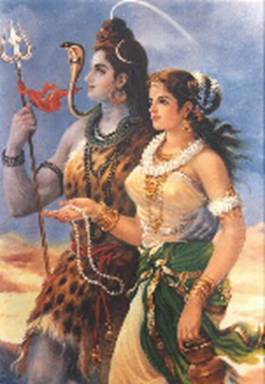
BRAHMA LEADING SHAKRA TO TANTRIC YOGA SESSION  WITH THE BRAHMAN BULL

Pope-Francis

POPE FRANCIS UPON HEARING THAT EVE WAS THE FIRST CREATION OF GOD

THE PROBLEM WITH ENLIGHTENMENT

by Kenneth Harper Finton ©2017

meditating-dog

There is a problem with what people like to call ‘enlightenment’. No matter how much you think you might know the answers, you return to the familiar spot where you started. The world appears just as it did before. If you had a timeless experience through meditation or drugs or intellectual inquiry, then you begin to think that your timeless experience had no meaning at all and is perhaps just a function of your overtaxed nervous system. The universe and all its existential problems seem unchanged.

If you are like me with an abiding interest in cosmology and metaphysics, you check the TV shows and books about the newest particle colliders and listen closely to the latest theories that explain how the universe came into being. You check the Internet and find the links to The Standard Model [standard_model.html]. You try to comprehend what physicists are saying. You realize that they are talking about theories that are backed up with mathematical equations that are difficult to understand and almost impossible to express. The essence of the world itself remains unknowable.

Scientists look for material reasons for the world’s existence and often ignore the non-material basis of being. Until non-material awareness is recognized as the primary building block of material existence, we will not understand how our world comes into being. We see evidence of this in quantum mechanics when we find that observation is interaction and produces changes the positioning of primary particles.

We are used to equating awareness and consciousness to what we term as living things. We are not used to it being a property of elemental reactions as well. Yet, it takes awareness to even make a point. Without an awareness that is processed through interactions, there is no point at all. A primal awareness without form or mass is essential to the very birthing of the world, just as it was in our personal beginnings. Gravity, weak forces, strong forces, and magnetism are essentially like the sense of touch—pressures that are brought into being by interactions that are perceived by awareness.

Nothingness does not exist in time and space. Even a void cannot be known without awareness. This awareness is not material, but it is eternally present and is especially evident everywhere that time and space have been formed. It dwells in an unknowable dimension of zero time and zero space.

If we are fortunate enough to be healthy, well-adjusted people, then we love our lives and the identities we have chiseled out of the elements. We feel sympathy and love. We desire to bask in understanding. We feel disgust, pain, and rejection and either strike out against it or want to sleep through it. We are human and that is our lot. We live in a local universe of beginnings and endings. We muddle through change and aging, love and regret, sickness and health, joy, and sorrow.

We find that there are many myths designed to help us cope with our lot in life. All of them are illusions created by others—sometimes out of real concern, sometimes for profit and power over us. All of them are fabricated answers.

We can only take reason and logic so far. We can probe our minds and find that something is conscious. That is quite evident. We cannot be sure that this conscious and aware entity is even ourselves. We spin around the vortex in the whirlpool of time. We discover that we will never have a real answer because there is no real answer.

There is a reason for that. Logic has not really abandoned us. If our own logic and observations cannot solve the problems of existence, then nothing can.

Our only and best recourse is to trust in the logical powers of our wisdom and minds. We know there appears to be an inside and an outside to everything. If we are the inside, then the world is the outside and we have to take that necessary leap of faith to believe in its actuality. We perceive the world around us with the same tools that we perceive ourselves.

When we delve deep inside we come to realize that there is a spirit in us that is beyond time and space. It does not matter what we call it. We can call it God, Soul, Void, or any other name we might devise. When we realize that time is truly relative and the now is an instant that always exists, we begin to get an idea of what our universe is about.

There is a way to wrap up the dichotomy of being and to solve the problem of why we exist. There is a real world about us. When we come to the realization that we are here for the experience of being and this experience is formed by interactions, we should get the bigger picture.

We know experience within ourselves. We need no outside proof of the fact that we are experiencing the world. That is our greatest gift and the way to a more peaceful life without nearly so much angst and sorrow. We can reach this understanding any time we wish to do so. When we sleep or enter into an unconscious state, the ultimate nature of the universe is revealed to us.

We are all made of the same stuff. That is obvious enough. Science tells us we are shaped by elements created by the explosions of ancient stars. We achieve uniqueness and variety by being in a place where we perceive space and time. It is a dimensional experience. It is all appearance. It appears to appear, so it exists. It is that simple.

Giant centrifuges are built to recreate conditions at the birth of the universe. This is not a useless thing. We might learn to harness physical forces and profit from this kind of research. After all, we profit from harnessing the energy released by converting matter to energy, not only in atomic energy but simple things like making fires, breathing, and moving about. All life consumes and utilizes energy. Higher sciences are quite useful and can have many positive values that create warmth and comfort and ease of living.

In one sense, this understanding makes gods of us all. Not the father-mother-holy-and-divine God that almost all religions profess to believe, but an eternal—without beginning, without ending—awareness that brings experience into the world. Each one of us is a part of that experience. It is even possible that experience repeats itself in the infinity that we devise when we take our place in time and space. Information, some physicists tell  us, is stored digitally on the boundaries between the universe and that nothingness that is on the outside.  The consciousness of our persona can forget itself and beget itself again and again. We do this every night when we sleep. Awareness can perhaps take a symbolic breather and not be aware. When time and space itself is a product of dimensional viewpoints, there is no need to become emotionally upset with what is just an appearance. There is no need to take ourselves seriously if we are but bits of information like actors in a cosmic play.

We are now back where we started. Our lives are the same. The experience that we now experience continues and the problems we had yesterday continue today. The only good such understanding can do is help is to make better decisions, be more tolerant and less judgmental. It can change our hormonal balance and make us feel better in the now.

We the people of the world are the ones that place value and judgment on the valueless facts that appear in nature. We create a communal mind and a social structure that feeds and nourishes us. Perfecting that structure is what we do with our time. The universe leaves us with a billion unanswered questions. It gives us something useful to do with our limited time. Be kind. It is better than being cruel. We deem this to be so. Be proud of your spiritual awareness. Perfect the social aspect of your existence. Our time in this sector of space is short. Cherish it.

Be kind. It is better than being cruel. We deem this to be so. Be proud of your spiritual awareness. Perfect the social aspect of your existence. Our time in this sector of space is short. Cherish it.


FOR FURTHER READING:

https://heliosliterature.com/2014/12/10/whoarewe/

https://heliosliterature.com/2015/02/26/does-the-universe-have-a-brain/

https://heliosliterature.com/2015/11/13/channeling-our-world/

https://heliosliterature.com/2014/12/21/much-ado-about-nothing/

https://heliosliterature.com/2014/12/26/the-perpetua-lsearcyh-for-truth/

https://heliosliterature.com/2015/01/03/of-god-man-nature-and-zero-dimension/

https://heliosliterature.com/2015/01/05/metaphysics/

https://heliosliterature.com/2014/12/21/much-ado-about-nothing/

https://heliosliterature.com/2015/02/12/thought/

https://heliosliterature.com/2015/03/20/god-infinity-and-the-mobius-universe/

DESPERATELY SEEKING READERS

Image

 Soumya Mukherjee


“Soumya is an alumni of St. Stephen’s College and Delhi School of Economics where he was supposed to have studied Economics. He, however, did not let studies interfere with his education. Currently he earns his daily bhat mach by working for a PSU Insurance company, and lectures for peanuts., He is addicted to the printed word and has been devouring it since learning to read. In whatever time this leaves him he pursues his other passions, family,films,travel,food,trekking,wildlife,music,theater,and occasionally,writing. He has been published earlier in TOI, HT, Express, and other lesser known papers and magazines. He is currently trying to learn the ropes of  tech challenged blogging.”


DESPERATELY SEEKING SUGGESTIONS

Written for a prompt on project 365, a newby blogger seeking advice from veterans:

Dearest Sir or Madam, more likely the latter, please guide a confused babe in the woods in this confusing virtual world of letters, where writers outnumber readers by a ratio of 10:1. That is if you can call a wrong side of fifty overweight graying man a babe, and this strange land populated by such fabulous beasts as urls, linkys, widgets  et al as wood…. But in the virtual world anything goes. And batting my eyelids won’t be visible behind my thick minus six progressive glasses, but still do help me out.

I need to unravel the eternal enigma of the amateur writer- how to grab eyeballs. How to get someone who doesn’t owe me money, filial loyalty, bonds of brohood or is otherwise indebted to me, in other words complete strangers, to read the outpourings of my soul. And read it to the end, controlling impatience, irritability and the myriad distractions of the millions of other posts, as well as that shadowy realm of the real world, inhabited by live humans who exist outside the laptop screen.

In the ancient times of snailmail and manual typewriters and little magazines and stenographers, life was simple. You simply dictated your ramblings, and sent the manuscript in double spaced type, one side of the page only, by post, addressed to the editor, along with a stamped self addressed envelope, and you got a polite rejection letter, or more rarely a cheque by post. Or you wrote longhand and dropped it at the friendly neighborhood little magazine publishers place, to see it in print when they could afford the next issue. The whole affair was leisurely, and took months, and you were gratified to see your babies in print, around once a month, sometimes with a monetary reward, but you didn’t know if anybody ever read it.

Nowadays I have to type it, with great difficulty, and through many trials and errors manage to upload it and share it on the social media, then wait for the elusive blue columns to see who has read them. Then waiting in vain for ratings and likes, turning greener than Greenpeace at the sight of you veterans with one million views, five thousand followers, comments ten pages long,  likes from hundred odd people., and dozens of awards advertised on the margins.

Your pieces come in myriad fonts, liberally peppered with pictures, videos and links, with many alluring exertions to comment and share. Your background and profile pix grab me by the collar and make me read. My piece in plain B&W text stand out forlornly like the spinster aunt at a ball in old English films, waiting desperately for a dance.

Tell me, should I change my Nome de plume to Partygirl and the profile picture to a early shot of Madonna (from whose first film I have stolen the title). On second thoughts, no… it might put off the ladies, who seem to constitute 80% of the population of this blogging world, and the only ones who sometimes read like and comment.

Modern poets, whose work no one reads, have a protocol. You listen to my ravings and I listen to yours. Anyone who welshes, runs away without listening to others after having read out one’s own, they are hunted down mercilessly by the thwarted poets. Does this work in the blogging world too?

Stories flock my mind, fighting to be born, held up by the roadblock of my tech illiteracy.  After giving sweat and blood in getting it into the netsphere, how do I find readers, followers and get those awards?

Wiseguy From The East's avatarIdyll Dreams of an Idle Fellow

DESPARETELY SEEKING SUGGESTIONS

Written for a prompt on project 365, a newby blogger seeking advice from veterans

Dearest Sir or Madam, more likely the latter, please guide a confused babe in the woods in this confusing virtual world of letters, where writers outnumber readers by a ratio of 10:1. That is if you can call a wrong side of fifty overweight graying man a babe, and this strange land populated by such fabulous beasts as urls, linkys, widgets  et al as wood…. But in the virtual world anything goes. And batting my eyelids won’t be visible behind my thick minus six progressive glasses, but still do help me out.

I need to unravel the eternal enigma of the amateur writer- how to grab eyeballs. How to get someone who doesn’t owe me money, filial loyalty, bonds of brohood or is otherwise indebted to me, in other words complete strangers, to…

View original post 469 more words

Today I Weep for my Own Ignorance


Originally written by and posted on whoknowswhenwhat:


98f5f74e965a938da4317005d4d6401d

Today I weep for my own ignorance,

I cradle myself in the warmth of my own embrace,

I bandage my own wounds with a loving, tender touch,

I sing myself soothing words just to ease the pain–

For if I can’t be compassionate to myself,

How can I be compassionate toward anyone else?

Confusion, suffering- they cannot be fully dissipated without the light of wisdom.

However, until the hour of knowledge dawns upon this being,

A love that is so often directed outwards,

Will now be directed inwards,

In order to soften the sharp blades of the stabs rendered behind the veil.

Surrender to love my dear,

To a love that encompasses all that you do not understand,

And all that you believe harms you.

Give it up, my dear,

Your persistent battle with the mind that can never be won.

A mind that is lovingly caressed, accepted and embraced,

Will with time, agree to bid you a farewell,

And reveal the secrets of that dazzling goldmine within.

JessMichorWrites's avatarJess Writes

Today I weep for my own ignorance,

I cradle myself in the warmth of my own embrace,

I bandage my own wounds with a loving, tender touch,

I sing myself soothing words just to ease the pain–

For if I can’t be compassionate to myself,

How can I be compassionate toward anyone else?

Confusion, suffering- they cannot be fully dissipated without the light of wisdom.

However, until the hour of knowledge dawns upon this being,

A love that is so often directed outwards,

Will now be directed inwards,

In order to soften the sharp blades of the stabs rendered behind the veil.

Surrender to love my dear,

To a love that encompasses all that you do not understand,

And all that you believe harms you.

Give it up, my dear,

Your persistent battle with the mind that can never be won.

A mind that is lovingly caressed, accepted and embraced,

Will with time, agree to…

View original post 12 more words

A SHORT HISTORY OF HUMAN RIGHTS

By Kenneth Harper Finton © 2014, rev 2015

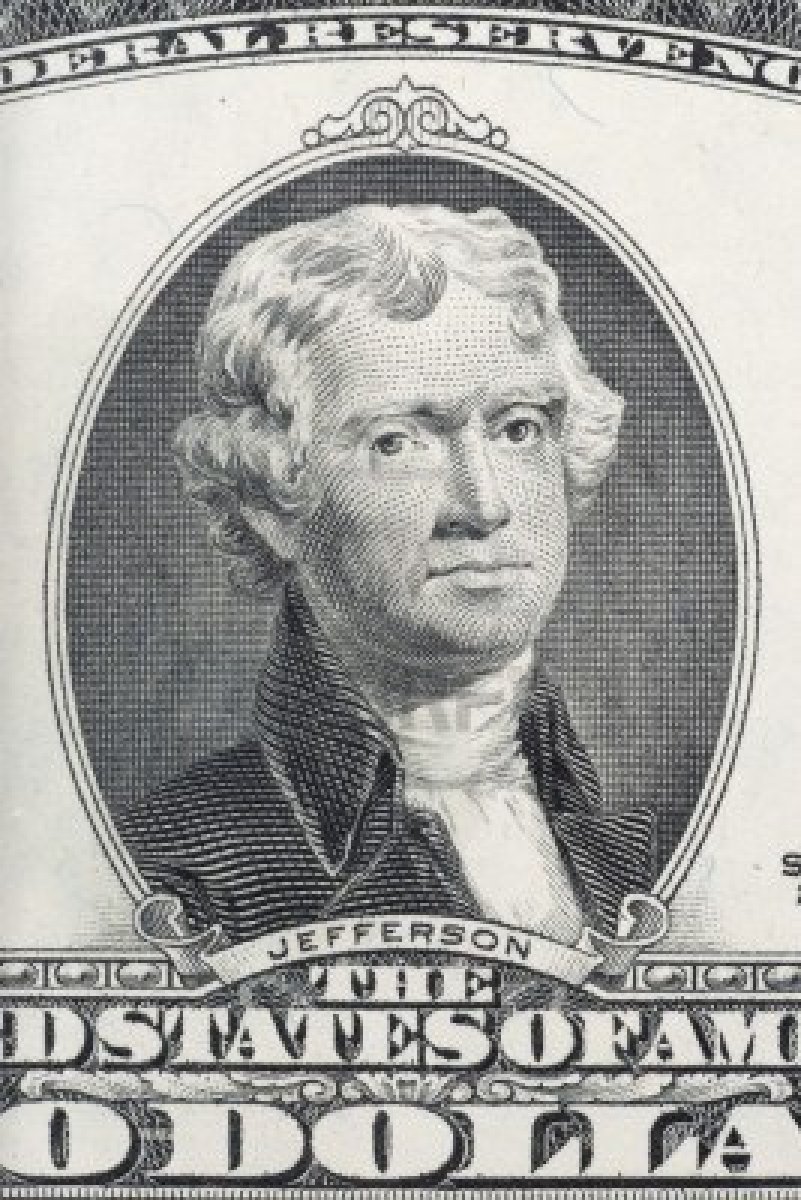
4874028-portrait-of-thomas-jefferson-2-dollar-note“We hold these truths to be self-evident: that all men are created equal; that they are endowed by their Creator with certain unalienable rights; that among these are life, liberty, and the pursuit of happiness.”   

 – Thomas Jefferson

This famous quote by Jefferson, the opening line of The Declaration of Independence, has long been the battle cry for freedom and equality.

Since the time I was a child, I felt chilled by the power and the wisdom in these words. I never doubted for a moment that these words were true because I wanted them to be true.

Is this really true?

Is it self-evident that all men are created equal? What if we substituted ‘gorillas’ instead of men.  Are all gorillas created equal? Are all snakes created equal? What about women? Are all women created equal as well?

This declaration says that all men are created equal. What it fails to reveal is that the instant this life is created, some are more advantaged than others by DNA, parental wealth and upbringing, and the social circles into which we are born.

What of “inalienable rights?” 

Are these natural rights derived from natural laws? Natural law and natural rights are not interchangeable. Nature itself knows nothing of rights. Nature simply creates and destroys and recycles the materials to create again. Where are these “inalienable rights” in nature?

The idea that there are natural rights was constructed by the Greek Stoics. These rights did not apply to nature, but to the social world that man created. The Stoics held that no one was made a slave by nature, but that slavery was an external condition imposed by society. These Stoics were among the first to declare the equality of men. They declared that there was an inner part of the human being that cannot be restrained by either the body or imprisonment. That this inner spark cannot be delivered into bondage was revived by the Reformation and Martin Luther.

Immanuel Kant claimed that natural rights were derived by reason alone, but Kant failed to realize that this kind of reason is also a human construction. That there is a right to life and liberty became a popular theme in philosophic thought.  John Locke declared that natural rights were:  “… to Life, Liberty, and Estate.” [i.e., property].


HitchensonFrancis Hutcheson 

In his Inquiry into the Original of Our Ideas of Beauty and Virtue (1725), Francis Hutcheson wrote: “For wherever any Invasion is made upon unalienable Rights, there must arise either a perfect, or external Right to Resistance . . .  Unalienable Rights are essential Limitations in all Governments.” 

Knowing that one person’s rights were often in conflict with another, Hutcheson said, ‘There can be no Right, or Limitation of Right, inconsistent with, or opposite to the greatest publick Good.”

In an attempt to prove that there are inalienable rights, Hutcheson said, “Thus no man can really change his sentiments, judgments, and inward affections, at the pleasure of another; nor can it tend to any good to make him profess what is contrary to his heart. The right of private judgment is therefore unalienable.”

I find this unconvincing. We have private judgments and opinions, but these do not have to be inalienable. We are not born with opinions or judgments. They come from our experience, our learning, and our social bias.

Thomas Paine (1731-1809) wrote about natural rights as well. In his book Rights of Man (1791) he recognized that if rights were promised by a charter or a constitution, this would mean that these rights could also be revoked. The right would then become mere privileges:

It is a perversion of terms to say that a charter gives rights. It operates by a contrary effect—that of taking rights away. Rights are inherently in all the inhabitants; but charters, by annulling those rights, in the majority, leave the right, by exclusion, in the hands of a few … They … consequently are instruments of injustice. The fact therefore must be that the individuals themselves, each in his own personal and sovereign right, entered into a contract with each other to produce a government: and this is the only mode in which governments have a right to arise, and the only principle on which they have a right to exist.

Benjamin Tucker (1854-1939) was among the first to abandon the case for natural rights and declare that there are only two rights (1) the right of might and (2) the right of contract. The right of might only existed until it was overridden by the right to contract.

180px-Erich_Fromm_Erich Fromm (1900-1980) argued that some powers over human beings could be wielded only by God. If there were no God, no human beings could wield these powers.

An early libertarian view of inalienable rights was laid out in Morris and Linda Tannehill’s book The Market for Liberty. This book attempted to fuse capitalism with anarchy and is known as anarcho-capitalism. They claimed that a person does have a right to ownership over their life and property because they invested a part of their life into it. By doing so, they made it an extension of their life. However, if this person uses force to the detriment of another person, then they lose that right to ownership and they are required to pay a debt: “Rights are not inalienable,” Tannehill wrote, “but only the possessor of a right can alienate himself from that right–no one else can take a man’s rights from him.” The Tannehills believed that there is such a thing as natural rights and that our society would be best off without governmental controls. [See: http://en.wikipedia.org/wiki/The_Market_for_Liberty]

Rights Are an Idea

Logic dictates that rights are an idea, a human construction, not a natural law. Rights are freedoms we have demanded from the established order and we have fought battles to protect these rights by social laws.  Rights are only as strong as the society that grants these rights and they can change with social evolution. Rights and entitlements are those things the social establishment allows us to have, those freedoms given to us by political laws.  They change with the political winds. Nature is free, but we are not free so long as we subscribe to a social contract for our cooperative existence. Our social contracts attempt to displace nature as the rule maker as much as is humanly possible. We are a part of society. We subscribe to social contracts and the laws governing our behavior to coexist in the greater world.  These social laws are local and change as we move forward in time.

TJquoteJefferson said that there is a right to “life, liberty and the pursuit of happiness.”

These are not rights at all, but rhetoric designed to inflame the masses and instigate revolution.

Does nature respect the right to life of the individual?

List examples here: ___________________.

Beginnings and endings are the order of time itself. We exist in order to perish.

The right to life is not a natural law, but a human conception based upon conflicting values. If there is a right to life, then war is a violation of those rights, as is execution and murder. Social values are conflicted by individual interpretations as to what a right to life might entail. The first assumption that is made is that there is a right to life–when nature makes no such assumption. Having agreed to the fallacy that there is a right to life, they must then make exceptions to this right for war, executions, self-defense, madness, irresponsibility, abortion, etc.

How much simpler it would be if God and Nature were not brought in as arbiters of human morality and we accepted the basic truth that we are responsible for our world and the entitlements that we enjoy.

The right to liberty is given to us by society as well.  Society may take our freedom and put liberty at will, should the governing bodies decide to do so.

As to the right to the pursuit of happiness–this is an a priori right that we can give ourselves and establish within the confines of our own minds. We create our own happiness and we may pursue it or not at will. Even if our liberty has been removed and our lives are scheduled to be forfeited, we may still pursue and achieve happiness.

Rights come and go.

They must be earned.

They must be fought for.

They must be accepted into social law to have any meaning at all.

METAPHYSICS

By Kenneth Harper Finton ©2015

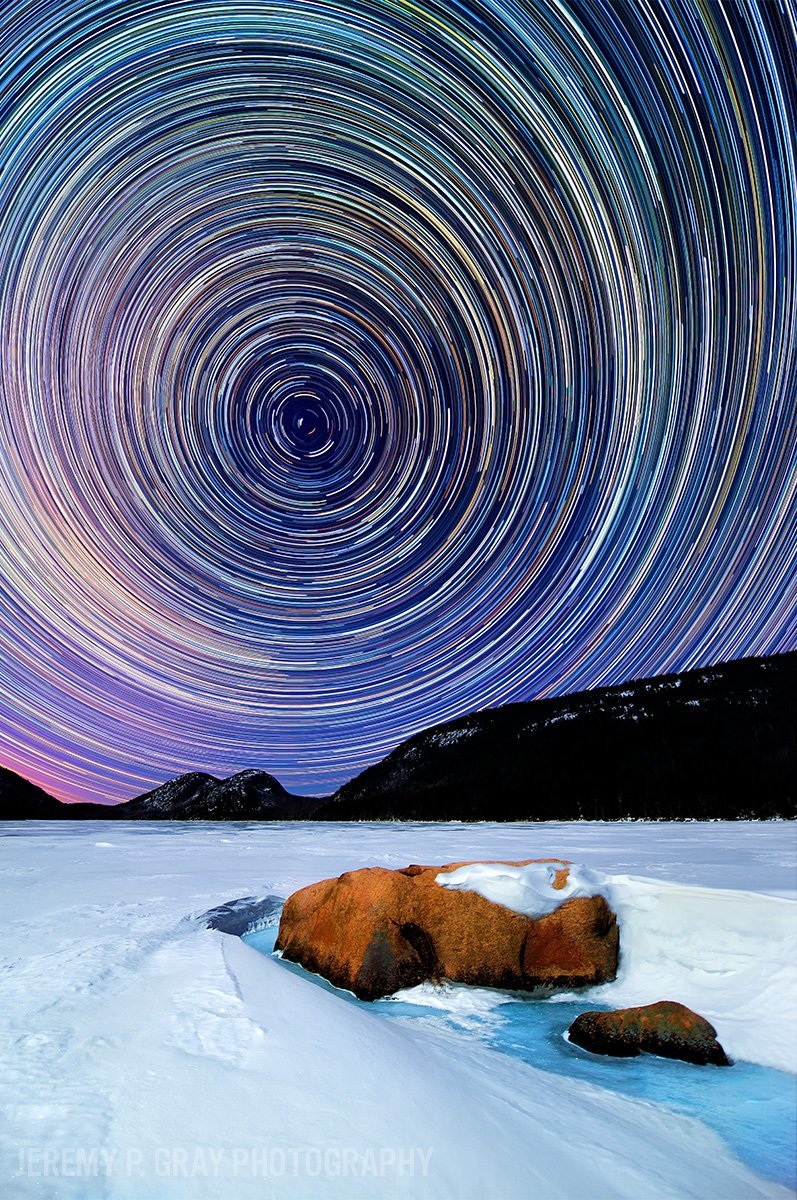
Adding the element of time to light passing stars forms a mesmerizing image of a funnel rhtough time as star trails paint the night sky.

Adding the element of time to light, passing stars forms a mesmerizing image of a funnel through time as star trails paint the night sky.

METAPHYSICS

Metaphysics is the branch of philosophy concerned with explaining the fundamental nature of being in the world. The word comes from the Greek metá, meaning beyond and physiká, meaning physics. Metaphysics is concerned with that which is beyond physics. As such, it is not easily defined or put into words.

A metaphysician tries to clarify the fundamental ways that people can understand the world and the universe about them. They are concerned with existence, objects that are brought forth by existence, space and time, cause and effect and the possibilities that understanding these concepts can raise.

Metaphysics attempts to clarify two basic questions that have bothered thinkers since man became self-aware: 1) what is existence, what is really there, and 2) what is this ultimate existence like.

The central branch of metaphysics is called ontology. Ontology tries to determine the nature of being itself. It asks questions such as, “What does exist? What are things? What are events? What is the meaning of being? And how may being itself be classified?”

Metaphysics predates both physics and science. Originally the term science meant knowledge, but came to be seen as empirical knowledge, a learning that can be deduced from outside sources such as experiments and whose results can be duplicated. Empirical knowledge is different from rational knowledge where reason alone is considered evidence. Empirical knowledge takes an idea, a hypothesis, and performs experiments to prove the idea, reviews those experiments with others (peer review that includes adversarial opinions), then published these findings so that others may duplicate the results.

One would think that the scientific and empirical method of seeking answers is the most correct method, but some questions and ideas cannot be subject to experience and data. These are called a prori, meaning “from the earlier.” Findings based on experimentation and the scientific methods are called a posteriori, meaning “from the later.”

AWARENESS AND THE SENSES

The senses are the source or our information about objects and ourselves. This sensory input is calculated and organized to form the basis of conception. Conception itself precedes or is conceived simultaneously by consciousness, or there would be nothing of which to be cognizant.

Let us define consciousness. It is the state or quality of being aware of an external object––something other than the self. Consciousness is the ability to experience and be affected by an outer force other than the self.

The above is an apriori statement. It is not dependent upon scientific experiments or methods, but on reason and logic alone. One cannot prove consciousness. It is inferred by itself and made obvious by its own presence.

This idea has mighty implications. It places awareness before or simultaneous to the material aspect of ‘things’, acknowledges that awareness existed before or at the same time that things appeared, and places the senses as the method for interpreting the being of the object. At that moment, being is conceptualized, and thereby exists.

We may, I believe, assume that this happens at  the very birth of existence itself. We can deduce that the world is physically composed of repetItive geometric patterns that have mathematical properties. These patterns of birthing repeat continually through nature and the universe. It occurs in the most primitive levels of elemental attraction to the most significant birthing of organisms. This birthing from nothing into a physical being has happened to each of us as we gradually became aware of the world outside ourselves. We know a priori within ourselves this world that comes rushing in at our birth.

See:  https://heliosliterature.com/2014/11/15/the-world-came-roaring-in

Gnosis

Gnosis is the Greek noun for knowledge, from which we developed the English word ‘know’. It is the word ancient Greeks used for the personal knowledge that we can deduce and come to know within ourselves, rather than intellectual knowledge that comes from learning from the exterior, that outside our being. We can deduce this because it has occurred within each of us. We are aware and conscious; of this we are certain. That this gnosis (this knowledge of the self) exists in every existent thing can be assumed. In fact, we have no choice but to deduce and assume this, as we are the only existent things that we can prove to be actual. We know that gnosis is within us on a personal level. We should then deduce that this awareness it must also occur everywhere because we cannot logically prove there is anything but our own awareness and consciousness. This is where logic takes us.

The idea makes us expand the idea of the self. The awareness that created our idea of self exists in every existent thing because it is one dimensional, an element in the basic building of existence that is everywhere at all times. One dimensional existence is but a single point that is everywhere at all times by definition.

Logic and pure mathematics are a priori. They do not depend upon empirical facts to exist. Mathematics and logic exist outside of the perceived and provable methods of scientific experimentation.This does not mean that logic and mathematics are inferior to scientifically objective findings. Both are used to point to findings that scientific methods cannot probe. The two methods operate in their own distinct realms, as different from one another as the sense of sight from the sense of touch. The eye can see an object, but it cannot feel it.

Matter  must  be observed to have a placement in actuality. This should be the lesson learned in quantum mechanics. Objects are observed through the senses, especially the sense of feel, and are pulled together by gravitational and electro-magnetic fields.

From this we can deduce that the first elementary particles that took shape in time and space were made existent by awareness. The experience of awareness and is also an a priori statement that needs not be and cannot be deduced through scientific findings to be correct and true.

FOR FURTHER READING:

It does not take a brain to conceptualize an object and actualize its being, nor does awareness need a brain. See: https://heliosliterature.com/2014/10/11/what-is-in-the-mind-of-god/

OF GOD, MAN, NATURE AND ZERO DIMENSION

????????????????????

Since the dawn of time and certainly since the rise of self-awareness in the human race, people have contemplated the nature of the universe about them. The deepest thinkers among them have come up with many answers and visions from the same basic facts that underlie the material universe. The cave dwellers—writing on the walls—expressed in primitive drawings not only the facts of life that they saw about them but their thoughts about the geometry of existence itself.

A certain unity of vision is capable of being expressed in numerous ways by simple contemplation itself. When one attempts to divide the world into its basic elements or contemplate the very nature of existence itself, thought runs smack up against the dualistic paradox of life.

Democritus, a Greek philosopher developed the idea of an atom around 460 B.C. He asked:  “If you break a piece of matter in half, then break it in half again, how many breaks will you have to make before you can break it no farther?”  This smallest basic piece of matter he called atoms more than two thousand years ago.

1. The Atoms and Cosmology (adopted in part at least from the doctrines of Leucippus, though the relations between the two are hopelessly obscure). While agreeing with the Eleatics as to the eternal sameness of Being (nothing can arise out of nothing; nothing can be reduced to nothing), Democritus followed the physicists in denying its oneness and immobility. Movement and plurality being necessary to explain the phenomena of the universe and impossible without space (not-Being), he asserted that the latter had an equal right with Being to be considered existent. Being is the Full (plenum); not-Being is the Void (vacuum), the infinite space in which moved the infinite number of atoms into which the single Being of the Eleatics was broken up. These atoms are eternal and invisible; absolutely small, so small that their size cannot be diminished; absolutely full and incompressible, they are without pores and entirely fill the space they occupy; homogeneous, differing only in figure (as A from N), arrangement (as AN from NA), position (as N is Z on its side), magnitude (and consequently in weight, although some authorities dispute this). But while the atoms thus differ in quantity, their differences of quality are only apparent, due to the impressions caused on our senses by different configurations and combinations of atoms. A thing is only hot or cold, sweet or bitter, hard or soft by convention; the only things that exist in reality are the atoms and the void. http://www.nndb.com/people/790/000087529/

Democritus lived in a time when the earliest writing had been devised, so we knew what he thought.

images-2From symbols seen in cave paintings and pictographs, it would seem the cave dwellers from many thousands of years ago had already seen the symbolism of geometric shapes, as they drew them on walls and incorporated geometric patterns in their drawing and figures.

Perhaps these geometric shapes are the foundations of existence itself, the first principles of being that existed everywhere at once––a quantum universe.  Awareness came upon itself and recognized its own twin. It created time and space by devising an orbit.

Thoughts of geometric forms are expressed on the walls of a many a cave and cliffside from many thousands of years ago. I see no reason why primitive man could not have come to a similar conclusion. Circles, points, and triangles are two-dimensional representations of mathematical principles that were the first ingredient of being, thus becoming the first experiences.

Democritus tried to imagine the smallest pieces of matter, but later scientists found that atoms are broken into even smaller and smaller pieces.

democritus-1-sizedDemocritus’ theories were dismissed by Aristotle and were forgotten for two thousand years due to of the great stature that Aristotle held over his mimicking followers until the time of Newton. [For a concise history of atomic discovery from Democritus to quantum theory, see:  http://www.nobeliefs.com/atom.htm.]
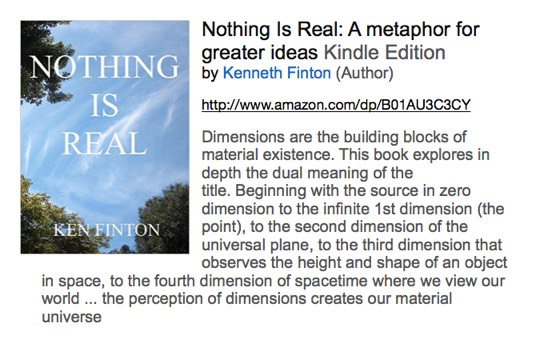
When one attempts to contemplate the beginnings of all things and the endings of all things, paradox comes into being. What was there before this world and this universe existed? What will there be after this universe ends?

The answer, of course, is nothing. Yet, duality is an integral part of existence itself. The thought that nothing exists, shows that something exists in its very essence. The nothing the forms the basis of the world about us, we discover, is the soul of our world and without essence. It is the zero dimension.

Such thoughts sometimes lead us to a spiritual definition of nothingness that from even the most primitive times has been recognized as God or the Void, a unification of all that exists and a recognition that existence is, in its essence, non-material or spiritual. For some, as thought explodes and stills, the elusive basis of reality shines forth in the minds of those who contemplate. If nothing exists, then all is nothing and nothing is everything. If God is a spirit without form or essence, then God is present in every aspect of everything that exists.

This is where contemplation leads us. It is how we interpret this emotionally that gives rise to our moral values and our feelings about ourselves and the world about us.

PARADOX

There is something in us that cannot tolerate paradox.

If nothing exists, then that must mean that God does not exist. That leads to a denial of the zero dimension that forms the basis for existence itself. It is obvious that all came from nothing.  It is so in our own lives and it is so in the universe and perhaps the multi-verses that surround us. We have no recollection before our awareness formed. We were in zero dimension. We pass through life and return to zero dimension. We spend eternity in zero dimension, yet the only thing we know of it is what we learn and experience in our lifetimes––our identities and lives.

NOTHING MATTERS

Negative thoughts can lead to a sense of forlorn isolation where nothing matters but the smaller self that we call our individual identity. We become the only thing that matters. These thoughts can lead to self-indulgence and greed. Much of the brutal history of the world was written by people who thought in this manner.

When the zero dimension is accepted by the mind, then something similar to God not only exists—if we desire it to be so—but everything is God and everything is nothing at the same moment. It is everywhere and in everyone.

Our physical basis is 99.99% space, which is a dimension, and .01% flowing electrical energy whose basis is one-dimensional, ever changing and drawn from the zero dimension where time is not a factor. It is everywhere at once and nowhere at the same instant because it has a single dimension.

OF GOOD AND EVIL

This in itself does not make existence any less problematic. Nature is not only gentle but violent. Mythologies are constructed to explain what we see as evil and good in the essence of the world about us. Because we, as humans, name and value things, we force nature into shapes and patterns that we can comprehend and create a world of good and bad.  No wonder we live in a world of black and white with many shades of gray. We have created such a vision from placing values on limited experiences and emotional reactions to these experiences.

The universe was formed without human values.  The image of the universe that we create is born with the dawn of self-awareness, but self-awareness properly extends to basic forces of nature and the unconscious growth of awareness that has resulted in a form of self-awareness that we regard as the human experience. The urge to be more than we are within ourselves is the driving force of evolution.

Experience itself may be the reason for existence, though existence needs no reason to exist. This might seem to be a strange and idea to some. Many people rebel against this reasoning. Many want to believe that there is a spiritual nature that is essentially good––even divine––and something went astray in the world that produced the terrible things that we experience and see around us. That is the way we escape taking responsibility for what we see as evil in the world.

Is there no other way to view this dichotomy?

If we are all spirit in essence, then we would all be God and the world would be like Heaven on Earth. Yet, it is not. Does this prove that we are not all God? Does this not prove that we are not, in essence, a spirit?

When we look deeper into this, we can see that good and evil is simply another pattern of opposites that form the basis for existence and experience itself. Change is built into the world by time and space and the forming of structures that are never permanent by both design and necessity. Change imposes a beginning and an ending. Both are temporal. Place a value on change—call it life and death, good and evil––it is still temporal.  Reality ‘dwells’ in zero dimension. All time and space are contained within an infinity of zero dimension.

The only actual time is now and all things are present and exist in the now. Many things we thought we knew about this world are false. If zero dimension is the basis for the universe about us, then because we live and experience the world, this experience of ours is the reason for our being.

It is not that we must deny the idea of a past, as change itself leaves traces of the previous states that were experienced by material things that are no longer actual and existent. It is not that we cannot plan a future, as the future is created from the probabilities that are inherent in the now and have not yet been experienced. It is the experience that drives the zero dimension to produce an actuality that we know as our lives, our history and our universe. The world is still what we make it out to be.


Previous parts:

https://heliosliterature.com/2014/12/10/whoarewe/

https://heliosliterature.com/2014/12/21/much-ado-about-nothing/

https://heliosliterature.com/2014/12/26/the-perpetua-lsearcyh-for-truth/

NOTHING

THE PERPETUAL SEARCH FOR TRUTH

by Kenneth Harper Finton ©2014

learn_the_truth

The Perpetual Search for Truth

I have learned not to trust anyone who tells me they possess the truth. I have no doubt they think they do possess truth, but this thinking does not make it so.

A myth is a widely held but false belief or idea. If the world itself is viewed as a myth, then we cannot help but generate new mythologies no matter how scientifically rooted our knowledge becomes.

Myths are associated with traditions and religions. There are twelve major religions in the world today–Baha’i, Buddhism, Christianity, Confucianism, Hinduism, Islam, Jainism, Judaism, Shinto, Sikhism, Taoism, and Zoroastrianism–and all of them have adherents who think they possess the truth.

That alone shows us that truth is subjective.

Religions serve many purposes, but three main human longings form the basis for the hold of religion over the populations: 1) the thought of death 2) the purpose of living 3) the advancement of social constructions.

We, like most of the spectrum of living things, have an instinct for survival. The self-aware human realizes that they will perish from a very early age. People often accuse young people of feeling that they are immortal, but nothing could be farther from reality. They come upon the realization of their potential demise early on and are often highly troubled with the thought.

It is understandable that we wish to continue as long as possible, but sooner of later, we will come to realize that nothing lives forever. We find that fact to be depressing and begin to wonder what the purpose of life really is. “Why,” we ask, are born but to die?”

Enter religion and mythology,

Afterlife–concepts of heaven and hell, the idea of eternity Nirvana or unity with the void– are common components of religious belief.

Some people desperately want to believe that they and their loved ones can persist long after their time on Earth has come to an end. Religions and individuals develop mythologies to satisfy this deep-set urge to persist and continue their personal identities in another place and time. In scientific circles, ideas of multiple or alternative universes where other forms of ourselves exist in other planes seem to satisfy the need for perpetuation in some people. After all, in infinity are not all things possible?

Potentiality, however, is not the same idea as possibility. It behooves us to remember that infinity is in another dimension. In nonexistence nothing at all is possible. Again, we meet with duality and the limitation of expression. The preceding sentence has a double meaning, as nothing is not only possible, but the basis of all things.

Since we obviously have an identity, then we exist and therefore we are not Infinite. We are temporal beings. The price of existing seems to be the possession of a beginning and an ending.

It is hard to fault people for these beliefs. It seems so natural to want to persist through eternity, despite the likelihood that we would grow so bored and stagnant that we would want to curse of our immortal existence after an unreasonable amount of time had passed.

Too many wonderful lives end too quickly in our short life spans. It is the stuff of tragedy, confusion and the ingredients for despair. Our emotional human natures call out for a scape goat for the horrid things that happen to us and those around us.

The first in line for blame is generally God, the Devil, or Mother Nature–social constructions that we have made to explain the harshness of reality in our short,  lives filled with both tragedy and comedy. Religions teach us not to blame God for the evils that occur, but many allow us to blame the Devil. Mother Nature is concerned with nurture and growth, so she is not to blame in many religious dogmas.

So what if the Earth opens up and swallows us whole or the currents sweep away the innocent child. So what if the tornado cripples the town or an accident breaks the back of the best athlete your village has ever known, turning him into a paraplegic vegetable. It is not the fault of Mother Nature. It is not the fault of God. “Who are we to know the ways of God,” is often the answer we are asked to swallow.

Satan is the ultimate scape goat in the Judaic/Christian belief system. There is something in us that wants to define and personalize evil and hate. What better construction for the ages than to have a benevolent and caring father figure at war with the unholy forces that cause harm to ourselves and our loved ones?

Thus we build our myths. God, the father, is built upon the structure of the nuclear family. Satan is the source of all evil.

So what is the reasonable explanation? What new myths should we construct to explain the inhumanity of man to man and the eternal war against the mechanisms of nature? Shall we create a myth of alternative universes or parallel worlds? Should we speculate that Infinity all is possible, including the recording and storing of all identities and experiences? Surely this is a possibility, as in endless time most all potentiality becomes possible.

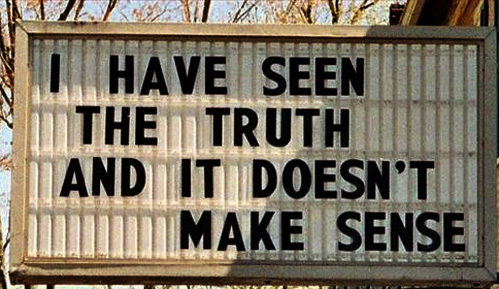
truth_sense
We can only speculate upon the reason, if any, for existence to be apparent. The big question of why there is anything at all when nothing would do so well is answered with the realization that nothing is real but the infinity of the zero dimension.

Yet, there is the question as to why a world, be it real or illusion, exists at all.

The answer, of course, is that it exists and does not exist simultaneously. There is only experience and the awareness that makes that experience possible.

Infinity precipitates all things. Nothing becomes real, because nothing is real. Once experience begins there is no stopping it. Once movement defines space and contains enough duration to be felt and observed, an entire universe is born.

Experience itself might be the purpose of the observable universe, if it must have a purpose at all. However, there is no need for a purpose. Purpose is a human construct and value. Why would the universe need a purpose? Experience is in itself enough. Experience preceded our human values and will succeed and outlast our values.

The human mind is born without experience. Experience is learned from trial and error. Would not the universe itself, born without experience, do the same?

What happens if experience comes to an end? What happens if all motion is stilled and all space and time disappears? Does the universe itself end? Will experience begin again as it did in a beginning? Or did it never begin in the first place?

The only way out of the conundrum is the latter. It never did begin and it will never end because it did not begin. This thought seems to be the only logical answer. Nothing exists is a dual term, not an expression of the ultimate nihilistic thought. Because nothing exists, we have an existent universe.

If experience is the source of all events, all events are experience. They carry no blame, no cause, no system of evaluation. Being is for the sake of being and all things that we emotionally react to are not purposeful, but essential for the experience of being.

How, we might ask, could it be any different? I can see no way that it could be different. As in life we have to deal with the good and the bad, the evil and the good, so does the universe at large.

You might ask yourself what you would change is you were in charge of designing the universe. If you were the creator of all things, what would you change? Would you make things so we all beings live forever? Would you eliminate pain and suffering and man’s inhumanity to man? Would you prefer the constant temperance of a summer’s day to periods of tornados, hurricanes, earthquakes and tsunami waves?

Personally, I would make a small change, should I design the world. I would prefer that dogs live as long as we do. I have always found it absurd that elephants and parrots and turtles have century long lives while dogs are lucky to make it to age fifteen. Yet, even that might be too much to ask. By loving our pets and losing them, we are prepared for greater sacrifice and sorrows to come later. If we are to live in this world of gain and loss, we must experience both. So it is with the universe at large.

The world changes about us and we change with the changes. The sun shines on all and the rain falls on everyone. Some of the most destructive forces in the universe have created the temperate planet on which we live today. The Earth itself was struck by a sister planet the size of Mars about three and a half billion years ago. That collision almost destroyed the Earth, but without that occurrence, we would have no moon.

Without the moon we would have much smaller tides only pulled by the Sun. We would have much shorter days of between four and eight hours of daylight. We would have much longer years because it would take well over a thousand days to orbit the Sun. We would have much darker nights with our shortened days without the reflected moonlight to shine upon the planet. Without that cosmic cataclysm life would be much different on Earth, if it existed at all.

A universe without change would be impossible, as change is inherent in the very design of movement. Movement begets change. Change begets loss. Loss begets sorrow, sorrow begets new joys.

Infinity is unknowable. It is the zero dimension. One dimensional entities exist everywhere at once. Two dimensional entities begin the march of time. Three dimensional entities begin the march of space. Four dimensional entities combine time and space into events.

Awareness is essential for dimensions to exist. The zero dimension must then be the primitive form of eternal awareness that makes events possible. It contains no mass nor matter nor energy. Infinity has no place in time, no place in space, yet it is the source of all things that become manifest and worlded. The mathematical patterns and physical laws that govern the interactions of things must either precede existence itself or they are discovered and made manifest through trial and error through the eons of time that infinity encompasses. It is possible––even likely––that mathematics and physical laws are two dimensional entities, like lines and circles on a flat plane that appear everywhere at once and establish the rules for further dimensional events. We write equations in two dimensional spaces and conceptualize them in three dimensions or more.

Dimensions are the blueprints and scaffolding in the building of existence itself.


http://www.amazon.com/dp/B01AU3C3CY

NOTHING 


MUCH ADO ABOUT NOTHING

by Kenneth Harper Finton ©2014

Making Something of Nothing 

QUANTUM PARTICLESWhen we finally realize that we live in a quantum universe where time is non-existent, then we can begin to assemble the conceptual tools to understand why we perceive a past history and a potential future. If all is in the now, then all time past, present and future have to be included in that eternal moment.

In an eternal now, time is not a factor. Space and time is created by particles taking on mass traveling at less than the speed of light.

The mechanics of this concept are like quantum particles in nature. The past materializes through observation and measurement and is experienced from different points in space-time. It is not dependent upon the individual perception of our limited waking consciousness, but upon the awareness that perceives and feels material being. In fact, the addition of awareness to the primal primordial soup of existence is the big game changer.

In my understanding, awareness is essential to the very making of the material world. It is not a product that comes into existence gradually as nervous systems are developed, but an integral part of the building blocks of natural phenomena. With consciousness added, value is determined––positive values that attract and negative values that repel.

The attraction of elementary particles to one another is the same pattern as the natural law that is seen in feelings and love.

Feeling is the sense that allows two objects to recognize and react to one another. SELF REFLECTIONA point must know itself in order to be a point at all. A point has a potential for awareness, but there is nothing to be aware of. It takes an effect from another point for awareness to feel itself. That effect creates a polarity which sets the stage for movement.

In very simple terms, movement eventually creates space as the points become lines and eventually recross their own points of origin and become circles. The awareness that was present in the point is now present in every every possible place the point found itself in this new dimension of space-time.

The only way we can have space-time is to be aware of it. Without awareness, it would not exist in any dimension. This awareness is not a thing. It is almost impossible to define because it is not a thing. It is not a spirit or anything tangible. It is not energy or mass, but that which makes energy and mass possible in the worlding of the universe.

Space-time is created by the point intersecting its own starting point, creating an orbit.

A line is simply a point that mFive_point_stencil_illustrationoves, adding the dimension of time–which is measured by the same awareness. The same point is made manifest over and over in the appearance of the line, the difference being the dimension of time and eventually space. This is the secret of duality. The same point is everywhere at one moment.

There is, then, a universal field, which is a universal sense of feeling based on attraction and repulsion that permeates and creates all things. This sense of feeling is present in these same elementary particles and the feeling becomes known by an awareness that is timelessly eternal.

This timeless and eternal awareness is the source of things. By allowing space and time to be measured, awarenesss enters into existence––a process that occurs  simultaneously and eternally in many places at once. The perception of movement and the feeling that influences these particles and waves results in space-time.

Physicists have been looking for the Higgs Boson Field that they believe allows the that slows the pure energy of photons to slow enough to be imparted with mass. This slowing allows an environment where wave particles can slow enough to obtain mass, congregate and join together.

Their formation produces a sense of space and time. The Higgs Boson particle is often called the God Particle. Recent experiments in particle colliders actually seems to have found this particle, but there does seem to be more than one form to this particle that creates a universal field called the Higgs Field that allows energy to become mass.

Space-time exists in an eternal now, a pseudo moment that holds all that ever was and that which will ever be. Because time itself is relative to movement and speed, a photon begins and ends at the same moment, much as the Higg’s boson does. We  measured the duration of a moment differently  because we measure the duration from our viewpoints.

As humans, it appears to us that there is a past and a future because we live and operate in a time and space that travels at a particular speed and we view ourselves as being in a particular region of space-time.

We are able to discern the artifacts and traces left by events that occurred in what we see as ‘then’, even though it takes place in the eternal now. We are in differently defined sections of space-time experiencing some of the infinite numbers of experience that can come to being in an world of infinite possibility.

Space-time occurrences are not defined by us, but by awareness. What we define as individuals is infinitesimal. The part does not define the whole. The whole defines the part.eternity symbol

While this eternal awareness is observing and creating that which we see as being in the past, traces of the particles and waves from that observed portion of time and space can be seen from other sections of space and time can be  that also exist in the eternity of now. Our perceptions create the world we live in just as the perception of the world we live in creates us.

The universe can be viewed as a perceptive awareness that behaves in a quantum fashion. Its only task is to experience and create new experience. It is everywhere at once and nowhere at the same moment. It both exists for us and does not exist at the same moment and there is only that one moment. Nothing came before it and nothing comes after it.

That simple point of awareness that exists everywhere is not aware until there is another point of which to be aware.. One point is dark and one point is light. They must appear to be different to distinguish themselves from one another.

This light and dark energy slows to become light and dark matter in a universal field we can call the Higgs Field. By passing through the Higgs Field, they take on mass and create a space-time continuum.

The dark matter is invisible and cannot be seen because it does not react to light matter. It is not sensitive to light, but to gravitational attraction, the essence of feeling.

This gravitational attraction is made manifest by awareness. One primal form of awareness is the gravitational attraction itself.

Consciousness has no mass. It only needs an awareness of another and in that awareness of another an entire universe is built. It exists in potentiality and comes into existence dependent upon the point of space-time we find ourselves materialized within. Individually, we are but one small facet in the infinite number of potentialities that consciousness makes possible.

This process does not begin, but it has always been in the moment we call now.


NOTHING