IMPENDING AUTUMN

by Slo-Man ©2014

dsc02818.jpg

Now is the season for death. A death that will bring life once again, but for that life we must die now. This is the season for love. A love that will take you further apart, but for that love, this love must die.

The present is doomed. The past misunderstood. The future? The future is known. The future is death. The thing we call love is filled with the thing we call hate. The one and the other are equal to the eye.

The chill winds blow and the ill winds whisper their sweet murmurings of deceit. The body cries how! How did this happen? Did you not see the signs of decay? The glimmer of gathering gloom, the lengthening shadows?

Leave now, she cries, as the red bleeds from the trees and the swirling miniature tornadoes chase your feet, scampering puppy-like just out of reach of your toes.

The wind tears at you and the eyes tear. You turn away hiding the hurt, your voice is silent, the shoulders are straight, painfully straight. There is warmth somewhere, far away.

The first signs of implosion are not seen, not felt. The world is just a place where happiness is earned, where love is not a right, and sadness runs free every day.

The past doomed you. The present buries you. The future, when it comes, will relieve you. Think of the past with love, think of the present with sadness. Think of the future with no regret.

Let the red bleed from the trees. Let it show the way. Let the light change from a glorious brilliance to a dull grey. Let it all happen. Let it flow with no hindrance and no let.

Now is the season for death. A death that will bring love once again, but for that love we must live now. This is the season for life. A life that will take you from love, but for that life, you cannot die.

SloWord's avatarSloWord

dsc02818.jpgNow is the season for death. A death that will bring life once again, but for that life we must die now. This is the season for love. A love that will take you further apart, but for that love, this love must die.

The present is doomed. The past misunderstood. The future? The future is known. The future is death. The thing we call love is filled with the thing we call hate. The one and the other are equal to the eye.

View original post 244 more words

ALMOST FOREVER: a Christmas Story

Ken Finton's avatarKenneth Harper Finton

by Kenneth Harper Finton ©2014

Dead-End-Good-Ways-To-Make-Money1

It was Christmas Eve.

Sarah was alone in her apartment.

Fred had left a week ago.

The holiday season had all the ingredients of a miserable experience.

Sarah has just turned forty-five.

She felt that her life has been spent giving a lot and not getting much back.

She wondered if that was her own fault.

“Am I deluding myself?” she asked. “Have I really given enough?”

Fred had told her she was arrogant just before he walked out the door. “You always think that you’re better than me,” he had said.

She had been accused of arrogance before Fred was around. Roger, her lover and dance director had complained of her air of superiority. She recognized there might be some truth to it.

However, the difference between arrogance and truth is often a fine line that depends on the delivery of the message.

Sarah…

View original post 850 more words

WHO ARE WE?

by Kenneth Harper Finton ©2015

t032art

Who am I? Who are you?

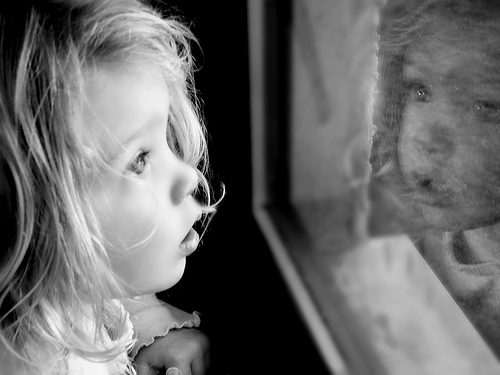
We limit our identities to what we think is our personal selves because that is the way we think at the moment. Our identities are composed of complex thought and memories of events past, present and yet those yet to be perceived.  When we look into a mirror we see only a portion of our self. Neither that self-reflected person in the mirror nor the self buried within us is our whole being.

Shakespeare said, “All the world’s a stage, and all the men and women merely players; they have their exits and their entrances, and one man in his time plays many parts.”  If we are the dream and/or the dreamer, if the universe about us is a play.

The Hindus will tell us that all is illusion. Physicists will tell us of the quantum world where existence only comes to be when it is observed.

images-2

These are metaphors for a greater idea. Calling this truth and wrapping it in holy cloth has been done for so long that people have become quite leery of the term.

To be objective, there must be a subject and an object, but ultimately, if the object and the subject are the same, then neither are truly substantial. That is why some people believe that we live in a world of illusion.

Our personal life is always struggling to find the balance between the light and the dark, the good and the bad, the happy and the miserable.

Some say that there is such a thing as enlightenment. Be it in a dream, a trance, a meditative revelation, or under the influence of a mind-altering drug, many of us have felt the awesome presence of that which is infinitely complete. The state of sleep is an altered state of consciousness from the waking consciousness. We often remember little or nothing of the time when we sleep. Thanks to the unconscious, the body continues to function automatically. Sleep is one of the continuing patterns of our conscious selves, putting us in direct contact with nothingness and dreams.
Unknown

Enlightenment is good, but whenever we realize that we are not who we thought we were, we come back down to the same old problems and feelings we had before we discovered that our being might be some kind of an absurd trick or an illusion.

The devil is in the details, as they say. Our bodies require maintenance. Because enlightenment is a timeless experience, once it has been experienced we must return to the previous patterns of out individual lives. We  identify our being and become ourselves, the product of our lifetime of experiences and interactions. Like it or not, we must live in a temporal world. In the end, as in the beginning, each of us has a personal world.  Some of us may want to change that––and it will change whether we will it to be so or not––as change is the motion of the universe.

All is a leap of faith. Since we cannot logically prove anything other than something is being observed and this something is thinking, we call it ourselves. Even that is a leap of faith, as we cannot prove it is us doing the thinking and observing. This can only lead us to a metaphysical approach. The potential of awareness is the only thing that does not need time nor space to be.

impossible triangle

Do we live in a dual world of illusion and self reflection?

The practical aspects of existence must matter for our own survival and thriving.

We must invent mechanisms and theories as to this being-within-ourselves as we are intelligent beings seeking to understand the mechanics of our memory and consciousness.

Is it illusion? Are we are just images on the great screen that shows the universal movie. The pain feels real … the hunger is palpable, the evil is just as horrifying.

This is the price of being. Would you rather not be? In some strange way we live in an nonexistent universe. How could it be otherwise when time is a ghostly illusion, the now is eternal and contains all that there ever was?

Yet, even if we realize that all is but experience that is experienced in the now, the realization begs answers as to how our personal and communal observations create the time and space that leads to the universe that we behold and study. In other words, though we can realize that we are in some ways both the dream and the dreamer. The history of how we passed through a continuous now to create the memories of ancient pasts as well as a continuous personal history remains foremost in our individual and collective lives.

images-1

Artist Lorado Taft Year 1920, dedicated 1922 Type Concrete Dimensions 7.3 m × 38.66 m × 7.16 m (24 ft × 126 ft 10 in × 23 ft 6 in) Location Washington Park (outdoor), Chicago, Illinois

Lorado Taft’s statue of The Fountain of Time is correct, Father Time stands still as the   world and its events parade before him.

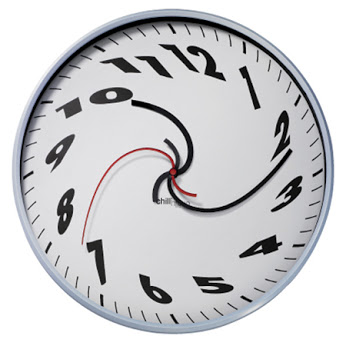
Time is relative. It is relative to speed and motion. The now moves through time and time moves through the now. There has never been anything other than a now and there will never be anything other than a now. Both what we believe to be the past and the future is contained in the now.

How can this be?

As you read this paragraph, concentrate on the words before you as you read this line. You will notice that in your peripheral vision there are blurred lines that only have meaning when you look at them in the present. These blurry lines are like the past. The past is like the words you have already read. To make it come alive, you have to retrace and bring the now into the previous patterns of letters and vowels and words that created meaning and understanding.

The blurry lines that you have not yet read come after this line that you are reading now. That is the way the future and the past is laid out. It takes experiencing them in the now to bring them into consciousness. That consciousness is eternal, all things are within it, existing and not existing at the very same moment.

It is a more a quantum world than we realize.

There is a reason for this.

There is a reason that the only time is now. How could it be otherwise?

clockWho has ever lived for a moment in a time that was not NOW?
No one.

The reason is both absurd and obvious.

Before there was time and before there was space, what was there?

Before the universe existed and after the universe is gone, what is there?

If you answered nothing, then you are correct, but you may not know what nothing is, because nothing is No Thing.

There are no things in nothing. Nothing is infinite.

It is a place where there are no selves.

The thing that has confused us for generations is that nothing exists.

Nothing exists is where duality meets existence.

Nothing ever existed and nothing exists now.

That is the very primary tenant.

Because of the dual fact that nothing exists, we have an entire universe to explore.

images-3

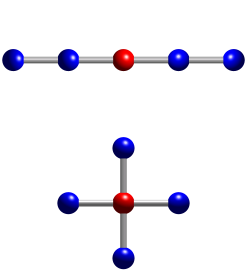
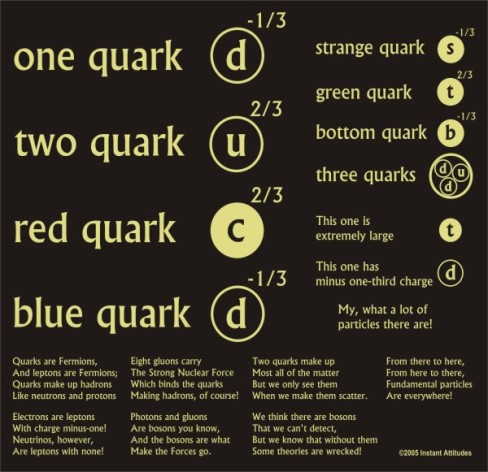
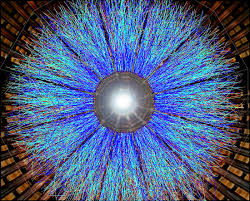
If all the matter in the universe was compressed into one point, that point would be one dimensional,existing everywhere at once. Zero dimension is infinity. Infinity is eternal. A singularity is one dimensional.

The world is always changing because charged particles and wave forms become aware of one another and feel the presence of one another. They do this in a manner that Alfred North Whitehead calls ‘prehensions’. The term “prehension” indicates that the perceiver actually incorporates aspects of the perceived thing into itself. The term is meant to indicate a kind of perception that can be conscious or unconscious, applying to people as well as electrons.]

There are positive attractions and negative repulsions. We humans believe that feelings are unique to our brains and nervous systems, but the essence of feelings is reflected in primary particles, waves and magnetic fields.

Love is a primary feeling and is thus a universal force. In its simplest form, it is an attraction between two objects that fall under the gravitational pull of another. Is this why John Lennon wrote: “Love is all you need.”

images-4

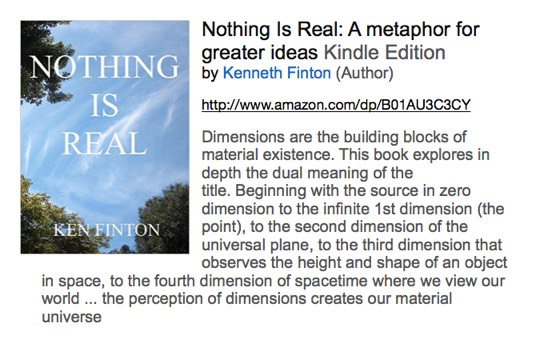
John Lennon also wrote: “Let me take you down ‘cause I’m going to Strawberry Fields. Nothing is real. Nothing to get hung about.”

Did he mean no thing is real? Did he mean that all is an illusion? Or did he mean that nothing is real, that real is actually nothing? Or do they both mean the same thing?

Reality is a misused word. Diffent dimensions create different realities.

250px-Warp_and_weft

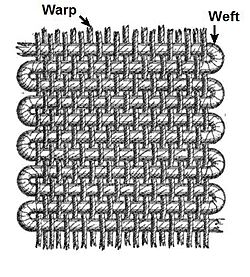
An example: The warp and weft of time and space are entwined in one another. The now is the weft, the stringy thread of time, the string that flows through universal fields eternally, We use it as a measurement by observing it and declaring it to be a reality. Being is the pattern woven from warps in space that the stringy thread of time becomes attracted to and as they wind into into one another.

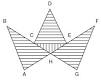
As soon as there is one, there is two because there is an inside and an outside. That makes two. This is what creates duality. In order for the two to conceive of an inside and an outside, there must be another dimension. Timages-1wo lines cannot come together without a third line, as in a triangle.

The third line is essential for any existent closed space. The simplest form is the triangle.

One line can only come together as a circle. This too encloses the space and requires an inside and an outside. In order to see the circle, one must transcend it. A third dimension is needed. A circle within itself is not even two dimensional, but has no dimension at all.  A circle within itself cannot know that it is a circle. It can only be seen from above and that adds a third dimension.

cropped-clifford-torus.gif

It takes a dimension to make an event of a singularity. If it simply had but an inside and an outside, then it would be like two lines that can never come together to enclose a space. Think of the world as a web of energy, vibrating strings of energy that moves slowly enough to create a sense of time and dimension. With the addition of time––the symbolic and theoretical line can cross its own starting point, creating an observable measurement. The same point is observed in time moving in curved space creates an orbit that forms the basis of matter.

Awareness recognizes an object by feel through the orbiting of its electrical charge–positive or negative. Elementary particles become a palpable form through the sense of feel and magnetism, but it takes a background of awareness to materialize and organize an event. The world of being is, in essence, an informational network


Follow Ken at kennethharperfinton.me

NOTHING

THE HEAVIEST THING

by Matt Stancel ©2014


il_570xN.387178576_b5w2

I stepped out of the camper, its metal stairs squealed underneath size nine boots. My dad followed, and we got into his red pick-up. We traveled down a bumpy trail that stretched along the side of a clearing and then penetrated the woods. The rustic road led to a clear-cut spot where a timber company was pillaging the forest during the week. On weekends, however, the landowner allowed my father and some friends to hunt.

We exited the truck, each grabbing a backpack, rifle, and orange vest to ensure that other hunters who might be in the woods didn’t get deer fever and shoot us due to some hallucination.

Since I was eleven, and despite my father’s warning, I felt the need to walk along each downed tree like it was a balance beam all the way through the forest’s bald spot. Then I followed him into the thick brush, and we hiked about a half mile through heavy woods to a stream, into which we relieved ourselves. We crossed the water on another log, and I asked my dad if we could rest a moment before we climbed the steep hill that led to his deer blind.

Though his expression revealed he was disappointed to wait, he muttered, “Okay, just for a minute.”

maxresdefaultI leaned against a large rock protruding from the ground. It was at least eight feet tall, and being still a child, I imagined myself endowed with superhuman strength. I pressed against it, trying to feel a budge, even an inch, to no avail.

“You know most of that rock’s probably underground,” my father stated. Attempts to move the impossible stone made him smile for a moment, but he decided we’d wasted enough time and told me to get moving up the ridge.

My thigh muscles burned and throbbed by the time we got to the blind. It was basically a four-foot tall fence-like structure my dad had made of limbs, bushes, and leaves. Two folding chairs were positioned against a tree behind the camouflage wall, and they allowed us to sit in relative comfort while we waited for our prey.

I rested the rifle across my lap and surveyed the woods around me. This was to be my main pastime until dusk.

Occasionally squirrels would entertain us by chasing each other through the trees, and we watched three turkeys trample within about fifty feet of the blind. They eventually stomped away, and I spent a few minutes contemplating how forest animals could be so noisy but I had to sit freezing in silence.

My father nudged me and slowly pointed to our left. About a hundred yards away, a brown shape stepped cautiously between trees. It was the first time I’d ever actually seen a deer in the woods. I rested my rifle on a branch and looked through the scope. Pulling my gun off of the makeshift rail, I whispered, “Doe.”

She was joined by another female and a fawn. They moved quickly and quietly. The three were nearly out of sight when I noticed another deer trailing behind. I put my scope on it and counted eight points on a set of antlers.

“Buck?” my dad asked.

“Yep.”

“Remember where to aim. Wait for a clearing.”

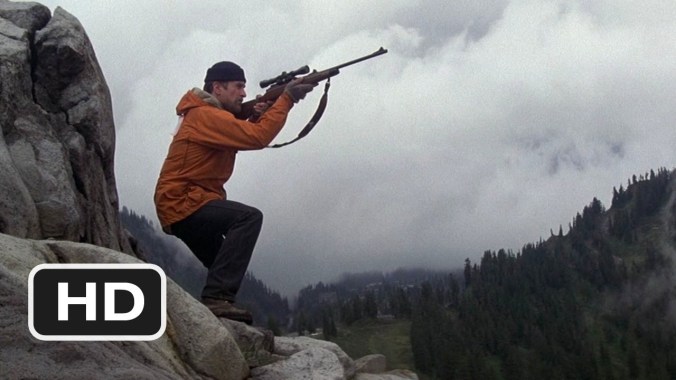
image-06-700x393I was shaking with excitement, and I struggled to breathe. Feeling a hand on my shoulder, I heard “Steady” over the pounding pulse inside my ears. I took a deep breath, held it in, and pulled the trigger.

The deer’s hind legs flew into the air, and its hooves pointed momentarily at the sky, then fell limply to the ground. It tried to take a step with a front leg, then collapsed.

We stood and I immediately got a pat on the back and a handshake. My father had a bigger smile than I’d ever seen on his face, and we quickly walked toward the fallen deer. Dad pulled out his revolver in case it was still alive.

“You shot it right in the middle of the spine, there’s almost no blood,” he said.

“Uh,” I replied, staring into the glassy, black, vacant eye of the brown animal. Faced with the result of my action,I wanted to cry or run away, but my legs felt like they were rooted deep in the earth. All of my nervous energy wore off immediately, and I did my best to nod responses to my father’s questions.

Steam rose from the broken animal, aboy-nownd I dreaded the future. Pictures would be taken, the experience would be recounted, I would have to smile when speaking of the act, but what truly concerned me at that moment was the grim fact that I would have to drag this terrible trophy, this heavy thing, out of the woods.



Hi, I’m Matt. I write flash fiction, the occasional poem, and stories both long and short. I have a novel currently available on Amazon, the proceeds from which are being given to a friend with huge medical bills. You should buy two copies. http://www.amazon.com/Burn-This-Novel-Matt-Stancel/dp/1492792217/ref=sr_1_1?ie=UTF8&qid=1405823757&sr=8-1&keywords=burn+this+novel


541e4e2f7913db2e3a538649ee9f3e70


– See more at: https://scriggler.com/Profile/matt_stancel#sthash.5VSGihYx.dpuf

CLAUS VS. CORPORATE PERSONHOOD

Ken Finton's avatarKenneth Harper Finton

SANTA CLAUSE ACCUSED OF NOT TAKING PAY FOR DELIVERY FEES

by Kenneth Harper Finton ©2014

Santa Claus

Claus checked his ledgers in Quickbooks. It was not a task he enjoyed.

He fondly remembered the days when the smoke encircled his head like a wreath. He quit smoking a pipe a decade or two ago, but he still missed the pungent aroma of his tobacco. What he did not miss was the sore tongue and hacking cough he would often get.

When Christmas was taken over by the corporate gift manufacturers he had shaken his head and withdrawn in total disbelief.  “How could they corner the market on gifts so quickly,” Claus remembered saying.

He had long since had to retire much of his elf force. The elves just could not compete with the prices the corporations charged for general gifts of all shapes and sizes. Soon metal toys replaced his home-made-by-elfen-hands wooden…

View original post 525 more words

PISSED LULLABIES

by Joelly Cameron ©2014


100823-F-JI436-005


You lay before me nicely decorated.

Despite  that you were a weak, and doddering sponge of a man.

One who was too undependable to demonstrate love and compassion.

I review your constant state.

As my heart exhumes the recitals of your frailty and your miscarriages.

Though a transient, your face is kindred.

I regret that I only knew you through stories of pissed lullabies, desecration, and verbal vomit.

Somehow, I lost track of the letter you sent.

The small cursive print was unclear despite,

that inside rest a diamond concealed in a  small velvet envelope.

Adolescent hands before a mirror clung to its fluid matter.

Yet, it symbolized squat, zilch…nothing.

My character twice descended.

Our paths now thwarted permanently.

And for that I am mournful.

This Purple Heart pinned neatly to your chest,

Is inconsistent with the abundance of pollution you helped create.

Your disdain nested itself among us…those left to grieve you…

The ones you ponied up and passed out.

As the flag is presented and folded.

I am brought back to the here and now.

Forever is not mine to conserve,

For I cannot bleed over a stranger.


02b5ac7b7857_caa214f1-5723-4f0d-a552-6bdc0c3b9ab7


The Laundry Maid

 Joelly Cameron

Joelly Cameron's avatarAlphabet Soup Minuscule

You lay before me nicely decorated.

Despite  that you were a weak, and doddering sponge of a man.

One who was too undependable to demonstrate love and compassion.

I review your constant state.

As my heart exhumes the recitals of your frailty and your miscarriages.

Though a transient, your face is kindred.

I regret that I only knew you through stories of pissed lullabies, desecration, and verbal vomit.

Somehow, I lost track of the letter you sent.

The small cursive print was unclear despite,

that inside rest a diamond concealed in a  small velvet envelope.

Adolescent hands before a mirror clung to its fluid matter.

Yet, it symbolized squat, zilch…nothing.

My character twice descended.

Our paths now thwarted permanently.

And for that I am mournful.

This Purple Heart pinned neatly to your chest,

Is inconsistent with the abundance of pollution you helped create.

Your disdain nested itself among us…those left…

View original post 40 more words

IN THE EMPTYING

by Tom Atkins ©2014

Tom Atkins's avatar Quarry House

round barn

In The Emptying

The barn is empty,
slowly stripped of the debris
that has crept in for generations,
the piles of broken things,
of abandoned things,
of useless things, not wanted,
no longer cared for,
but still clung to,
things of theoretical value,
and only that.

It has taken ages to pry these things loose,
to admit their uselessness to your life,
to confess your clinging
to dead things,
and begin at last to expose them
to the light
and let them go.

Some will be claimed by others,
tinkers perhaps, with a will to wrestle
them back to usefulness,
or to other collectors of the broken.

And in the giving, in the emptying,
you are the winner, for your old barn,
once so full there was nothing
is suddenly full
of possibility.

About this poem

We do this in our spaces. We do this in our lives.

Tom

View original post

PROCESSES

by Bill Yarrow ©2014


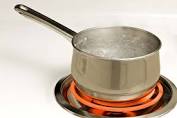
How to Boil Water  Unknown

Get a pot.
Fill it with water.
Place it on the stove.
Turn on the flame.
When tiny bubbles appear and grow wild
Voilà!
It is done.


How to Cook an Egg

Unknown-3
Read my poem “How to Boil Water.”
Drop an egg in it.


How to Eat

Press your food Unknown-1into the hole
just below
your nose.


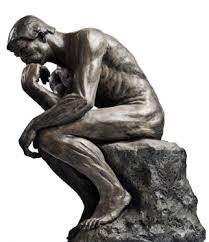
How to Thinkimages-1

Pick one thing
one thing you’ve been told
Pick this one thing you’ve been told
and pick
and pick
and keep picking at it
until the scab of unknowing
falls off.


How to LoveUnknown-2

Sweep into one corner
all your ego.
Set a match to it.


How to Dieimages

Watch those who live in your neighborhood.
Watch them closely.
Copy what they cease to do.


Bill Yarrow is the author of THE LICE OF CHRIST (MadHat Press 2014), INCOMPETENT TRANSLATIONS AND INEPT HAIKU (Cervena Barva Press 2013), POINTED SENTENCES (BlazeVOX 2012), FOURTEEN (Naked Mannekin, 2011), and WRENCH (erbacce-press 2009).

Bill Yarrow, an editor at the online journal Blue Fifth Review and Professor of English at Joliet Junior College is the author of “The Vig of Love,” “Blasphemer,” “Pointed Sentences,” and five chapbooks, most recently “We All Saw It Coming.” “Against Prompts,” his fourth full-length collection, is forthcoming in 2018 from Lit Fest Press.

http://billyarrow.wordpress.com

https://scriggler.com/Profile/bill_yarrow

THE TALE OF MAN


by Tomaj Javidtash


aaa0a957-3ea1-41e5-8be0-c3a8efa2d2f1


Man wakes up in the middle of existence; he cannot remember how and why he ended up here. He doesn’t remember anything. Unable to remember, he decides to forget, to forget that he has forgotten something. In his attempt at forgetting his forgetfulness he begins to fill the surrounding void with objects of his own imagination; he is obsessed with decorating the void so he forgets he is in the void; he becomes the master decorator and he calls his business life. Little does he know that he is still in the middle of the void trying to remember how he ended up there. He makes up stories as to how he is here; he can’t help but imagine a fall; he makes up stories after stories, calls them science, philosophy, religion; he seeks as if there was something to seek for. He makes up names to account for the alleged fall: God, Self, consciousness, creation, Big Bang, world, Brahman, etc. He imagines a thing and calls it truth. He decorates the void with these idols.

How deluded is this creature! What he had forgotten after waking up in the middle of existence was that “waking up in the middle of existence forgetful of how and why he ended up here” was one of his own stories. In reality none of it has ever happened; nothing has ever happened; there is nothing to remember as there is nothing to forget. Nothing is nor is not. If truth is inexpressible it is because there is nothing to express; if Self cannot be known it is because there is nothing to know: Nothing has ever happened.


Tomaj Javidtash is the author of writing about quantum physics, quantum entanglement and the indistinguishability of particles.  He write non-fiction books available on Amazon.com about the non-dual aspects of quantum physics.

toomajj's avatarNOEMAYA

Man wakes up in the middle of existence; he cannot remember how and why he ended up here. He doesn’t remember anything. Unable to remember, he decides to forget, to forget that he has forgotten something. In his attempt at forgetting his forgetfulness he begins to fill the surrounding void with objects of his own imagination; he is obsessed with decorating the void so he forgets he is in the void; he becomes the master decorator and he calls his business life. Little does he know that he is still in the middle of the void trying to remember how he ended up there. He makes up stories as to how he is here; he can’t help but imagine a fall; he makes up stories after stories, calls them science, philosophy, religion; he seeks as if there was something to seek for. He makes up names to account for the…

View original post 123 more words

SAFE HOUSE

by Amy Skelton

sad_pe2


Editorial Note: The situation described in this story is all too common. Safe houses now exist in many cities and small towns, but clever abusers can all too often escape the justice system and wreck the lives of the innocent. This is but one small tale that occurs daily throughout the world. Whether this story is truth or fiction does not matter. It is a subject that society must address and correct.


Deborah stood on the threshold of the house, trembling with fear. She wanted very badly to go further, feel the crisp fall air, smell the fallen leaves and hear them crackle under her feet. It had been a very long time since she’d heard that sound. Eight long years she had been shut in her house, unable to endure the openness of the outdoors. Her doctor had diagnosed her with agoraphobia but she didn’t believe it. She knew it was more than that. Eight years ago something happened to her. Something that changed her in a deep and horrible way. She had many medical books and journals on her shelves. She knew she was suffering from post-traumatic stress disorder. She couldn’t explain to her doctor why she believed she was right. She had repressed the horrible memories of that period of her life so thoroughly, that it was more like a fading dream that still haunted her every waking moment.

* * *

Eight years earlier … in the misty dawn of a beautiful autumn morning, Deborah emerged from her house. She sat at her patio table with her steaming cup of coffee and lit a cigarette. She never smoked inside; her husband didn’t like the smell. It was five in the morning and he would be getting up in about an hour. Deborah used the extra hour to relax and be alone. He was relentless from the time he woke until the time he fell into bed at night. She couldn’t stand it anymore. Watching the beautifully coloured leaves fall from the trees, Deborah went over her plan again. She needed to escape. She didn’t know where she would go or what she was going to do about money, but that didn’t matter anymore. All that mattered was her daughter.

On September twenty-eighth at two in the afternoon, Deborah’s life took a dramatic detour. She remembered the date clearly, as it was the day after her daughter Jenny’s tenth birthday. Jenny came to her mother and sat her down at the kitchen table. She had tears in her eyes but her chin was firm and her eyes blazed sapphirine fire. Deborah had never seen her daughter look so angry and sad at the same time. She was afraid of what she was going to hear but she sat quietly and waited for her daughter to speak.

“Mom,” she began, “I am going to tell you something. I know you are going to be mad but I can’t keep it in.”

Jenny looked down at her hands and Deborah saw she was twisting them together vigorously.

“I know that Gary is not my father,”

Deborah started up in protest and Jenny raised her hand to silence her.

“He told me that years ago, mom. That is not what I want to talk about. Just listen to me, okay.” Jenny swallowed hard and got the next part out in a rush.

“Gary has been having sex with me. He comes into my room at night, drunk, and puts his penis into me and has sex with me. I know you don’t know because he always hits you until you don’t get up. Then he comes into my room. I’m leaving this house. I asked my friend Katie’s parents if I could stay with them and they said it was okay. I’m sorry, mom. I wish you could come too but I know you won’t. I know that if you were going to leave, you would have by now. Good-bye. I love you.”

Tears were streaming down Jenny’s face as Deborah sat across the table from her, mouth open and paralysed. She shook her head vigorously and when she finally came out of shock, Jenny was half-way out the door.

She ran to her and screamed, “No, Jenny! Don’t leave me!”

Jenny cried harder and ran down the driveway with her little backpack. She didn’t look back.

Deborah didn’t want Gary to find out where Jenny was hiding. When he came home from work that day and found out that Jenny had left, he beat Deborah so badly she ended up in the hospital with a fractured skull.

She spent three weeks recuperating in the hospital. Gary came to see her three times. Once, the day after she was admitted, the second time after she had a stroke due to her injuries and the last time, when she could finally go home. She didn’t miss Gary in the hospital. She was happily entranced in a romance novel series that one of the nurses gave her to pass the time.

The nurses all knew what happened. Deborah never once told them what happened, they just knew. They were experienced and had seen it too many times to miss the signs.

She fell down the stairs.

Sure she did.

The doctor told her that she had options. She didn’t have to live like this, in constant fear. She replied, “Fear of what, doctor? Of falling down the stairs?”

She laughed feebly and the doctor shook his head. It was up to her now.

When Gary took Deborah home he was very gentle with her. He laid her on the couch, on some pillows that he had arranged and got her a nice, hot cup of tea.

She said, “Thank you, Gary. I missed having tea in the hospital.”

He smiled at her and asked, “Do you know where Jenny went?”

Deborah hesitated, only for an instant, before she replied, “No, I don’t know. She wouldn’t say. She just ran out the door and got into a silver car. I meant to call her friends and ask but you came home shortly after and…”

He shook his head and said, “I said I was sorry. What more do you want from me? Why is it never enough with you?”

Gary was yelling by the end of this speech but he took a deep breath and moderated his voice, “I will let you make those calls, since you know who her friends are.”

He left the house to go to work.

In the next few hours there were a lot of plans to be made.

Deborah needed help.

She knew that the only help she could find was at a shelter, but she didn’t know where it was. She looked in the phone book and called the number she found.

Deborah was relieved to hear a woman’s sympathetic voice on the other end of the line. She made arrangements for a room and told them her daughter was staying with friends but was concerned that her husband would be able to find her.

The woman at the shelter told Deborah that she needed to contact the police.

The woman offered to pick her up in her own car and take her down to the shelter where they would call the police and have Gary picked up.

Deborah said, “I don’t have any money. He has it all and I can’t access it.”

“That’s okay, Deborah, we will do what we can. By the way, my name is Wendy Barnes.”

Deborah smiled as she hung up the phone and went to pack her meagre possessions while she waited for Wendy to pick her up.

***

Gary came home from work earlier than expected.

He came up the stairs, saw the suitcase on the bed and immediately flew into a rage.


DV_pe


“What are you doing? Where the hell do you think you’re going?”

He grabbed her arm and Deborah didn’t protest. She knew that she was still too weak to do anything and she knew if Gary hit her again, it would be the end of her.

“Gary, please. Don’t hit me. I’ll die if you hit me again.”

Gary hesitated only for a moment before throwing her down on the bed. He grabbed her leg and twisted hard.

Deborah could feel her hip dislocate and the searing, agonizing pain it caused.

Gary jumped on her and started punching her in the stomach. Her screams were ignored and she could feel pressure building up in her head.

When he finally stopped, he said, “Where is Jenny?”

Deborah laid motionless on the bed. She whispered, “I’m not telling.”

Gary emitted a wordless scream and starting throwing things around the room. Her mother’s china and the precious pictures of the family crashed against the walls.

Deborah was crying but she knew there was help on the way. She let out a gasp when the doorbell rang.

Gary tore downstairs to yell at whoever rang the bell. When he flung open the door, his face was red and sweat was pouring down his cheeks. Wendy took a step back as the door flew open.

She opened her mouth but no sound emerged. She was surprised, and a little scared, to see Gary, but she stuck out her hand and said, “Hello, my name is Wendy Barnes. Elections are coming up and I am going around door-to-door to talk to my constituents.”

Gary was confused and still angry, but beginning to calm himself. He knew that if anyone saw him like this, then saw his wife, he would be in trouble. He already had to go back to the hospital and tell those moron doctors about how clumsy his wife was.

“Hello. I’m sorry but I don’t have time to talk. My wife has just fallen down the stairs again and she needs to go to the hospital.”

Wendy backed away again and replied, “Oh my god, how awful. Can I help? Would you like me to take her?”

Gary eyed her suspiciously. Why would a local politician want to drive Deborah to the hospital? He said, “No, no it’s fine. Thanks anyway.”

When Wendy got back into her car and drove away, Gary carried Deborah down the stairs and out to his pick-up truck. He threw her in the cab, sat her up straight and said, “Do up your own damn seat belt.”

While pulling out of the driveway, he was none too gentle. Slamming the truck into gear, he sped down the street, heading toward the hospital. Little did he know that Wendy was following in her car.

At the hospital, Gary asked for a wheelchair and went out to put Deborah in it. He wheeled her to the desk and then walked right back out of the emergency room.

Wendy ran into the emergency room and saw a woman sitting in a wheelchair, crying. The nurses hurried to help the woman and quickly carried her off to an exam room. Wendy was explaining the situation to the nurse at the desk when one of the others walked up to her.

“Do you know that woman?” The nurse asked.

“Yes, I spoke to her this morning. I’m from the women’s shelter. I don’t know what happened. Her husband must have come home from work unexpectedly. He was red in the face and sweating when he answered the door. Then he said she fell down the stairs and he had to take her to the hospital. I followed them in my car. Will she be alright? Can I speak with her?”

“Her hip was dislocated. She will be fine but we are going to do an MRI to make sure she suffered no further damage since the last time she was here.”

Wendy covered her mouth with her hand, her eyes widening, “When was that?”

The nurse replied, “Actually, she just left here today.”

A tear streamed down Wendy’s cheek. She thanked the nurse and went outside to get some air.

Sitting on a bench outside the door of the hospital, Wendy made a couple of phone calls. One was to the administrator of the women’s shelter, to get approval to act as she knew she must. She knew that if she was not careful, Gary could sue the shelter.

She also called the police and spoke to a detective that she knew personally.

“Hello, Detective Marshall’s office.”

Wendy sighed and said, “Hello, Martha. It’s Wendy. Is Ben there?”

Martha answered in a worried voice, “Yes, Wendy, I will put you through right away.”

Wendy heard a click and Ben answered, “Hi, Wendy. What’s up?”

She gave him the whole story and he listened in silence.

“I think she’s reluctant to talk and that’s why I called you. You have convinced a number of my ladies to press charges. If she doesn’t get out of that house, Gary is going to kill her. I know it, Ben. Please come to the hospital.”

“I’ll do what I can. I know Gary. I’ve picked him up for drunk and disorderly and a few other misdemeanours. I had no idea he was so violent but I trust you. You’ve seen some horrible things, Wendy.”

“You don’t know the half of it, Ben. The only thing that keeps me going is the knowledge that these women need me and I so badly want to help them.”

“You do great things, lady. Keep it up. I will do my part as well.”

Wendy thanked Detective Marshall and hung up the phone. She lit up a cigarette and tried to relax. As long as Gary wasn’t at the hospital, Deborah would be fine. She was in good hands here and all the nurses watched their patient carefully.

After a few more deep breaths, Wendy went back into the hospital and was allowed to see Deborah. She ran to the woman and hugged her gently, introduced herself and apologized for not getting to her house sooner. Deborah told her the story of how she had come to be in the hospital immediately before the current incident and explained how embarrassed she was to be back the very day she was released. Wendy said, “This is not your fault. Please don’t feel embarrassed. It is for Gary to be punished for his crimes. Please don’t punish yourself.”

Deborah nodded and closed her eyes for a moment. She was relieved that she was in the hospital again. Gary couldn’t touch her there.

She laid back and took a few deep breaths but a sudden flash of her daughters face appeared before her closed lids. She snapped her head up and said, “Jenny! I need Jenny to be here right now. Gary tore out of here real quick and since I’ve been out, all he could say was, ‘Where’s Jenny, where’s Jenny.’ I know he went looking for her. We need to get to her before he does!”

Wendy ran over to the phone in Deborah’s room and called Detective Marshall again. Martha answered again and Wendy gave her the whereabouts of Deborah’s daughter. She told Martha to have Ben go there before the hospital, as it was an emergency and that little Jenny could be in grave danger. Martha hung up and immediately told the detective the news. He lit up his cherries and raced over to the house just in time.

Jenny was playing in the front yard with her friend when Detective Marshall arrived. Just as he was getting out of the car, Gary showed up in his blue Chevy pick-up.

Detective Marshall drew his gun and pointed it at Gary. Gary raised his hands and slowly approached his daughter. Jenny’s eyes were wide and fixed on Gary. She was about to run when Detective Marshall spoke, “Jenny, please don’t run. Come over to me, slowly. I’m going to take you to your mommy.”

Jenny was silent and Gary laughed, “Great, you take her to Deb and when I pick her up, I’ll have both my girls together again.”

Detective Marshall’s eyes never left Gary’s face and he knew that there was something wrong. His eyes were strangely dilated and his hands were shaking. Jenny had walked over to the police car and Detective Marshall had heard her gasp.

He said, “Don’t worry, Jenny. Gary isn’t taking you, or your mom, anywhere. Consider that a guarantee.”

Detective Marshall walked slowly toward Gary, still pointing his gun, and said, “Get on the ground with your hands behind your head.”

Gary rode in the back of the cruiser and Jenny rode up front. Gary had finally lost his temper. He was kicking at the door and the back of the seat, slamming his head against the window and yelling incoherently.

Jenny was leaning forward, crying and covering her face with her hands. Detective Marshall patted her shoulder and tried to reassure her.

“Don’t worry, Jenny. You and your mom will be safe now. I don’t know a judge in the country that wouldn’t throw this scumbag in jail for a long, long time.”

Jenny wiper her cheeks with the back of her hand and asked, “Do you think you can convince my mom to press charges? She’s scared of Gary. I am too. I had to run away but I didn’t want to.”

Detective Marshall answered, “I know I can get her to press charges. If I can’t, would you appear in court to testify against him? His abuse of you is enough to get him a good, long sentence. Are you too scared to do that?”

Jenny looked him square in the eye and said, “No, I’m not too scared. I hate Gary and I hate what he has done to my mom and me. I want him to go away forever.”

Detective Marshall smiled to himself and stopped at the police station. He dragged Gary out of the car, escorted him into the building and came back out right away. Jenny waited in the car and they were soon on their way to the hospital.

The reunion between mother and daughter was frantic and filled with tears. Jenny held her mother’s hand as the detective spoke to them. He told Deborah that he was filling out a statement as she spoke and that he expected her to sign it.

“If you don’t sign this, Gary will go free. After hearing your story, from the doctors, nurses and Wendy, I think I can say without contradiction that if you do not sign this statement and press charges, Gary will kill you. Do you agree?”

Deborah gasped and turned away and Jenny squeezed her hand. “Mom, he’s right you know.” Deborah turned to her daughter, with tears streaming down her face, and said, “I know, dear. It’s over. Give me the papers.”

***

It took a year for the courts to hear the case. Gary was in county jail the entire time and was not given the opportunity for bail. No one would have paid it in any case and Gary was broke. He was charged with assault, aggravated assault, assault causing bodily harm, sexual interference of a minor, sexual assault of a minor.

Gary was sentenced to ten years in prison but an appeal to the court was granted and his sentence was reduced to one year. Deborah and Jenny were devastated and Deborah got a restraining order against him. Gary ignored the order repeatedly and was constantly harassing them until the police agreed to put them into the witness protection program. Deborah and Jenny were moved to a new city, far away from home, where they were able to start a new life.

Deborah was able to start out on disability, making just enough money to live in reasonable comfort with her daughter by her side. Jenny had deep-seated emotional problems and was seeing a psychiatrist on a regular basis to help her deal with the horrible conditions of her childhood. Five years later, Jenny took an overdose of her anti-depressant medication and died before her mother had any idea of what was going on.

Now Deborah is still coping with the loss of her daughter and the permanent injuries she sustained at the hands of her ex-husband. She walks with a cane now and her head injuries have never healed properly, causing extremely painful migraines and dizziness. Gary is still free and even though she has not seen him, Deborah knows he is still looking for her. She doesn’t leave the house, not even to go to the end of the driveway to get her mail. The farthest she will venture is her front porch and even then, if a car drives by, she darts back into the house. One of her neighbours, who knows her story, retrieves her mail from the box and brings it to her every day. She also goes grocery shopping for her once a week. She feels an incredible sympathy for Deborah and does all she can to help her. Deborah has never visited her daughter’s grave since the funeral.


Amy Skelton is the author of Night Terror, published in Helios earlier this year. 

Amy lives in Ontario with not far from the St. Clair River and Lake Huron. She is a writer of novels, short stories and poetry, specializing in women’s issues and disturbing images.  She is the owner of the website AmysTalesAndPoetry.Weebly.com and the administrator of the Facebook page Amy’s Tales and Poetry that can be found at www.facebook.com/publishamy. This story was originally published in Scriggler.