WHAT IS IN THE MIND OF GOD?

 NOW – CHAPTER 4 SAMPLE

People often say, when they do not know the answer, “Who knows what is in the mind of God?”

People say, “God knows all.”

Take the common conception of God as a divine being that creates and governs the universe. Then take all the people here on Earth–what they all are thinking, what they all have been, and what they all will be.

Imagine that God knows all that. Then add all the other conscious forms of life on Earth, as well as the history of the planet and solar system. Imagine that God knows that as well.

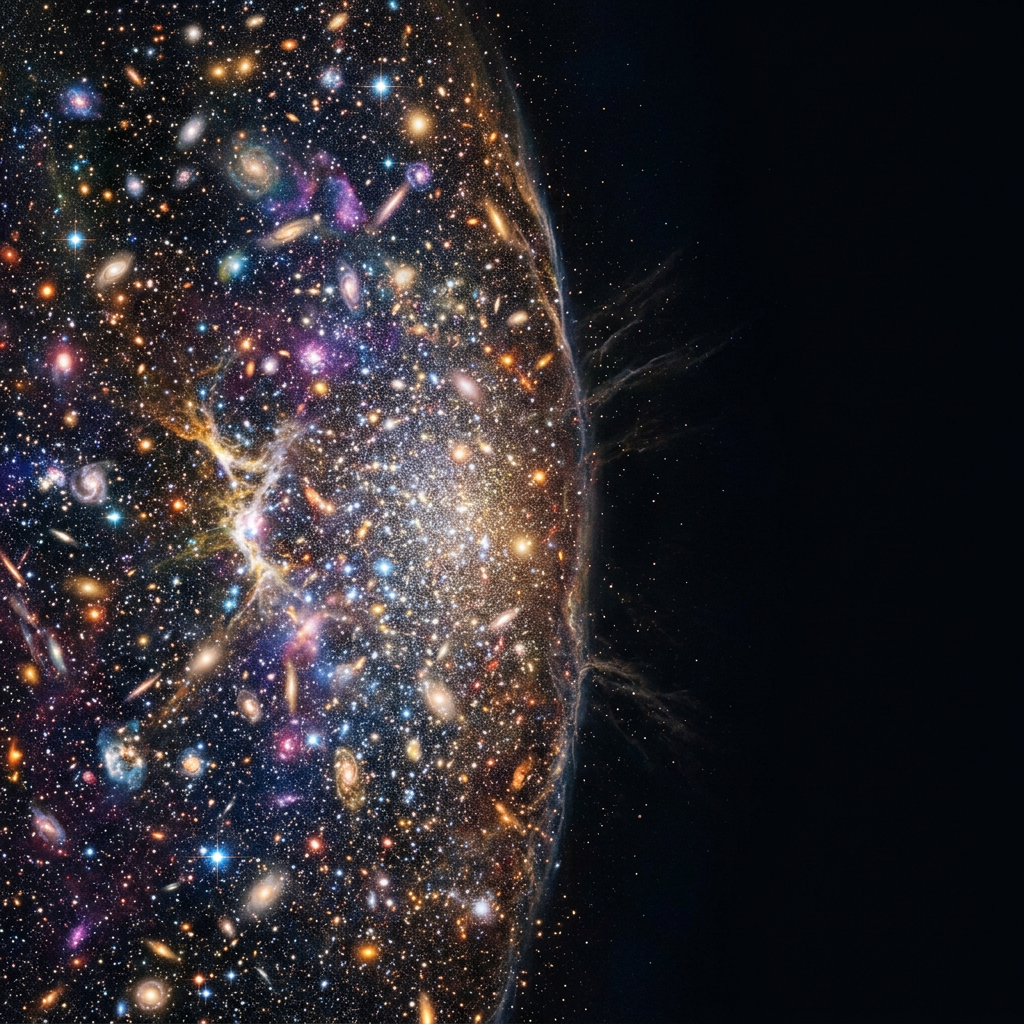
Then realize that the Earth is a speck of dust in a commonplace galaxy. Remember that there are trillions of stars and billions of galaxies, and uncounted billions of planets. Try to imagine a mind that knows all this.

What would it be like? One thing is certain. It would not be like the human mind. 

But would God even have a Self? Is God self-aware?

What need would God have for self-awareness?

Humans have self-awareness. Some animals surely have forms of self-awareness.

Self-awareness is a curse and a blessing. It creates loneliness. It creates unhappiness. If God were self-aware, God would be lonely. 

Does God get lonely?

THE SINGULARITY OF THE SELF

The self can only be aware of its own self by knowing that there is another outside that is not the self.

If God is everything, then what would exist outside God for God to be self-aware? If God isn’t everything, then what is this thing outside that is not God?

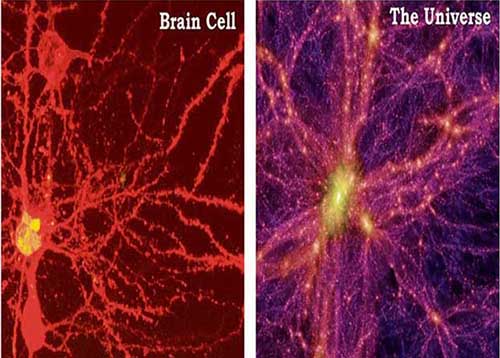
What is a mind? What are the makings of a mind–– neural synapses, connections, electrical impulses, fields of energy? Some would call it a brain, but what use would a brain be for God? A brain is far too small to hold everything. 

If we use the concept of ‘membrane’ instead of ‘brain’, could God be the membrane that binds the electrical impulses–fused, united, linked, and bound together to create thought?

What is this membrane made of? 

Is it made of electrical fields or atomic and subatomic particles? 

Quarks and electrons seem to only have a definite location––a place in time––when they are observed. Are they only the result of observations? Or is there something there that we cannot perceive?

If objects are the results of observation, then awareness and conceptions would be essential to everything. Observation would be what causes the universe to come into being. Observations would be the history, the present, and the form, the basis of the ideas for the future of all.

SELF-AWARENESS

Who says that what is observed must be self-aware? The observer does not need to be self-aware. The world existed before self-awareness. So, as far as we can tell, the universe has only had self-awareness for a minute fraction of an eternal epoch. The universe has gotten along quite well for billions of years without self-awareness.

So do we live in a fraction of an eon when the mud learned to think, stand up, and become self-aware?

And does that matter at all to the mind of God that has no self and no need for a self?

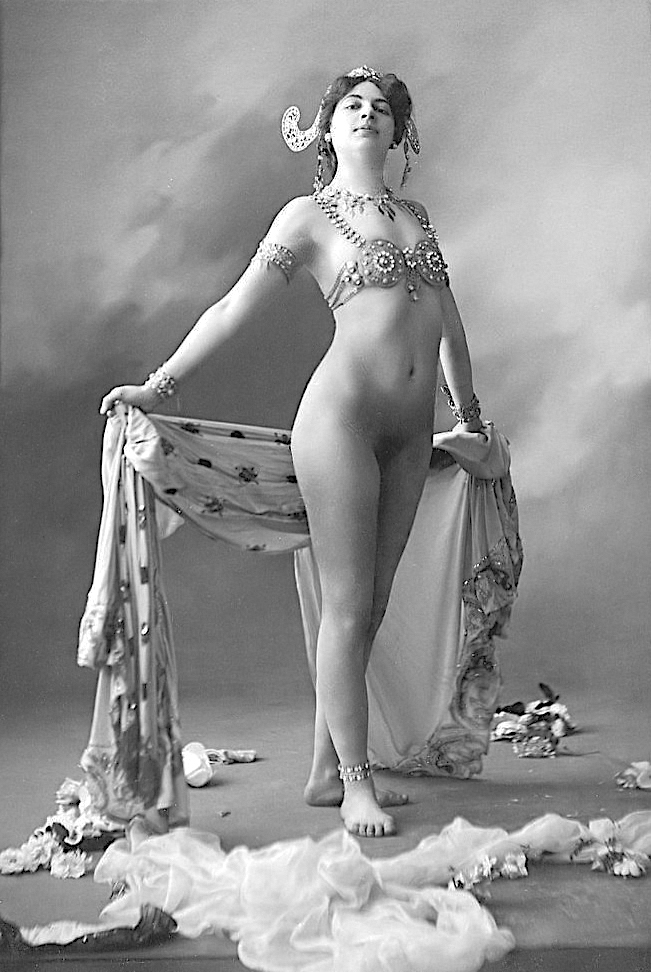
MATA HARI

Mata Hari was a Dutch exotic dancer and courtesan who was convicted of being a spy for Germany during World War I. She was executed by firing squad in France. The idea of a beautiful exotic dancer using her powers of seduction as a spy made her name synonymous with the femme fatale. Her story has served as an inspiration for many books, films, and other works.

It has been said that she was convicted and condemned because the French Army needed a scapegoat, and that the files used to secure her conviction contained several falsifications. Some have even stated that Mata Hari could not have been a spy and was innocent.

Margaretha Geertruida Zelle was born 7 August 1876 in Leeuwarden, Netherlands. She was the eldest of four children to Antje van der Meulen (1842–1891) and her husband, Adam Zelle (1840–1910). She had three younger brothers; Johannes Hendriks, Arie Anne, and Cornelis Coenraad. She was affectionately called “M’greet” by her family. Despite traditional assertions that Mata Hari was partly of Jewish, Malaysian, or Javanese, i.e., Indonesian descent, scholars conclude she had no Jewish or Asian ancestry, and both of her parents were Dutch. Her father owned a hat shop, made investments in the oil industry, and became affluent enough to give Margaretha and her siblings a lavish early childhood that included exclusive schools until the age of 13.

Soon after Margaretha’s father went bankrupt in 1889, her parents divorced, and her mother died in 1891.[Her father remarried in Amsterdam on 9 February 1893 to Susanna Catharina ten Hoove (1844–1913). The family fell apart, and Margaretha was sent to live with her godfather, Mr. Visser, in Sneek. She studied to be a kindergarten teacher in Leiden, but when the headmaster began to flirt with her conspicuously, she was removed from the institution by her godfather.  A few months later, she fled to her uncle’s home in The Hague.

Promiscuous, flirtatious, and openly flaunting her body, Mata Hari captivated her audiences and was an overnight success from the debut of her act at the Musée Guimet on 13 March 1905. She became the long-time mistress of the millionaire industrialist Émile Étienne Guimet, who had founded the Musée. She posed as a Javanese princess of priestly Hindu birth, pretending to have been immersed in the art of sacred Indian dance since childhood. She was photographed numerous times during this period, nude or nearly so. Some of these pictures were obtained by MacLeod and strengthened his case in keeping custody of their daughter. -WIKIPEDIA

Margaretha Zelle alias Mata Hari

QUESTIONS

Questions
by Joseph Mills 

On the Interstate, my daughter tells me
she only has two questions. I’m relieved
because she usually has two hundred.
I say, Okay, let’s have them, and she asks,
What was there before there was anything?
Stupidly, I think I can answer this:
There was grass, forests, fields, meadows, rivers.
She stops me. No, Daddy. I mean before
there was anything at all, what was there?
I say that I don’t know, so then she asks,
Where do we go when we die? I tell her
I don’t know the answer to this either.
She looks out the side, and I look forward,
then she asks if we can have some music.

“Questions” by Joseph Mills from The Miraculous Turning. © Press 53, 2014.

RUMORS

9a92a03d-1cf8-4e4e-9d55-7067aa7381e4


Rumors

by Kenneth Harper Finton ©2014


Who started that rumor

a man shouldn’t cry?

When he’s done all he can,

tried all he can try?

Who started that rumor

a man shouldn’t cry?

Tears grease the passage

while endings pass by.


MY RAPE-COLORED SKIN

By Caroline Randall Williams
June 26, 2020

A true daughter of the confederacy has written what should be the last words on the monuments:

Dr. Caroline Randall Williams


I have rape-colored skin. My light-brown-blackness is a living testament to the rules, the practices, the causes of the Old South.

If there are those who want to remember the legacy of the Confederacy, if they want monuments, well, then, my body is a monument. My skin is a monument.

Dead Confederates are honored all over this country — with cartoonish private statues, solemn public monuments and even in the names of United States Army bases. It fortifies and heartens me to witness the protests against this practice and the growing clamor from serious, nonpartisan public servants to redress it. But there are still those — like President Trumpand the Senate majority leader,Mitch McConnell — who cannot understand the difference between rewriting and reframing the past. I say it is not a matter of “airbrushing” history, but of adding a new perspective.

I am a black, Southern woman, and of my immediate white male ancestors, all of them were rapists. My very existence is a relic of slavery and Jim Crow.

According to the rule of hypodescent (the social and legal practice of assigning a genetically mixed-race person to the race with less social power) I am the daughter of two black people, the granddaughter of four black people, the great-granddaughter of eight black people. Go back one more generation and it gets less straightforward, and more sinister. As far as family history has always told, and as modern DNA testing has allowed me to confirm, I am the descendant of black women who were domestic servants and white men who raped their help.

It is an extraordinary truth of my life that I am biologically more than half white, and yet I have no white people in my genealogy in living memory. No. Voluntary. Whiteness. I am more than half white, and none of it was consensual. White Southern men — my ancestors — took what they wanted from women they did not love, over whom they had extraordinary power, and then failed to claim their children.

What is a monument but a standing memory? An artifact to make tangible the truth of the past. My body and blood are a tangible truth of the South and its past. The black people I come from were owned by the white people I come from. The white people I come from fought and died for their Lost Cause. And I ask you now, who dares to tell me to celebrate them? Who dares to ask me to accept their mounted pedestals?

You cannot dismiss me as someone who doesn’t understand. You cannot say it wasn’t my family members who fought and died. My blackness does not put me on the other side of anything. It puts me squarely at the heart of the debate. I don’t just come from the South. I come from Confederates. I’ve got rebel-gray blue blood coursing my veins. My great-grandfather Will was raised with the knowledge that Edmund Pettus was his father. Pettus, the storied Confederate general, the grand dragon of the Ku Klux Klan, the man for whom Selma’s Bloody Sunday Bridge is named. So I am not an outsider who makes these demands. I am a great-great-granddaughter.

And here I’m called to say that there is much about the South that is precious to me. I do my best teaching and writing here. There is, however, a peculiar model of Southern pride that must now, at long last, be reckoned with.

This is not an ignorant pride but a defiant one. It is a pride that says, “Our history is rich, our causes are justified, our ancestors lie beyond reproach.” It is a pining for greatness, if you will, a wish again for a certain kind of American memory. A monument-worthy memory.

But here’s the thing: Our ancestors don’t deserve your unconditional pride. Yes, I am proud of every one of my black ancestors who survived slavery. They earned that pride, by any decent person’s reckoning. But I am not proud of the white ancestors whom I know, by virtue of my very existence, to be bad actors.

Among the apologists for the Southern cause and for its monuments, there are those who dismiss the hardships of the past. They imagine a world of benevolent masters, and speak with misty eyes of gentility and honor and the land. They deny plantation rape, or explain it away, or question the degree of frequency with which it occurred.

To those people it is my privilege to say, I am proof. I am proof that whatever else the South might have been, or might believe itself to be, it was and is a space whose prosperity and sense of romance and nostalgia were built upon the grievous exploitation of black life.

The dream version of the Old South never existed. Any manufactured monument to that time in that place tells half a truth at best. The ideas and ideals it purports to honor are not real. To those who have embraced these delusions: Now is the time to re-examine your position.

Either you have been blind to a truth that my body’s story forces you to see, or you really do mean to honor the oppressors at the expense of the oppressed, and you must at last acknowledge your emotional investment in a legacy of hate.

Either way, I say the monuments of stone and metal, the monuments of cloth and wood, all the man-made monuments, must come down. I defy any sentimental Southerner to defend our ancestors to me. I am quite literally made of the reasons to strip them of their laurels.

Caroline Randall Williams(@caroranwill) is the author of “Lucy Negro, Redux” and “Soul Food Love,” and a writer in residence at Vanderbilt University.

Does my algorithm have a mental-health problem?

https://aeon.co/ideas/made-in-our-own-image-why-algorithms-have-mental-health-problems

Thomas T Hills is professor of psychology at the University of Warwick in Coventry, UK.


Is my car hallucinating? Is the algorithm that runs the police surveillance system in my city paranoid? Marvin the android in Douglas Adams’s Hitchhikers Guide to the Galaxyhad a pain in all the diodes down his left-hand side. Is that how my toaster feels?

This all sounds ludicrous until we realise that our algorithms are increasingly being made in our own image. As we’ve learned more about our own brains, we’ve enlisted that knowledge to create algorithmic versions of ourselves. These algorithms control the speeds of driverless cars, identify targets for autonomous military drones, compute our susceptibility to commercial and political advertising, find our soulmates in online dating services, and evaluate our insurance and credit risks. Algorithms are becoming the near-sentient backdrop of our lives.

The most popular algorithms currently being put into the workforce are deep learning algorithms. These algorithms mirror the architecture of human brains by building complex representations of information. They learn to understand environments by experiencing them, identify what seems to matter, and figure out what predicts what. Being like our brains, these algorithms are increasingly at risk of mental-health problems.

Deep Blue, the algorithm that beat the world chess champion Garry Kasparov in 1997, did so through brute force, examining millions of positions a second, up to 20 moves in the future. Anyone could understand how it worked even if they couldn’t do it themselves. AlphaGo, the deep learning algorithm that beat Lee Sedol at the game of Go in 2016, is fundamentally different. Using deep neural networks, it created its own understanding of the game, considered to be the most complex of board games. AlphaGo learned by watching others and by playing itself. Computer scientists and Go players alike are befuddled by AlphaGo’s unorthodox play. Its strategy seems at first to be awkward. Only in retrospect do we understand what AlphaGo was thinking, and even then it’s not all that clear.

To give you a better understanding of what I mean by thinking, consider this. Programs such as Deep Blue can have a bug in their programming. They can crash from memory overload. They can enter a state of paralysis due to a neverending loop or simply spit out the wrong answer on a lookup table. But all of these problems are solvable by a programmer with access to the source code, the code in which the algorithm was written.

Algorithms such as AlphaGo are entirely different. Their problems are not apparent by looking at their source code. They are embedded in the way that they represent information. That representation is an ever-changing high-dimensional space, much like walking around in a dream. Solving problems there requires nothing less than a psychotherapist for algorithms.

Take the case of driverless cars. A driverless car that sees its first stop sign in the real world will have already seen millions of stop signs during training, when it built up its mental representation of what a stop sign is. Under various light conditions, in good weather and bad, with and without bullet holes, the stop signs it was exposed to contain a bewildering variety of information. Under most normal conditions, the driverless car will recognise a stop sign for what it is. But not all conditions are normal. Some recent demonstrations have shown that a few black stickers on a stop sign can fool the algorithm into thinking that the stop sign is a 60 mph sign. Subjected to something frighteningly similar to the high-contrast shade of a tree, the algorithm hallucinates.

How many different ways can the algorithm hallucinate? To find out, we would have to provide the algorithm with all possible combinations of input stimuli. This means that there are potentially infinite ways in which it can go wrong. Crackerjack programmers already know this, and take advantage of it by creating what are called adversarial examples. The AI research group LabSix at the Massachusetts Institute of Technology has shown that, by presenting images to Google’s image-classifying algorithm and using the data it sends back, they can identify the algorithm’s weak spots. They can then do things similar to fooling Google’s image-recognition software into believing that an X-rated image is just a couple of puppies playing in the grass.

Algorithms also make mistakes because they pick up on features of the environment that are correlated with outcomes, even when there is no causal relationship between them. In the algorithmic world, this is called overfitting. When this happens in a brain, we call it superstition.

The biggest algorithmic failure due to superstition that we know of so far is called the parable of Google Flu. Google Flu used what people type into Google to predict the location and intensity of influenza outbreaks. Google Flu’s predictions worked fine at first, but they grew worse over time, until eventually it was predicting twice the number of cases as were submitted to the US Centers for Disease Control. Like an algorithmic witchdoctor, Google Flu was simply paying attention to the wrong things.

Algorithmic pathologies might be fixable. But in practice, algorithms are often proprietary black boxes whose updating is commercially protected. Cathy O’Neil’s Weapons of Math Destruction (2016) describes a veritable freakshow of commercial algorithms whose insidious pathologies play out collectively to ruin peoples’ lives. The algorithmic faultline that separates the wealthy from the poor is particularly compelling. Poorer people are more likely to have bad credit, to live in high-crime areas, and to be surrounded by other poor people with similar problems. Because of this, algorithms target these individuals for misleading ads that prey on their desperation, offer them subprime loans, and send more police to their neighbourhoods, increasing the likelihood that they will be stopped by police for crimes committed at similar rates in wealthier neighbourhoods. Algorithms used by the judicial system give these individuals longer prison sentences, reduce their chances for parole, block them from jobs, increase their mortgage rates, demand higher premiums for insurance, and so on.

This algorithmic death spiral is hidden in nesting dolls of black boxes: black-box algorithms that hide their processing in high-dimensional thoughts that we can’t access are further hidden in black boxes of proprietary ownership. This has prompted some places, such as New York City, to propose laws enforcing the monitoring of fairness in algorithms used by municipal services. But if we can’t detect bias in ourselves, why would we expect to detect it in our algorithms?

By training algorithms on human data, they learn our biases. One recent study led by Aylin Caliskan at Princeton University found that algorithms trained on the news learned racial and gender biases essentially overnight. As Caliskan noted: ‘Many people think machines are not biased. But machines are trained on human data. And humans are biased.’

Social media is a writhing nest of human bias and hatred. Algorithms that spend time on social media sites rapidly become bigots. These algorithms are biased against male nurses and female engineers. They will view issues such as immigration and minority rights in ways that don’t stand up to investigation. Given half a chance, we should expect algorithms to treat people as unfairly as people treat each other. But algorithms are by construction overconfident, with no sense of their own infallibility. Unless they are trained to do so, they have no reason to question their incompetence (much like people).

For the algorithms I’ve described above, their mental-health problems come from the quality of the data they are trained on. But algorithms can also have mental-health problems based on the way they are built. They can forget older things when they learn new information. Imagine learning a new co-worker’s name and suddenly forgetting where you live. In the extreme, algorithms can suffer from what is called catastrophic forgetting, where the entire algorithm can no longer learn or remember anything. A theory of human age-related cognitive decline is based on a similar idea: when memory becomes overpopulated, brains and desktop computers alike require more time to find what they know.

When things become pathological is often a matter of opinion. As a result, mental anomalies in humans routinely go undetected. Synaesthetes such as my daughter, who perceives written letters as colours, often don’t realise that they have a perceptual gift until they’re in their teens. Evidence based on Ronald Reagan’s speech patterns now suggeststhat he probably had dementia while in office as US president. And The Guardian reportsthat the mass shootings that have occurred every nine out of 10 days for roughly the past five years in the US are often perpetrated by so-called ‘normal’ people who happen to break under feelings of persecution and depression.

In many cases, it takes repeated malfunctioning to detect a problem. Diagnosis of schizophrenia requires at least one month of fairly debilitating symptoms. Antisocial personality disorder, the modern term for psychopathy and sociopathy, cannot be diagnosed in individuals until they are 18, and then only if there is a history of conduct disorders before the age of 15.

There are no biomarkers for most mental-health disorders, just like there are no bugs in the code for AlphaGo. The problem is not visible in our hardware. It’s in our software. The many ways our minds go wrong make each mental-health problem unique unto itself. We sort them into broad categories such as schizophrenia and Asperger’s syndrome, but most are spectrum disorders that cover symptoms we all share to different degrees. In 2006, the psychologists Matthew Keller and Geoffrey Miller argued that this is an inevitable property of the way that brains are built.

There is a lot that can go wrong in minds such as ours. Carl Jung once suggested that in every sane man hides a lunatic. As our algorithms become more like ourselves, it is getting easier to hide.


Thomas T Hills

This article was originally published at Aeon and has been republished under Creative Commons.

A Physicist’s Physicist Ponders the Nature of Reality

TO READ THE ENTIRE ARTICLE GO TO THE ORIGINAL BELOW

https://www.quantamagazine.org/edward-witten-ponders-the-nature-of-reality-20171128/

Edward Witten reflects on the meaning of dualities in physics and math, emergent space-time, and the pursuit of a complete description of nature.

Edward Witten in his office at the Institute for Advanced Study in Princeton, New Jersey.

Jean Sweep for Quanta Magazine

Edward Witten in his office at the Institute for Advanced Study in Princeton, New Jersey.

A Guide To Aging Bald Eagles And How To Distinguish Immature Bald Eagles From Golden Eagles

Almost five years ago (1/27/13) I published a post entitled “A Guide To Aging Bald Eagles”. With over 71,000 views to date that post has been my most popular so I decided it was overdue for an update and enhancements. For this version I’ve made the following changes:

  • much of the text has been rewritten for purposes of accuracy and clarification
  • three images have been added
  • a section about distinguishing immature Bald Eagles from Golden Eagles has been included
  • formatting has been cleaned up and the title modified


As we approach prime eagle watching season here in northern Utah I thought it might be timely to present a guide that would be helpful in aging Bald Eagles as they progress through the 5-6 year plumage stages of becoming those glorious white-headed and white-tailed adults we’re all so familiar with. And since many immature Bald Eagles so strongly resemble Golden Eagles I’ve included information and photos that should be helpful in distinguishing the two.

Raptors, including eagles, that have not reached the adult plumage stage are referred to as immature. Those in their first plumage stage are called juveniles and the term sub-adult is used to refer to any plumage stage between juvenile and adult. Depending on molt sequence, age and timing plumage stages are highly variable so other factors like iris and beak color are also taken into account when estimating age. Eyes gradually change from dark brown to yellow while the beak goes from blackish-gray to yellow as they mature.


bald-eagle adult 2172

1/4000, f/8, ISO 500, 500 f/4, not baited, set up or called in

The adult Bald Eagle is unmistakable with its distinctive bright white head and tail contrasting with the dark brown body and wings.


bald eagle 0320 juvenile ron dudley

1/200, f/6.3, ISO 800, 500 f/4, 1.4 tc, not baited, set up or called in

But immature Bald Eagles present very differently than adults, especially in the early stages of development. This juvenile is barely fledged and was still hanging around its nest in southwest Montana. Notice that the plumage is dark brownish-black throughout, though they may have some white or pale mottling at this stage especially on the underparts. Both eye and beak are very dark.


bald eagle 7024 ron dudley

1/2000, f/6.3, ISO 500, 500 f/4, 1.4 tc, not baited, set up or called in

This is a first year bird during winter. There’s already some color change in the eye.


bald eagle 6590 ron dudley

1/800, f/8, ISO 500, 500 f/4, natural light, not baited, set up or called in

A side view of the same bird as in the previous image. The warm, early morning light gives it a bit of a golden glow that wouldn’t normally be seen.  This stage in particular is often confused with the Golden Eagle.


bald eagle 2298 ron dudley

1/3200, f/8, ISO 500, 500 f/4, not baited, set up or called in

Plumage colors after the first year become increasingly variable. There is more white mottling ventrally and the beak and cere are becoming less dark.


bald eagle 7599 ron dudley

1/1600, f/6.3, ISO 500, 500 f/4, 1.4 tc, not baited, set up or called in

The iris is beginning its transformation to yellow and there’s also some yellow at the base of the beak.


bald eagle 2363 ron dudley

1/1250, f/7.1, ISO 500, 500 f/4, 1.4 tc, not baited, set up or called in

As plumage stages develop through the second and third sub-adult years the tail becomes whiter with a dark terminal band and more white appears elsewhere. The beak is less dark and as the head becomes lighter it generally leaves a darker “eye stripe”.


bald eagle 0226 3rd year ron dudley

1/1000, f/8, ISO 500, 500 f/4, 1.4 tc, not baited, set up or called in

The eye is becoming more yellow and the eye-stripe is quite distinctive and often similar to that of an Osprey.


bald eagle 1297 ron dudley

1/1600, f/8, ISO 500, 500 f/4, not baited, set up or called in

The beak is becoming more yellow (though not as bright as in the adult). Some birds at this stage (like this one) exhibit a few secondary flight feathers that are longer than the rest at the trailing edge of the wing.


bald eagle 8499 ron dudley

1/640, 7.1, ISO 800, 500 f/4, 1.4 tc, not baited, set up or called in

By the fourth year (though there’s much variation) they’re in transition from immature plumage to full adulthood. The head is mostly white with some dark flecking especially around the eye and forehead near the cere. The tail now lacks the dark terminal band and the beak is nearly completely yellow.


1/2500, f/8, ISO 500, not baited, set up or called in

A closer look at the same bird allows a better view of the detail of the dark flecking and the beak and eye color at this stage.


bald eagle 3237 ron dudley

1/1600, f/6.3, ISO 500, 500 f/4, 1.4 tc, not baited, set up or called in

This bird is very nearly in full adult plumage. The tail is now bright white but there remains a small amount of dark flecking on the head.


bald-eagle-3875 ron dudley

1/1250, f/7.1, ISO 500, 500 f/4, 1.4 tc, not baited, set up or called in

A fully mature adult. Both head and tail are now completely white with overall dark brown plumage elsewhere. This bird has fish blood on its beak and if you look closely you’ll see that it has a “blown eye” (misshapen pupil, possibly due to injury).


bald eagle 1454 ron dudley

1/1600, f/8, ISO 500, 500 f/4, 1.4 tc, not baited, set up or called in

Here we can compare three plumage stages of Bald Eagles in one photo – a sub-adult on the left, a juvenile in the middle and a mature adult on the right.


bald eagle 9847 ron dudley

1/800, f/11, ISO 500, 500 f/4, 1.4 tc, not baited, set up or called in

An adult and a first winter juvenile up close.


bald eagle 9961 ron dudley

1/1000, f/11, ISO 500, 500 f/4, 1.4 tc, not baited, set up or called in

An adult on the right, a juvenile on the left and a sub-adult with some interesting mottling in the middle.


1/1250, f/7.1, ISO 640, not baited, set up or called in

One of the most common ID errors I see in the field is folks confusing immature Bald Eagles with Golden Eagles (the image above is of a Golden Eagle). Almost invariably novices will call any very large dark raptor a Golden Eagle while in most North American habitats it’s much more likely to be an immature Bald. Here are some guidelines that can be used to distinguish Goldens from immature Balds.

  • Golden Eagles have a distinctive golden nape (back of neck) that is usually easily seen in direct light and is completely lacking in Bald Eagles of any age.
  • Though it can’t be seen well in this photo the legs of Golden Eagles are feathered all the way down to the toes while the lower legs (tarsi) of Bald Eagles are not feathered.
  • Typical of most fishing eagles Bald Eagles have a very large bill, noticeably larger than that of Golden Eagles.

There are other more subtle plumage differences that I’ve chosen not to include here.


1/1600, f/7.1, ISO 500, not baited, set up or called in

Another helpful tool is behavior and habitat. Golden Eagles very rarely feed on fish and as a result they’re less likely to be found in aquatic habitats so if the eagle you’re attempting to ID is associated with fish, fishing or aquatic habitats it’s very likely to be an immature Bald Eagle. That’s not an absolute guarantee but it’s a helluva clue.


For many of us Bald Eagle season is almost upon us so I hope these tips and guidelines will be helpful to my readers. After all, no one wants to misidentify an eagle of either species!

Ron

Notes: 

  • For this updated version I’ve used several resources for guidance including “Birds Of North America Online”, my own photos and knowledge and friend and raptor expert Jerry Liguori’s excellent book “Hawks From Every Angle – How To Identify Raptors In Flight”.
  • It’s possible that the third and fourth photos from the bottom in this series were baited. I learned after the fact that on some days photographers had been moving some of the carp the eagles were feeding on to more photogenic locations. I don’t believe the birds in these two images were baited, but it is possible.
  • I believe all of the images in this post were taken with my Canon EF 500mm f/4L IS USM lens (either version I or version II) though I ran out of time to verify. Most of the photos were taken at Farmington Bay WMA in northern Utah.

GRAVITY SUCKS

Gravity scksby Kenneth Harper Finton ©2017

Some years back, I believed that people  grew old and died because they became ill and their bodies deteriorated. As I age myself, I wonder if that is so. Could it be that people pass on because the world about them changes so much that they no longer feel attached to it? Can a person evolve to the point where withdrawing from the world seems the best logical choice? Does this changing of the world about us affect our consciousness and then our health? Does life culminate in the desire to no longer desire? Is death the natural end because we lose the desire and will to persist? Or is the will to persist yanked from us despite our rage against the darkness of the unknown night?

What is true for one might not be true for another. The sheer variety of humanity and the vast complexity of nature creates a different world for each entity that lives within it.

Inequality is everywhere because inequality is essential for movement. Inequality is gravity. It is that weak force that binds things together, feet to the earth and planets to the stars, friends to friends.

Each individual life is a cosmos unto itself.

As a young man, I easily saw the truth in the unity of all being but saw also that the world is a game of one-upsmanship. People compete to produce winners and losers. The world around us is stratified, socially and economically.

Social inequality is a constant, but nature demands a balance for stability. The highs must not be too high and the lows must not be too low.  When things are too far out of balance, they explode and gravity is overcome.

Gravity is the result of inequality. When things are equal, there is no push nor pull.

Each side of the equation is different, but the equality creates the balance.

For most of us living on Earth, there is nothing as fine as the era in time in which we now live. How could this not be so, when this time is all we have? Are we not practical? We cannot live in another era.

Yet, eras change, and change brings new actors to the stage, new athletes to the field. Soon enough, we barely know the rules of the game because it has changed so much.

We spend our lives speaking our lines and doing our work. We seek what makes us feel good—through pleasures, work, pastimes, and relationships. It becomes the driving factor that motivates and moves us.

It is movement that produces the gravity that keeps us centered enough to survive. We—like our Earth, our Sun, and our Galaxy—must evolve and revolve as we orbit around something much bigger than us. Heinlein wrote: “Love is that condition in which the happiness of another person is essential to your own.” Love is one of the gravitational anchors that hold us in place.

Health does get worse with time and wear. Physical strength does deteriorate. Passion itself takes a tumble with age. We know this is so. Yet, our fast-changing world can become so unfamiliar that we can easily become those Strangers in a Strange Land that we heard or read about years ago.

Heinlein’s character said: “Thinking doesn’t pay. It just makes you discontented with what you see around you.”  Time passes and consciousness is overloaded with evaluations and judgments made by past choices. It becomes harder to distinguish the winner from the loser when you know each all too well. We can become confused or dismayed about the directions our society and nations are going.

“Thou art god, I am god. All that groks is god,” Heinlein wrote.

Grok may be the only English word that is derived from a fictional Martian language. “Grok” was introduced in Robert A. Heinlein’s 1961 science fiction novel Stranger in a Strange Land. It means to understand fully and intuitively with empathy or intuition. It is hard to grow old and not see the reality of these observations. “Random chance is not a sufficient explanation of the Universe—in fact, random chance is not sufficient to explain random chance; the pot cannot hold itself.”

Everything living has a blind instinct to survive built into its system.

“The only religious opinion I feel sure of is this: self-awareness is not just a bunch of amino acids bumping together.”  ― Robert A. HeinleinStranger in a Strange Land