Today is the birthday of Hans Christian Andersen (books by this author), born in Odense, Denmark (1805). He was the only son of a shoemaker who used to tell him stories from Arabian Nights. His mother was an illiterate washerwoman who was widowed when her son was 11. When Andersen was 14, he told his mother that he wanted to go to Copenhagen. When she asked what he intended to do there, he said, “I’ll become famous! First you suffer cruelly, and then you become famous.”
He intended to find his fame on the stage. He even found a patron, Jonas Collin, who was the director of the Royal Danish Theatre. But Andersen was tall and gawky, and people used to laugh at his attempts to sing and dance; he also experienced poverty worse even than he had known in Odense. He felt like an outsider. These feelings were reinforced when he finally went back to school at Collin’s urging. Andersen was a country boy not used to life in the capital city, he was much older than the other students, and he was a mediocre student at best; his schoolmaster used to pick on him mercilessly. He finally graduated from the University of Copenhagen in 1828, and he published his first story in 1829. It was called “A Journey on Foot from Holmen’s Canal to the East Point of Amager,” and it was a success. His writing career was launched.
Andersen followed up that first story with volumes of poetry, plays, autobiographical novels, and travelogues. He published his first collection of fairy tales in 1835, but still continued writing for adults. Although his novels did well, his fairy tales were overlooked at first, and it wasn’t until an English translation was published in 1845 that they became popular. Andersen gave us “The Princess and the Pea,” “The Emperor’s New Clothes,” “The Ugly Duckling,” and “The Little Match Girl,” among many others – more than 150 fairy tales in all.
With his literary success came the fame and acceptance that Andersen had always wanted. He traveled extensively around Europe, rubbing elbows with fellow writers like Robert and Elizabeth Barrett Browning, Alexandre Dumas, Victor Hugo, and Henrik Ibsen. In England, he met Charles Dickens, whose work he admired. The two men shared a concern for the less fortunate members of society, and had both grown up without money, and they became friends.
In 2012, a Danish historian came across a previously unknown Andersen fairy tale in the bottom of a storage box in the national archive. The story is called “The Tallow Candle,” and it’s about a lonely candle that feels misunderstood and unappreciated until it is finally recognized by a tinderbox. Andersen wrote it when he was a teenager, during a particularly unhappy period at school, and he presented it to a vicar’s widow who had loaned him books when he was a child.
In 1872, Andersen was badly injured when he fell out of bed. He never fully recovered from his injuries; he also developed liver cancer, which claimed his life in 1875.
As heard on The Bob Edwards Show, December 17, 2010
My father and I disagreed vehemently about politics and religion in the late 1960s. He was a World War II veteran and a colonel in the Wisconsin National Guard. I was a long-haired student at the University of Wisconsin–Milwaukee, helping to organize antiwar demonstrations. He was a devout Catholic. I was an agnostic. My younger siblings remember all too vividly the violent arguments he and I would have. There was nowhere to hide from them in the small home where we lived. Once, my father ended up chasing me around the kitchen table, intent on hitting me for the first time in his life—and then he broke down crying.
The memory of those tears says more to me about who my father was than the memories of our arguments. He was a man who cared passionately—about the people he knew and loved, but also about people in need he didn’t know at all. He taught me to care with the same intensity. I never doubted that he loved me, even in those moments when I felt least understood by him. And his life spoke eloquently about how much he cared for the less fortunate. He and my mother always did charitable work—preparing and serving meals for homeless people at St. Ben’s parish in Milwaukee’s inner city, for example—but after my father retired, he took his social action to a new level.
He was admitted to a lay ministry program sponsored by the Milwaukee Archdiocese, a program that introduced him to contemporary theology and the history of Catholic social action. This was heady stuff for a man who had never gone to college—one of the greatest regrets of his life, by the way. Suddenly, my conservative father sounded like someone from Dorothy Day’s Catholic Worker Movement of the 1930s. He became incensed about how unconcerned the wealthy people in his suburban parish were about the plight of the less fortunate. When he graduated from the program, he became the Social Programs Coordinator for his parish, and until he died at eighty-one, he was a thorn in the side of his fellow parishioners, continually exhorting them to give more to, and do more for, those in need.
It is in large part because of the example set by my father, Arthur Kessenich, that I believe I have a responsibility to give of myself—not just to those I know and love, but to those I would never know if I didn’t seek them out: the poor, the disabled, the imprisoned. It is because of my father’s example that I try to tithe, to give 10 percent of my income to charity; that I spend two hours a week assisting a blind man; that I help lead Alternatives to Violence workshops in prisons.
I don’t do it out of guilt or fear of damnation, but out of love. Because I saw love in action, in my father’s tears and in the way he lived his life. Because of him, I believe in love.
Lawrence Kessenich was formerly an editor at Houghton Mifflin, where he encouraged W. P. Kinsella to write Shoeless Joe, the basis for the movie “Field of Dreams.” Mr. Kessenich now makes his living as a marketing writer while spending his free time writing poetry, essays, short stories, plays, and novels. He lives in Watertown, Massachusetts.
Lawrence Kessenich Reading Poetry on Poet to Poet Writer to Writer with Doug Holder
The Beatles with George Martin (Photo Michael Ochs)
Outside of his arrangement and recording skills, one of late producer George Martin’s greatest talents was taking the Beatles’ ambitious, often psychedelic concepts and making them into reality. It was particularly challenging when it came to the abstract ideas of John Lennon, whom Martin called an “aural Salvador Dalí.” Unlike Paul McCartney, who could generally offer concrete suggestions for his sounds, Lennon would speak of colors and sensations, which Martin somehow managed to translate to tape. In the wake of Martin’s passing, Vulture looks back at the many times he turned Lennon’s far-out ideas into musical legend.
“The First Feedback Ever Recorded”
The beginning five seconds of the Beatles’ 1964 single “I Feel Fine” contains nothing but a thick buzzing, which was actually feedback from a guitar Lennon left leaning up against his amp. Martin agreed to keep the accidental noise in, years before ax men like Jimi Hendrix and Pete Townshend would incorporate the screeches and howls in their songs. “That’s me, including the guitar lick with the first feedback ever recorded,” Lennon told Playboy in 1980. “I defy anybody to find an earlier record … unless it is some old blues record from the ’20s … with feedback on it.”
“Something Baroque-Sounding”
For the poignant Rubber Soul track “In My Life,” Lennon knew he needed something unique for the instrumental section in the middle. As usual, his instructions to Martin were vague, telling the producer he wanted “something Baroque-sounding.” Martin composed a piano solo but, thanks to his limitations with the instrument, couldn’t play it quickly enough to match the song’s pace. Rather than bring in another musician, Martin decided to experiment with the studio’s technology, recording the solo at half-tempo and speeding up the tape to make it fit, inadvertently giving the piano the sound of a harpsichord.
“Thousands of Monks Chanting”
As the Beatles got more into drugs and the burgeoning hippie movement, Lennon composed his most ambitious song yet, “Tomorrow Never Knows,” for 1966’s Revolver, interpreting lyrics from The Psychedelic Experience: A Manual Based on the Tibetan Book of the Dead by Timothy Leary, Richard Alpert, and Ralph Metzner. Lennon’s dream sound for the droning album closer? “I’d imagined in my head that in the background you would hear thousands of monks chanting. That was impractical of course and we did something different.” Instead, Martin ran Lennon’s vocals through a rotating Leslie speaker, though Lennon pondered the possibility of being hung upside down from the ceiling and being spun around a microphone to get a similar effect. He and the rest of the group also used the innovative techniques of playing certain instrumental tracks in reverse and looping tapes to create surreal background noises, such as Paul McCartney’s laugh being tweaked into the sound of a seagull.
“Just Join Them Together”
After Revolver, Lennon continued his boundary-pushing writing, penning the nostalgic “Strawberry Fields Forever” about his Liverpool childhood, ultimately recording two distinct versions of it. The first, featuring just the band’s sparser electric instruments, came out a little too brash for his tastes, but the second, with the more dramatic addition of strings and horns, also didn’t fully live up to his standards. According to Martin’s 1979 memoir, All You Need Is Ears, he made an offhand comment to Lennon about splitting hairs, leading the Beatle to suggest splicing the two takes together — “Why don’t we just join them together?” Martin balked, telling Lennon that the takes were in different tempos and keys, but Lennon insisted, saying he knew the producer could tackle the problem. “John always left this kind of thing to me,” Martin wrote. “He never professed to know anything about recording. He was the least technical of the Beatles.” Challenge accepted, Martin and engineer Geoff Emerick adjusted the tracks’ speeds to make their pitches match and, using a pair of editing scissors, spliced the tapes together around the one-minute mark to make one of the Beatles’ most-loved songs. “That is how ‘Strawberry Fields’ was issued, and that is how it remains today — two recordings,” wrote Martin.
“Inject My Voice”
In order to get a beefier bass sound for the Sgt. Pepper’s Lonely Hearts Club Band title track, Martin and his team had McCartney plug his instrument directly into their studio console, a now-common but then-pioneering tactic. Lennon loved the sound so much that he wondered if they could do the same for his vocals. “John came up to the control room one day and asked if we could possibly inject his voice directly into the console,” engineer Geoff Emerick said, according to Ultimate Classic Rock. “George replied, ‘Yes, if you go and have an operation. It means sticking a jack-plug into your neck!'”
“Smell the Sawdust”
Based on an old poster he owned, Lennon wrote “Being for the Benefit of Mr. Kite!” and asked Martin to help him evoke the sights, sounds, and smells of a carnival, with his usual vague ideas. “He’d make whooshing noises and try to describe what only he could hear in his head, saying he wanted a song ‘to sound like an orange,'” Martin recalled in Mark Lewisohn’s 1988 book The Complete Beatles Recording Sessions. “John had said that he wanted to ‘smell the sawdust on the floor,’ wanted to taste the atmosphere of the circus.” Martin took recordings of old Victorian steam organs and told Emerick to cut the tapes into small pieces, toss them in the air, then reassemble them at random and include them in the song to re-create the cacophony of a circus.
“A Chicken Cluck”
For no discernible reason, Lennon’s upbeat, soulful “Good Morning, Good Morning” is, excuse the pun, peppered throughout with the sounds of dogs and farm animals. Seeking to make the album flow seamlessly, Martin stumbled on the perfect solution to bridge the gap between “Good Morning” and the “Sgt. Pepper’s” reprise. “Imagine my delight when I discovered that the sound of a chicken cluck at the end of ‘Good Morning’ was remarkably like the guitar sound at the beginning of ‘Sergeant Pepper,'” he wrote in All You Need Is Ears. “I was able to cut and mix the two tracks in such a way that the one actually turned into the other.”
“Like the End of the World”
While working on “A Day in the Life,” the final Sgt. Pepper’s song, the Beatles and Martin were at a loss for how to fill in the 24 bars that close it out. “As always, it was a matter of my trying to get inside his mind, discover what pictures he wanted to paint and then try to realize them for him,” Martin wrote of Lennon in Ears. “He said, ‘What I’d like to hear is a tremendous build-up, from nothing up to something absolutely like the end of the world.” Martin hired a 40-piece orchestra and gave them an improvised score to create the grand dissonance, while the band invited a number of friends, include several Rolling Stones and Marianne Faithfull, to the session, and kept the mood loose by giving the orchestra members gag props to wear, such as fake nipples and gorilla-paw gloves. McCartney then convinced Martin to add in another couple strange bits to close out the LP after the final piano chord faded. The first is a high-pitched noise set at a frequency where only dogs can hear it, followed by a sampling of random studio chatter that originally appeared on the vinyl LP’s run-off groove. Some fans claimed that if they played the gibberish backward, they heard a random, hidden obscene phrase. “Well, with a huge stretch of the imagination, I supposed it did, but that was certainly never intended,” Martin said.
“Some Weird Noises”
After learning that an English teacher from his old high school was having students analyze his lyrics, Lennon wrote “I Am the Walrus,” just for the sake of writing something so surreal and confusing that people wouldn’t be able to decipher it. Martin was flummoxed, recalling the sessions in a 2013 interview with Rock Cellar magazine: “When I first heard that he just stood in front of me with a guitar and sang it through. But it was weird. I said to him, ‘What the hell am I going to do with this, John?’ And he said, ‘I’d like for you to do a score and use some brass and some strings and some weird noises. You know the kind of thing I want.’ But I didn’t but I mean I just went away and did that.” And that’s how the Magical Mystery Tour single — with its acid-influenced references to Lewis Carroll, Ginsberg, schoolyard rhymes, and King Lear — came to fruition
.
“A Picture in Sound”
“Revolution 9,” the divisive avant-garde collage from The White Album, is easily the weirdest thing the Beatles ever released. In a 1971 interview with Melody Maker, Martin took credit for much of the song’s oddities: “It was just an extension of ‘Tomorrow Never Knows,’ a similar kind of thing with various tapes, and I guess this was largely influenced by Yoko, because it was her kind of scene. But again I was painting a picture in sound, and if you sat in front of the speakers you just lost yourself in stereo. All sorts of things are happening in there: you can see people running all over the place and fires burning, it was real imagery in sound. It was funny in places too, but I suppose it went on a bit long.” Lennon took umbrage with these comments, as well as some in which the producer criticized his solo work, and wrote directly to the interviewer. “When people ask me questions about ‘What did George Martin really do for you?,’ I have only one answer, ‘What does he do now?’ I noticed you had no answer for that! It’s not a putdown, it’s the truth,” he said, before adding, “For Martin to state that he was ‘painting a sound picture’ is pure hallucination. Ask any of the other people involved. The final editing Yoko and I did alone (which took four hours).” According to Rolling Stone, a calmer Lennon later took it all back, saying, “George Martin made us what we were in the studio. He helped us develop a language to talk to other musicians.”
“They are tearing down my childhood home today,” he said, wishing instead he were already dead. “I should not watch. It is a sad thing to see,” he said, thinking softly of the past, wishing it could forever last.
“I wish I could have done more to save it,” he mused, feeling the blues as it oozed from the news.

“I ate watermelon at the kitchen table, sweet as summer’s breath,” he said, tasting the juice that his mind reproduced.
“We had many a memory in that house,” he understated,
watching as his reality was castrated.
“I wonder it I was happier back then than now,” he exclaimed, unashamed that he had no fame. “Probably not,” he said to himself, knowing he had not mastered laughter in the face of disaster.
“Some folk’s homes become museums,”he pondered as his thoughts wandered. “I was never that important,” he concluded, as he brooded.
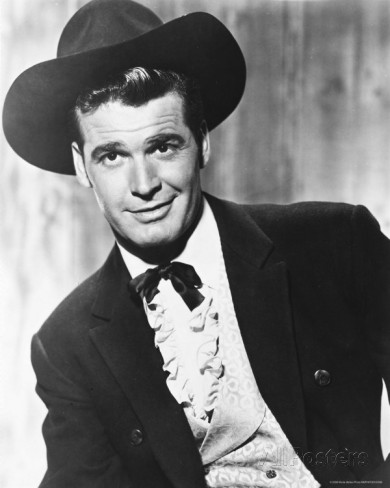
Fans loved him as Rockford, Maverick,
a man’s man, had your back, cool,
did the right thing. I loved him
for being Doris Day’s husband
in a movie I cut class to see,
fifth grade, played at the Riviera,
only old men and me during the day,
went alone told no one, but I had a gigantic
crush, he was an ob/gyn, she was a mom,
marriage in jeopardy, couples in movies
stayed together in the sixties, while out
in the world it was all falling apart, women
poised to flip their lives, marching into a world
of miniskirts, riots, shame, pill box hats, flinging
our boxy pink suit jackets and pumps into the sunset,
not even James Garner could have saved us, and this week
more unrest, more wars, I’m stuck on the headline James Garner Dead. When I was ten I needed a man
I could count on—even a man holding aces and eights.
How to Clean an Oil-Slicked Penguin
by Andrew Gent
Like the punch line to a very bad joke
the obvious and actual answer
is: “carefully”.
First, you must learn to hold the penguin
from behind, to avoid the beak,
pressing both wings against the body
until you need to hold each out
(again, carefully) to clean
in and around the extremities.
Next, contrary to logic,
you apply more oil
(cooking oil works best)
to loosen and remove
the thicker crude. Working it (carefully)
into the feathers. Next
you clean what remains
with dishwashing detergent
four, five, maybe even six times.
Careful (yet again) to avoid
the eyes and mouth.
You want to clean the feathers
without removing their natural
protective coating, or else
the penguin will sink like a stone
having lost its normal buoyancy.
Finally, you let it rinse off
in a pool of clean water.
Let the penguin do the work,
preening its coat and reclaiming
what little remains of its dignity.
Do not expect thanks.
In fact, it will continue
to bite and scratch.
But, if you are lucky,
it might survive.
Which is the most
we can hope for.
The first rule of writing is to not add descriptors to things inherently described. A ball need never be described as round because a ball, inherently, is round. Grass need never be described as green because grass naturally is green. Milk need never be described as white because milk normally is white. Adjectives are required only when the object to be described deviates from its inherent self. Thus a lozenge-shaped ball, blue or yellow grass, pink or speckled milk.
No need to say he watched with his eyes or she touched with her hands because we use our eyes to see and we use our hands to touch. If she touched his shoe with her toe, however, that’s a different story.
No one would write, “He sneezed with his nose,” “She danced with her feet,” or “He breathed with his lungs,” but people do write, “She pinched him with her fingers” (or worse, “with her thumb and index finger”) and “He kissed her with his lips.” Why? Let kiss be kiss and pinch be pinch. Over-scrupulous specificity is not a good.
Let the normal be normal and never over explain. He opened the window is sufficient. “He placed two hands on the window pull and lifted upward” or “he grabbed the door handle and pulled it outward” belabors the action and obscures the obvious. If you have something to say, say it directly. He kissed her. He parked the car. He cleaned the toilet. Add a detail only if it is an unexpected detail. He kissed her on the chin. He parked the car on the lawn. He cleaned the toilet in his suit.
Chekhov writes to Gorky: “You understand it at once when I say, ‘The man sat on the grass;’ you understand it because it is clear and makes no demands on the attention. On the other hand, it is not easily understood, and it is difficult for the mind, if I write, ‘A tall, narrow-chested, middle-sized man, with a red beard, sat on the green grass, already trampled by pedestrians, sat silently, shyly, and timidly looked about him.’ That is not immediately grasped by the mind, whereas good writing should be grasped at once—in a second.”
Description should be eloquent and precise, not fevered, not desperate, not consumed by the greed to be foolishly exhaustive and insanely comprehensive.
Consider these lines, both of which come from the William Carlos Williams poem that begins “By the road to the contagious hospital”
“the reddish / purplish, forked, upstanding, twiggy / stuff of bushes and small trees / with dead, brown leaves under them”—that description is unfocused, desperate, inept.
“the stiff curl of wild carrot leaf”—now, that description is eloquent, precise, thrillingly good!
Do not double up on words. Use “separated,” not “separated out.” Use “divided, not “divided up.” Use “together,” not “both together.” Use “sat,” not “sat down.” Use “fell,” not “fell down” (unless “down” is used as a preposition and requires an object, e.g. “down the stairs”). Use “lifted,” not “lifted up.”
Never exaggerate. Let words speak for themselves. “Hot,” not “scalding hot.” “Cold,” not “freezing cold.” “Handsome,” not “dashingly handsome.” “I sweated,” not “I sweated bullets.” “I jumped,” not “I jumped out of my skin.” “Red, not “beet red.” Or “blood red.” Or “firehouse red.” (An exaggeration is never far from a cliché.)
Do not add an adverb which does the same work as the verb. No need to say “moaned softly” when “moaned” will do. A moan, by its nature, is soft. No need to say “missed terribly” when “missed” will do. Adding “terribly” dilutes the force of “missed.”
Do not use “so” as an intensifier without using the word “that” to complete the comparison. Not “I was so embarrassed,” but “I was so embarrassed that I could not speak.” If you complete a comparison, make sure you are adding to the original idea rather than merely reiterating the idea. “I was so embarrassed that I turned red” is a reiterative sentence because people who are embarrassed do turn red. Better to say simply, “I was embarrassed” or “I turned red.” One or the other.
If you are going to sin, sin on the side of clarity. Add more words than fewer words. Repeat words if the repetition will help clarify the action or the idea. Consider the shortened form of the sentence from the preceding paragraph: “If you complete a comparison, make sure you are adding to rather than merely reiterating.” Add words for clarity.
Good writing is rhythmic. Prose rhythm may be established in a number of ways. [Note” not “a number of different ways.”] Thus, there are no hard and fast rules regarding word choice, particularly the number of words used. “I showered” and “I took a shower” are both fine ways to express the same idea. Two words are not universally preferable to four words. Choosing always the smallest possible number of words may make writing more difficult to decipher—like reading a telegram. Writing needs to breathe. Repetition is OK. The use of parenthetical elements is OK. The use of parallel phrases is to be encouraged. Triplets are to be admired. Good writing owes allegiance to precision, not constriction.
Use “sprinted” rather than “ran quickly,” not because “sprinted” is one word rather than two but because it may be the precise word you are looking for.
Use “reclined” rather than “leaned back,” not because “reclined” is one word rather than two but because it may be the precise word you are looking for.
Use “contemplated” rather than “thought carefully,” not because “contemplated” is one word rather than two but because it is the precise word you are looking for.
Use “labored” rather than “worked hard,” not because “labored” is one word rather than two but because it may be the precise word you are looking for.
Use “glanced” rather than “looked quickly,” not because “glanced” is one word rather than two but because it may be the precise word you are looking for.
Use “shouted” rather than “called loudly,” not because “shouted” is one word rather than two but because it may be the precise word you are looking for.
But “sprinted,” “reclined,” “contemplated,” “labored,” “glanced,” and “shouted” may not be the precise words you are looking for, so, in that case, don’t use them. Use whatever words you need whenever you need them.
Those people who see style as affectation see everything as affectation.
WE MUST NOT SAY SO
(with apologies to John Berryman)
Milk, friends, is white.
We must not say so.
Swans, friends, are white.
We must not say so.
Grass, friends, is green.
We must not say so.
Birds have two wings.
We must not say so.
River water is wet.
We must not say so.
We clap with our hands.
We must not say so.
The sky above is blue.
We must not say so.
but trucks sputter (or brake)
butter softens (or burns)
the factory closes (or hires)
the soil erodes (or dries up)
lips blister (or tighten)
leaves scatter (or shimmer)
paper cuts sting (or heal)
radiators knock (and hiss)
This essay appeared in Blue Fifth Review: Blue Five Notebook Series (Winter 2016 / 16.1) as “We must Not Say So.” https://bluefifthreview.wordpress.com/
Saul Bellow (June 10, 1915 — April 5, 2005) was one of our most famed American writers. He won the Pulitzer Prize, the Nobel Prize for Literature, and the National Medal of Arts; and he is the only writer to have won the National Book Award for Fiction three times.
In spite of all the accolades Bellow received during his lifetime (and after) Bellow thought of himself as a “working stiff.”
“Celebrity interferes with the business of writing,” he said. “But it gives you a certain amount of confidence. Before, I said anything I damn pleased, and I did it defiantly. Now, I say anything I damn please, but I do it with confidence.”
Bellow was not afraid to say what he pleased, ever. At a PEN conference, he stated (like Churchill) that democracy was the worst form of government, except for all the others. Predictably, he “had a fight on his hands.” But Bellow was not one to back down. And, as it turned out, neither was I.
Developing judgment
One of the hardest things to learn during the publishing process is judgment. Writing alone, in your garret, does not demand anything from you other than time and thought. But once your work is exposed to the world, critics emerge from the woodwork. Everyone has an opinion. If they like what you have written, you feel confident that you have done a good job. And if they don’t, doubts creep in. The question you face is whether those doubts are justified.
My editor at Random House had a great deal to say about everything I had written — every word, every sentence, every paragraph, every chapter (some of which she crossed out in their entirety). We did revision, after revision, after revision.
At the start, I assumed she was right, and I did everything she told me to do. I eliminated anything she might remotely find objectionable. But, by the end of that three-year period, I learned not to throw the baby out with the bathwater. Instead of eliminating, I simply tweaked. And, in some cases, I outright refused to make the modifications she suggested.
What had changed?
I had finally learned to “say what I damn well pleased.” I had learned to block out the advice that wasn’t consistent with what I wanted to say. And my work was all the better for it.
The last book in my series was the one in which I finally learned to stick to my guns. It was published just as I wrote it, and it got the best reviews of any of my books. Critics remarked that my writing had “really come along.” What they didn’t know was the writing had been the same in all three books. The difference was that by the time book number three came along, I had developed enough confidence to tell the difference between a good suggestion and a bad one.
The trick is to develop that confidence early — before you sacrifice your integrity.
Integrity
What constitutes integrity for a writer?
Your first loyalty is to your manuscript. You must tell your story as best you can, realizing its full potential. You must ignore the distractions of what people say will sell, or what you think readers may like. You are not a panderer, you are an artist. Your job is to interpret reality through language.
Your second loyalty is to your readers. You have offered to tell them a tale. So, do it. Don’t try to impress them with linguistic gymnastics. Don’t point a finger at yourself. “Look at me!” is for actors, not writers. (Yes, I am thinking of Cloud Atlas.) Your readers shouldn’t even know you are there. You are your story.
Your third loyalty is to yourself. Nothing is more frightening than writing fiction. It lays you bare. So, don’t lie. Don’t shy away from emotions that are difficult, and from scenes that leave you raw. Tell the truth as only you can tell it.
Here is some of what Saul Bellow had to say about writing. I guarantee Saul will help you on the road to saying what you damn well please.
“You must either like what you are doing very much, either like your characters or hate them, you can’t be indifferent.”
“Your own natural, original voice provides the engine for your writing.”
“The Bible says, ‘Woe unto you when all men speak well of you.’ That’s where the critics come in.”
“The writer cannot make the seas of distraction stand still, but he can at times come between the madly distracted and the distractions. He does this by opening another world.”
“When you open a novel — and I mean of course the real thing — you enter into a state of intimacy with its writer. You hear a voice or, more significantly, an individual tone under the words. This tone you, the reader, will identify not so much by a name, the name of the author, as by a distinct and unique human quality. It seems to issue from the bosom, from a place beneath the breastbone. It is more musical than verbal, and it is the characteristic signature of a person, of a soul.”
“The most pleasurable moments in writing are when you are either laughing or weeping, and scribbling at the same time. That’s what one lives for in this trade.”
Erica Verrillo has published five books. She blogs about the publishing world, posts useful tips on how to get an agent, lists agents who are looking for clients as well as publishers accepting manuscripts directly from writers, explains how to market and promote your work, how to build your online platform, how to get reviews, how to self-publish, and how to keep your confidence on Publishing and Other Forms of Insanity.
This collection is sister to The Curious Cat Project (CCP), a website that connects writers from all over the world. Follow CCP on Facebook.
Erica Verrillo was raised in Syracuse NY, the daughter of classical pianist, Violet Silverstein, and noted psychophysicist, Ronald T. Verrillo. At age seventeen Ms.Verrillo moved to England, where she performed in the Oxford Symphony Orchestra. On her return to the U.S. she attended New England Conservatory. She finished her undergraduate education at Tufts, where she majored in History.
Bio: Ricky graduated from Warwick University Coventry, UK, with triple honors in literature, theater and film.
Three screenplays: Myth – a modern allegory on Middle Eastern Current Events The Abandoned – A doomed menage a trois straddles the carnage of WWI France Pottersville – Xmas Eve and Ricky, redundant, separated and drunk, crashes his car and ends up in Pottersville, the nightmare town from his favorite film
Three teleplays all adapted from his own short stories: Is This Yours – A cell predicts horse-race winners but what else does it tell? A Turn of the Wheel – A contradictory SatNav sends its poor driver around the bend The Bell – Recuperating in an old cottage Simon gets caught up in its ghastly history
Three Dramas Ahasuerus – The Wandering Jew finds himself outside a Concentration Camp in 1943 Lenten Observance – A devout Catholic is torn between family and God when he discovers his autistic son is gay Litter – An examination of global warming from the inner human psyche