PRODUCING THE BEATLES MUSIC

http://www.vulture.com/2016/03/10-odd-john-lennon-requests-of-george-martin.html#

By Dan Reilly

10-john-lennon-george-martin.w529.h352

The Beatles with George Martin (Photo Michael Ochs)

Outside of his arrangement and recording skills, one of late producer George Martin’s greatest talents was taking the Beatles’ ambitious, often psychedelic concepts and making them into reality. It was particularly challenging when it came to the abstract ideas of John Lennon, whom Martin called an “aural Salvador Dalí.” Unlike Paul McCartney, who could generally offer concrete suggestions for his sounds, Lennon would speak of colors and sensations, which Martin somehow managed to translate to tape. In the wake of Martin’s passing, Vulture looks back at the many times he turned Lennon’s far-out ideas into musical legend.

“The First Feedback Ever Recorded”

The beginning five seconds of the Beatles’ 1964 single “I Feel Fine” contains nothing but a thick buzzing, which was actually feedback from a guitar Lennon left leaning up against his amp. Martin agreed to keep the accidental noise in, years before ax men like Jimi Hendrix and Pete Townshend would incorporate the screeches and howls in their songs. “That’s me, including the guitar lick with the first feedback ever recorded,” Lennon told Playboy in 1980. “I defy anybody to find an earlier record … unless it is some old blues record from the ’20s … with feedback on it.”


“Something Baroque-Sounding”

For the poignant Rubber Soul track “In My Life,” Lennon knew he needed something unique for the instrumental section in the middle. As usual, his instructions to Martin were vague, telling the producer he wanted “something Baroque-sounding.” Martin composed a piano solo but, thanks to his limitations with the instrument, couldn’t play it quickly enough to match the song’s pace. Rather than bring in another musician, Martin decided to experiment with the studio’s technology, recording the solo at half-tempo and speeding up the tape to make it fit, inadvertently giving the piano the sound of a harpsichord.


“Thousands of Monks Chanting”

As the Beatles got more into drugs and the burgeoning hippie movement, Lennon composed his most ambitious song yet, “Tomorrow Never Knows,” for 1966’s Revolver, interpreting lyrics from The Psychedelic Experience: A Manual Based on the Tibetan Book of the Dead by Timothy Leary, Richard Alpert, and Ralph Metzner. Lennon’s dream sound for the droning album closer? “I’d imagined in my head that in the background you would hear thousands of monks chanting. That was impractical of course and we did something different.” Instead, Martin ran Lennon’s vocals through a rotating Leslie speaker, though Lennon pondered the possibility of being hung upside down from the ceiling and being spun around a microphone to get a similar effect. He and the rest of the group also used the innovative techniques of playing certain instrumental tracks in reverse and looping tapes to create surreal background noises, such as Paul McCartney’s laugh being tweaked into the sound of a seagull.


“Just Join Them Together”

After Revolver, Lennon continued his boundary-pushing writing, penning the nostalgic “Strawberry Fields Forever” about his Liverpool childhood, ultimately recording two distinct versions of it. The first, featuring just the band’s sparser electric instruments, came out a little too brash for his tastes, but the second, with the more dramatic addition of strings and horns, also didn’t fully live up to his standards. According to Martin’s 1979 memoir, All You Need Is Ears, he made an offhand comment to Lennon about splitting hairs, leading the Beatle to suggest splicing the two takes together — “Why don’t we just join them together?” Martin balked, telling Lennon that the takes were in different tempos and keys, but Lennon insisted, saying he knew the producer could tackle the problem. “John always left this kind of thing to me,” Martin wrote. “He never professed to know anything about recording. He was the least technical of the Beatles.” Challenge accepted, Martin and engineer Geoff Emerick adjusted the tracks’ speeds to make their pitches match and, using a pair of editing scissors, spliced the tapes together around the one-minute mark to make one of the Beatles’ most-loved songs. “That is how ‘Strawberry Fields’ was issued, and that is how it remains today — two recordings,” wrote Martin.

“Inject My Voice”

In order to get a beefier bass sound for the Sgt. Pepper’s Lonely Hearts Club Band title track, Martin and his team had McCartney plug his instrument directly into their studio console, a now-common but then-pioneering tactic. Lennon loved the sound so much that he wondered if they could do the same for his vocals. “John came up to the control room one day and asked if we could possibly inject his voice directly into the console,” engineer Geoff Emerick said, according to Ultimate Classic Rock. “George replied, ‘Yes, if you go and have an operation. It means sticking a jack-plug into your neck!'”


“Smell the Sawdust”

Based on an old poster he owned, Lennon wrote “Being for the Benefit of Mr. Kite!” and asked Martin to help him evoke the sights, sounds, and smells of a carnival, with his usual vague ideas. “He’d make whooshing noises and try to describe what only he could hear in his head, saying he wanted a song ‘to sound like an orange,'” Martin recalled in Mark Lewisohn’s 1988 book The Complete Beatles Recording Sessions. “John had said that he wanted to ‘smell the sawdust on the floor,’ wanted to taste the atmosphere of the circus.” Martin took recordings of old Victorian steam organs and told Emerick to cut the tapes into small pieces, toss them in the air, then reassemble them at random and include them in the song to re-create the cacophony of a circus.


“A Chicken Cluck”

For no discernible reason, Lennon’s upbeat, soulful “Good Morning, Good Morning” is, excuse the pun, peppered throughout with the sounds of dogs and farm animals. Seeking to make the album flow seamlessly, Martin stumbled on the perfect solution to bridge the gap between “Good Morning” and the “Sgt. Pepper’s” reprise. “Imagine my delight when I discovered that the sound of a chicken cluck at the end of ‘Good Morning’ was remarkably like the guitar sound at the beginning of ‘Sergeant Pepper,'” he wrote in All You Need Is Ears. “I was able to cut and mix the two tracks in such a way that the one actually turned into the other.”


“Like the End of the World”

While working on “A Day in the Life,” the final Sgt. Pepper’s song, the Beatles and Martin were at a loss for how to fill in the 24 bars that close it out. “As always, it was a matter of my trying to get inside his mind, discover what pictures he wanted to paint and then try to realize them for him,” Martin wrote of Lennon in Ears. “He said, ‘What I’d like to hear is a tremendous build-up, from nothing up to something absolutely like the end of the world.” Martin hired a 40-piece orchestra and gave them an improvised score to create the grand dissonance, while the band invited a number of friends, include several Rolling Stones and Marianne Faithfull, to the session, and kept the mood loose by giving the orchestra members gag props to wear, such as fake nipples and gorilla-paw gloves. McCartney then convinced Martin to add in another couple strange bits to close out the LP after the final piano chord faded. The first is a high-pitched noise set at a frequency where only dogs can hear it, followed by a sampling of random studio chatter that originally appeared on the vinyl LP’s run-off groove. Some fans claimed that if they played the gibberish backward, they heard a random, hidden obscene phrase. “Well, with a huge stretch of the imagination, I supposed it did, but that was certainly never intended,” Martin said.

“Some Weird Noises”

After learning that an English teacher from his old high school was having students analyze his lyrics, Lennon wrote “I Am the Walrus,” just for the sake of writing something so surreal and confusing that people wouldn’t be able to decipher it. Martin was flummoxed, recalling the sessions in a 2013 interview with Rock Cellar magazine: “When I first heard that he just stood in front of me with a guitar and sang it through. But it was weird. I said to him, ‘What the hell am I going to do with this, John?’ And he said, ‘I’d like for you to do a score and use some brass and some strings and some weird noises. You know the kind of thing I want.’ But I didn’t but I mean I just went away and did that.” And that’s how the Magical Mystery Tour single — with its acid-influenced references to Lewis Carroll, Ginsberg, schoolyard rhymes, and King Lear — came to fruition

.

“A Picture in Sound”

“Revolution 9,” the divisive avant-garde collage from The White Album, is easily the weirdest thing the Beatles ever released. In a 1971 interview with Melody Maker, Martin took credit for much of the song’s oddities: “It was just an extension of ‘Tomorrow Never Knows,’ a similar kind of thing with various tapes, and I guess this was largely influenced by Yoko, because it was her kind of scene. But again I was painting a picture in sound, and if you sat in front of the speakers you just lost yourself in stereo. All sorts of things are happening in there: you can see people running all over the place and fires burning, it was real imagery in sound. It was funny in places too, but I suppose it went on a bit long.” Lennon took umbrage with these comments, as well as some in which the producer criticized his solo work, and wrote directly to the interviewer. “When people ask me questions about ‘What did George Martin really do for you?,’ I have only one answer, ‘What does he do now?’ I noticed you had no answer for that! It’s not a putdown, it’s the truth,” he said, before adding, “For Martin to state that he was ‘painting a sound picture’ is pure hallucination. Ask any of the other people involved. The final editing Yoko and I did alone (which took four hours).” According to Rolling Stone, a calmer Lennon later took it all back, saying, “George Martin made us what we were in the studio. He helped us develop a language to talk to other musicians.”

TAGS:GEORGE MARTINJOHN LENNONTHE BEATLESCOLLABORATIONSMORE

HOMEWRECKERS


110506.ajm_.demolition.3766

“They are tearing down my childhood home today,” he said, wishing instead he were already dead. “I should not watch. It is a sad thing to see,” he said, thinking softly of the past, wishing it could forever last.

images-1“I wish I could have done more to save it,” he mused, feeling the blues as it oozed from the news.


images

“I ate watermelon at the kitchen table, sweet as summer’s breath,” he said, tasting the juice that his mind reproduced.

Family-At-Table-1954-001

“We had many a memory in that house,” he understated,

110506.ajm_.demolition.37061

watching as his reality was castrated.

memory

“I wonder it I was happier back then than now,” he exclaimed, unashamed that he had no fame. “Probably not,” he said to himself, knowing he had not mastered laughter in the face of disaster.

Unknown

“Some folk’s homes become museums,”he pondered as his thoughts wandered. “I was never that important,” he concluded, as he brooded.


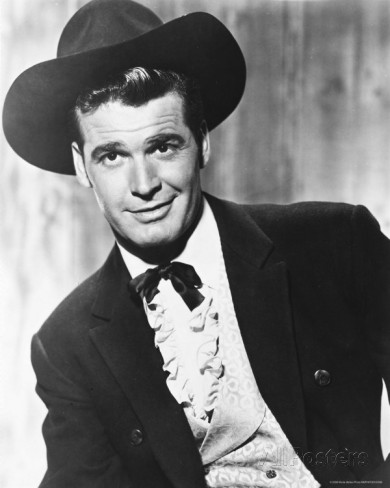
Goodbye to James Garner

james-garner

Goodbye to James Garner
by Kim Dower 

Fans loved him as RockfordMaverick,
a man’s man, had your back, cool,
did the right thing. I loved him
for being Doris Day’s husband
in a movie I cut class to see,
fifth grade, played at the Riviera,
only old men and me during the day,
went alone told no one, but I had a gigantic
crush, he was an ob/gyn, she was a mom,
marriage in jeopardy, couples in movies
stayed together in the sixties, while out
in the world it was all falling apart, women
poised to flip their lives, marching into a world
of miniskirts, riots, shame, pill box hats, flinging
our boxy pink suit jackets and pumps into the sunset,
not even James Garner could have saved us, and this week
more unrest, more wars, I’m stuck on the headline
James Garner Dead. When I was ten I needed a man
I could count on—even a man holding aces and eights.


“Goodbye to James Garner” by Kim Dower from Last Train to the Missing Planet. © Red Hen Press, 2016. Reprinted with permission. (buy now).

How to Clean an Oil-Slicked Penguin

Tuesday, Mar. 15, 2016, The Writer’s Almanac

rockhopper-penguins-007

How to Clean an Oil-Slicked Penguin
by Andrew Gent

Like the punch line to a very bad joke
the obvious and actual answer
is: “carefully”.
First, you must learn to hold the penguin
from behind, to avoid the beak,
pressing both wings against the body
until you need to hold each out
(again, carefully) to clean
in and around the extremities.
Next, contrary to logic,
you apply more oil
(cooking oil works best)
to loosen and remove
the thicker crude. Working it (carefully)
into the feathers. Next
you clean what remains
with dishwashing detergent
four, five, maybe even six times.
Careful (yet again) to avoid
the eyes and mouth.
You want to clean the feathers
without removing their natural
protective coating, or else
the penguin will sink like a stone
having lost its normal buoyancy.
Finally, you let it rinse off
in a pool of clean water.
Let the penguin do the work,
preening its coat and reclaiming
what little remains of its dignity.
Do not expect thanks.
In fact, it will continue
to bite and scratch.
But, if you are lucky,
it might survive.
Which is the most
we can hope for.


“How to Clean an Oil-Slicked Penguin” by Andrew Gent from Explicit Lyrics. © The University of Arkansas Press, 2016. Reprinted with permission. (buy now)

SPECKLED MILK

6f9b0bd7-adc8-463c-8f16-0bf9bc250395

by Bill Yarrow 

THOUGHTS ON WRITING

The first rule of writing is to not add descriptors to things inherently described. A ball need never be described as round because a ball, inherently, is round. Grass need never be described as green because grass naturally is green. Milk need never be described as white because milk normally is white. Adjectives are required only when the object to be described deviates from its inherent self. Thus a lozenge-shaped ball, blue or yellow grass, pink or speckled milk.

No need to say he watched with his eyes or she touched with her hands because we use our eyes to see and we use our hands to touch. If she touched his shoe with her toe, however, that’s a different story.

No one would write, “He sneezed with his nose,” “She danced with her feet,” or “He breathed with his lungs,” but people do write, “She pinched him with her fingers” (or worse, “with her thumb and index finger”) and “He kissed her with his lips.” Why? Let kiss be kiss and pinch be pinch. Over-scrupulous specificity is not a good.

Let the normal be normal and never over explain. He opened the window is sufficient. “He placed two hands on the window pull and lifted upward” or “he grabbed the door handle and pulled it outward” belabors the action and obscures the obvious. If you have something to say, say it directly. He kissed her. He parked the car. He cleaned the toilet. Add a detail only if it is an unexpected detail. He kissed her on the chin. He parked the car on the lawn. He cleaned the toilet in his suit.

Chekhov writes to Gorky: “You understand it at once when I say, ‘The man sat on the grass;’ you understand it because it is clear and makes no demands on the attention. On the other hand, it is not easily understood, and it is difficult for the mind, if I write, ‘A tall, narrow-chested, middle-sized man, with a red beard, sat on the green grass, already trampled by pedestrians, sat silently, shyly, and timidly looked about him.’ That is not immediately grasped by the mind, whereas good writing should be grasped at once—in a second.”

Description should be eloquent and precise, not fevered, not desperate, not consumed by the greed to be foolishly exhaustive and insanely comprehensive.

Consider these lines, both of which come from the William Carlos Williams poem that begins “By the road to the contagious hospital”

 “the reddish / purplish, forked, upstanding, twiggy / stuff of bushes and small trees / with dead, brown leaves under them”—that description is unfocused, desperate, inept.

 “the stiff curl of wild carrot leaf”—now, that description is eloquent, precise, thrillingly good!

Do not double up on words. Use “separated,” not “separated out.” Use “divided, not “divided up.” Use “together,” not “both together.” Use “sat,” not “sat down.” Use “fell,” not “fell down” (unless “down” is used as a preposition and requires an object, e.g. “down the stairs”). Use “lifted,” not “lifted up.”

Never exaggerate. Let words speak for themselves. “Hot,” not “scalding hot.” “Cold,” not “freezing cold.” “Handsome,” not “dashingly handsome.” “I sweated,” not “I sweated bullets.” “I jumped,” not “I jumped out of my skin.” “Red, not “beet red.” Or “blood red.” Or “firehouse red.” (An exaggeration is never far from a cliché.)

Do not add an adverb which does the same work as the verb. No need to say “moaned softly” when “moaned” will do. A moan, by its nature, is soft. No need to say “missed terribly” when “missed” will do. Adding “terribly” dilutes the force of “missed.”

Do not use “so” as an intensifier without using the word “that” to complete the comparison. Not “I was so embarrassed,” but “I was so embarrassed that I could not speak.” If you complete a comparison, make sure you are adding to the original idea rather than merely reiterating the idea. “I was so embarrassed that I turned red” is a reiterative sentence because people who are embarrassed do turn red. Better to say simply, “I was embarrassed” or “I turned red.” One or the other.

If you are going to sin, sin on the side of clarity. Add more words than fewer words. Repeat words if the repetition will help clarify the action or the idea. Consider the shortened form of the sentence from the preceding paragraph: “If you complete a comparison, make sure you are adding to rather than merely reiterating.” Add words for clarity.

Good writing is rhythmic. Prose rhythm may be established in a number of ways. [Note” not “a number of different ways.”] Thus, there are no hard and fast rules regarding word choice, particularly the number of words used. “I showered” and “I took a shower” are both fine ways to express the same idea. Two words are not universally preferable to four words. Choosing always the smallest possible number of words may make writing more difficult to decipher—like reading a telegram. Writing needs to breathe. Repetition is OK. The use of parenthetical elements is OK. The use of parallel phrases is to be encouraged. Triplets are to be admired. Good writing owes allegiance to precision, not constriction.

 Use “sprinted” rather than “ran quickly,” not because “sprinted” is one word rather than two but because it may be the precise word you are looking for.

 Use “reclined” rather than “leaned back,” not because “reclined” is one word rather than two but because it may be the precise word you are looking for.

 Use “contemplated” rather than “thought carefully,” not because “contemplated” is one word rather than two but because it is the precise word you are looking for.

 Use “labored” rather than “worked hard,” not because “labored” is one word rather than two but because it may be the precise word you are looking for.

 Use “glanced” rather than “looked quickly,” not because “glanced” is one word rather than two but because it may be the precise word you are looking for.

 Use “shouted” rather than “called loudly,” not because “shouted” is one word rather than two but because it may be the precise word you are looking for.

But “sprinted,” “reclined,” “contemplated,” “labored,” “glanced,” and “shouted” may not be the precise words you are looking for, so, in that case, don’t use them. Use whatever words you need whenever you need them.

Those people who see style as affectation see everything as affectation.

WE MUST NOT SAY SO
(with apologies to John Berryman)

Milk, friends, is white.
We must not say so.
Swans, friends, are white.
We must not say so.
Grass, friends, is green.
We must not say so.
Birds have two wings.
We must not say so.
River water is wet.
We must not say so.
We clap with our hands.
We must not say so.
The sky above is blue.
We must not say so.

but trucks sputter (or brake)
butter softens (or burns)
the factory closes (or hires)
the soil erodes (or dries up)
lips blister (or tighten)
leaves scatter (or shimmer)
paper cuts sting (or heal)
radiators knock (and hiss)


This essay appeared in Blue Fifth Review: Blue Five Notebook Series (Winter 2016 / 16.1) as “We must Not Say So.”        https://bluefifthreview.wordpress.com/


SEE MORE FROM BILL YARROW ON  HELIOShttps://heliosliterature.com/2014/11/26/processes/

Bill Yarrow is the author of THE LICE OF CHRIST (MadHat Press 2014), INCOMPETENT TRANSLATIONS AND INEPT HAIKU (Cervena Barva Press 2013), POINTED SENTENCES (BlazeVOX 2012), FOURTEEN (Naked Mannekin, 2011), and WRENCH (erbacce-press 2009).


SAYING WHAT YOU DAMN WELL PLEASE

1*gP-QMfEtAT-2HYTiiurxsw

by Erica Verrillo               Feb 14, 2016:  5 minute read

Saul Bellow (June 10, 1915 — April 5, 2005) was one of our most famed American writers. He won the Pulitzer Prize, the Nobel Prize for Literature, and the National Medal of Arts; and he is the only writer to have won the National Book Award for Fiction three times.

In spite of all the accolades Bellow received during his lifetime (and after) Bellow thought of himself as a “working stiff.”

“Celebrity interferes with the business of writing,” he said. “But it gives you a certain amount of confidence. Before, I said anything I damn pleased, and I did it defiantly. Now, I say anything I damn please, but I do it with confidence.”

Bellow was not afraid to say what he pleased, ever. At a PEN conference, he stated (like Churchill) that democracy was the worst form of government, except for all the others. Predictably, he “had a fight on his hands.” But Bellow was not one to back down. And, as it turned out, neither was I.

Developing judgment

One of the hardest things to learn during the publishing process is judgment. Writing alone, in your garret, does not demand anything from you other than time and thought. But once your work is exposed to the world, critics emerge from the woodwork. Everyone has an opinion. If they like what you have written, you feel confident that you have done a good job. And if they don’t, doubts creep in. The question you face is whether those doubts are justified.

My editor at Random House had a great deal to say about everything I had written — every word, every sentence, every paragraph, every chapter (some of which she crossed out in their entirety). We did revision, after revision, after revision.

At the start, I assumed she was right, and I did everything she told me to do. I eliminated anything she might remotely find objectionable. But, by the end of that three-year period, I learned not to throw the baby out with the bathwater. Instead of eliminating, I simply tweaked. And, in some cases, I outright refused to make the modifications she suggested.

What had changed?

I had finally learned to “say what I damn well pleased.” I had learned to block out the advice that wasn’t consistent with what I wanted to say. And my work was all the better for it.

The last book in my series was the one in which I finally learned to stick to my guns. It was published just as I wrote it, and it got the best reviews of any of my books. Critics remarked that my writing had “really come along.” What they didn’t know was the writing had been the same in all three books. The difference was that by the time book number three came along, I had developed enough confidence to tell the difference between a good suggestion and a bad one.

The trick is to develop that confidence early — before you sacrifice your integrity.

Integrity

What constitutes integrity for a writer?

Your first loyalty is to your manuscript. You must tell your story as best you can, realizing its full potential. You must ignore the distractions of what people say will sell, or what you think readers may like. You are not a panderer, you are an artist. Your job is to interpret reality through language.

Your second loyalty is to your readers. You have offered to tell them a tale. So, do it. Don’t try to impress them with linguistic gymnastics. Don’t point a finger at yourself. “Look at me!” is for actors, not writers. (Yes, I am thinking of Cloud Atlas.) Your readers shouldn’t even know you are there. You are your story.

Your third loyalty is to yourself. Nothing is more frightening than writing fiction. It lays you bare. So, don’t lie. Don’t shy away from emotions that are difficult, and from scenes that leave you raw. Tell the truth as only you can tell it.

Here is some of what Saul Bellow had to say about writing. I guarantee Saul will help you on the road to saying what you damn well please.

“You must either like what you are doing very much, either like your characters or hate them, you can’t be indifferent.”

“Your own natural, original voice provides the engine for your writing.”

“The Bible says, ‘Woe unto you when all men speak well of you.’ That’s where the critics come in.”

“The writer cannot make the seas of distraction stand still, but he can at times come between the madly distracted and the distractions. He does this by opening another world.”

“When you open a novel — and I mean of course the real thing — you enter into a state of intimacy with its writer. You hear a voice or, more significantly, an individual tone under the words. This tone you, the reader, will identify not so much by a name, the name of the author, as by a distinct and unique human quality. It seems to issue from the bosom, from a place beneath the breastbone. It is more musical than verbal, and it is the characteristic signature of a person, of a soul.”

“The most pleasurable moments in writing are when you are either laughing or weeping, and scribbling at the same time. That’s what one lives for in this trade.”


Erica Verrillo has published five books. She blogs about the publishing world, posts useful tips on how to get an agent, lists agents who are looking for clients as well as publishers accepting manuscripts directly from writers, explains how to market and promote your work, how to build your online platform, how to get reviews, how to self-publish, and how to keep your confidence on Publishing and Other Forms of Insanity.

This collection is sister to The Curious Cat Project (CCP), a website that connects writers from all over the world. Follow CCP on Facebook.


7094134Erica Verrillo was raised in Syracuse NY, the daughter of classical pianist, Violet Silverstein, and noted psychophysicist, Ronald T. Verrillo.  At age seventeen Ms.Verrillo moved to England, where she performed in the Oxford Symphony Orchestra. On her return to the U.S. she attended New England Conservatory. She finished her undergraduate education at Tufts, where she majored in History.

Erica's website is ericaverrillo.com. Her blog, Publishing ... and Other Forms of Insanity can be found 
at http://www.ericaverrillo.com as well.


Erica is also the writer of Stella’s Star Wish found here in Helios. https://heliosliterature.com/2014/11/13/stellas-star-wish/

CROSSROADS

by Ricky Hawthorne


woman-standing-red-traffic-light-22129474

Une brève réunion


The traffic light changed from green to red

And there you were

Knowing me, grinning

At my stupefaction

Calling me by name

Running heavily across the traffic

Toward me as if a returning lover

At the climax of a movie


‘John’,  you cried and only then I knew you too

‘My God you look well,

What are we, fifty-five?’

(I play tennis oh, and I have a gym membership)

I head the corporation now you know


‘And smart in that suit;

But surely you were a dustman

The last time I saw you?’

(I went to college, at night, after work)


‘Yes, father’s retired now’


‘Where are you living now?

Never, however did you afford that?’

(Sixteen hour days and sacrifice)


I’ll inherit the house of course

‘And just back from Barbados — A second honeymoon’

(I thought of ours, in Skeggie, and smiled)


And the car and the Cretan Villa…


Then your conversation evaporated

Like a plump dewdrop

Pricked by a sunbeam

From a new star


Yes, these were yours long ago

My patron, my king

And here where all roads meet

We will always measure the distance


So we shook hands

For the first time while

Above us the lights turned green;

You went west, I east

But what I didn’t tell you was

That I’d done it all for you


– See more at: https://scriggler.com/DetailPost/Poetry/20936#sthash.q0iMr5gB.dpuf


6466

Ricky Hawthorne


Bio:  Ricky graduated from Warwick University Coventry, UK, with triple honors in literature, theater and film.
Three screenplays:
Myth – a modern allegory on Middle Eastern Current Events
The Abandoned – A doomed menage a trois straddles the carnage of WWI France
Pottersville  – Xmas Eve and Ricky, redundant, separated and drunk, crashes his car and ends up in Pottersville, the nightmare town from his favorite film
Three teleplays all adapted from his own short stories:
Is This Yours – A cell predicts horse-race winners but what else does it tell?
A Turn of the Wheel – A contradictory SatNav sends its poor driver around the bend
The Bell –  Recuperating in an old cottage Simon gets caught up in its ghastly history
Three Dramas
Ahasuerus –  The Wandering Jew finds himself outside a Concentration Camp in 1943
Lenten Observance – A devout Catholic is torn between family and God when he discovers his autistic son is gay
Litter – An examination of global warming from the inner human psyche

HARRISON BERGERON

uw95X.jpg

by Kurt Vonnegut, Jr.

THE YEAR WAS 2081, and everybody was finally equal. They weren’t only equal before God and the law. They were equal every which way. Nobody was smarter than anybody else. Nobody was better looking than anybody else. Nobody was stronger or quicker than anybody else. All this equality was due to the 211th, 212th, and 213th Amendments to the Constitution, and to the unceasing vigilance of agents of the United States Handicapper General.

Some things about living still weren’t quite right, though. April for instance, still drove people crazy by not being springtime. And it was in that clammy month that the H-G men took George and Hazel Bergeron’s fourteen-year-old son, Harrison, away.

It was tragic, all right, but George and Hazel couldn’t think about it very hard. Hazel had a perfectly average intelligence, which meant she couldn’t think about anything except in short bursts. And George, while his intelligence was way above normal, had a little mental handicap radio in his ear. He was required by law to wear it at all times. It was tuned to a government transmitter. Every twenty seconds or so, the transmitter would send out some sharp noise to keep people like George from taking unfair advantage of their brains.

George and Hazel were watching television. There were tears on Hazel’s cheeks, but she’d forgotten for the moment what they were about.

On the television screen were ballerinas.

A buzzer sounded in George’s head. His thoughts fled in panic, like bandits from a burglar alarm. “That was a real pretty dance, that dance they just did,” said Hazel.

“Huh” said George.

“That dance–it was nice,” said Hazel.

“Yup,” said George. He tried to think a little about the ballerinas. They weren’t really very good-no better than anybody else would have been, anyway. They were burdened with sashweights and bags of birdshot, and their faces were masked, so that no one, seeing a free and graceful gesture or a pretty face, would feel like something the cat drug in. George was toying with the vague notion that maybe dancers shouldn’t be handicapped. But he didn’t get very far with it before another noise in his ear radio scattered his thoughts.

George winced. So did two out of the eight ballerinas.

Hazel saw him wince. Having no mental handicap herself, she had to ask George what the latest sound had been.

“Sounded like somebody hitting a milk bottle with a ball peen hammer,” said George.

“I’d think it would be real interesting, hearing all the different sounds,” said Hazel a little envious.

“All the things they think up.”

“Um,” said George.

“Only, if I was Handicapper General, you know what I would do?” said Hazel. Hazel, as a matter of fact, bore a strong resemblance to the Handicapper General, a woman named Diana Moon Glampers. “If I was Diana Moon Glampers,” said Hazel, “I’d have chimes on Sunday-just chimes. Kind of in honor of religion.”

“I could think, if it was just chimes,” said George.

“Well-maybe make ’em real loud,” said Hazel. “I think I’d make a good Handicapper General.”

“Good as anybody else,” said George.

“Who knows better then I do what normal is?” said Hazel.

“Right,” said George. He began to think glimmeringly about his abnormal son who was now in jail, about Harrison, but a twenty-one-gun salute in his head stopped that.

“Boy!” said Hazel, “that was a doozy, wasn’t it?”

It was such a doozy that George was white and trembling, and tears stood on the rims of his red eyes. Two of of the eight ballerinas had collapsed to the studio floor, were holding their temples.

“All of a sudden you look so tired,” said Hazel. “Why don’t you stretch out on the sofa, so’s you can rest your handicap bag on the pillows, honeybunch.” She was referring to the forty-seven pounds of birdshot in a canvas bag, which was padlocked around George’s neck. “Go on and rest the bag for a little while,” she said. “I don’t care if you’re not equal to me for a while.”

George weighed the bag with his hands. “I don’t mind it,” he said. “I don’t notice it any more. It’s just a part of me.”

“You been so tired lately–kind of wore out,” said Hazel. “If there was just some way we could make a little hole in the bottom of the bag, and just take out a few of them lead balls. Just a few.”

“Two years in prison and two thousand dollars fine for every ball I took out,” said George. “I don’t call that a bargain.”

“If you could just take a few out when you came home from work,” said Hazel. “I mean-you don’t compete with anybody around here. You just set around.”

“If I tried to get away with it,” said George, “then other people’d get away with it-and pretty soon we’d be right back to the dark ages again, with everybody competing against everybody else. You wouldn’t like that, would you?”

“I’d hate it,” said Hazel.

“There you are,” said George. The minute people start cheating on laws, what do you think happens to society?”

If Hazel hadn’t been able to come up with an answer to this question, George couldn’t have supplied one. A siren was going off in his head.

“Reckon it’d fall all apart,” said Hazel.

“What would?” said George blankly.

“Society,” said Hazel uncertainly. “Wasn’t that what you just said?

“Who knows?” said George.

The television program was suddenly interrupted for a news bulletin. It wasn’t clear at first as to what the bulletin was about, since the announcer, like all announcers, had a serious speech impediment. For about half a minute, and in a state of high excitement, the announcer tried to say, “Ladies and Gentlemen.”

He finally gave up, handed the bulletin to a ballerina to read.

“That’s all right-” Hazel said of the announcer, “he tried. That’s the big thing. He tried to do the best he could with what God gave him. He should get a nice raise for trying so hard.”

“Ladies and Gentlemen,” said the ballerina, reading the bulletin. She must have been extraordinarily beautiful, because the mask she wore was hideous. And it was easy to see that she was the strongest and most graceful of all the dancers, for her handicap bags were as big as those worn by two-hundred pound men.

And she had to apologize at once for her voice, which was a very unfair voice for a woman to use. Her voice was a warm, luminous, timeless melody. “Excuse me-” she said, and she began again, making her voice absolutely uncompetitive.

“Harrison Bergeron, age fourteen,” she said in a grackle squawk, “has just escaped from jail, where he was held on suspicion of plotting to overthrow the government. He is a genius and an athlete, is under-handicapped, and should be regarded as extremely dangerous.”

A police photograph of Harrison Bergeron was flashed on the screen-upside down, then sideways, upside down again, then right side up. The picture showed the full length of Harrison against a background calibrated in feet and inches. He was exactly seven feet tall.

The rest of Harrison’s appearance was Halloween and hardware. Nobody had ever born heavier handicaps. He had outgrown hindrances faster than the H-G men could think them up. Instead of a little ear radio for a mental handicap, he wore a tremendous pair of earphones, and spectacles with thick wavy lenses. The spectacles were intended to make him not only half blind, but to give him whanging headaches besides.

Scrap metal was hung all over him. Ordinarily, there was a certain symmetry, a military neatness to the handicaps issued to strong people, but Harrison looked like a walking junkyard. In the race of life, Harrison carried three hundred pounds.

And to offset his good looks, the H-G men required that he wear at all times a red rubber ball for a nose, keep his eyebrows shaved off, and cover his even white teeth with black caps at snaggle-tooth random.

“If you see this boy,” said the ballerina, “do–I repeat, do not–try to reason with him.” There was the shriek of a door being torn from its hinges.

Screams and barking cries of consternation came from the television set. The photograph of Harrison Bergeron on the screen jumped again and again, as though dancing to the tune of an earthquake.

George Bergeron correctly identified the earthquake, and well he might have – for many was the time his own home had danced to the same crashing tune. “My God-” said George, “that must be Harrison!”

The realization was blasted from his mind instantly by the sound of an automobile collision in his head.

When George could open his eyes again, the photograph of Harrison was gone. A living, breathing Harrison filled the screen.

Clanking, clownish, and huge, Harrison stood – in the center of the studio. The knob of the uprooted studio door was still in his hand. Ballerinas, technicians, musicians, and announcers cowered on their knees before him, expecting to die.

“I am the Emperor!” cried Harrison. “Do you hear? I am the Emperor! Everybody must do what I say at once!” He stamped his foot and the studio shook.

“Even as I stand here” he bellowed, “crippled, hobbled, sickened – I am a greater ruler than any man who ever lived! Now watch me become what I can become!”

Harrison tore the straps of his handicap harness like wet tissue paper, tore straps guaranteed to support five thousand pounds.

Harrison’s scrap-iron handicaps crashed to the floor.

Harrison thrust his thumbs under the bar of the padlock that secured his head harness. The bar snapped like celery. Harrison smashed his headphones and spectacles against the wall.

He flung away his rubber-ball nose, revealed a man that would have awed Thor, the god of thunder.

“I shall now select my Empress!” he said, looking down on the cowering people. “Let the first woman who dares rise to her feet claim her mate and her throne!”

A moment passed, and then a ballerina arose, swaying like a willow.

Harrison plucked the mental handicap from her ear, snapped off her physical handicaps with marvelous delicacy. Last of all he removed her mask.

She was blindingly beautiful.

“Now-” said Harrison, taking her hand, “shall we show the people the meaning of the word dance? Music!” he commanded.

The musicians scrambled back into their chairs, and Harrison stripped them of their handicaps, too. “Play your best,” he told them, “and I’ll make you barons and dukes and earls.”

The music began. It was normal at first-cheap, silly, false. But Harrison snatched two musicians from their chairs, waved them like batons as he sang the music as he wanted it played. He slammed them back into their chairs.

The music began again and was much improved.

Harrison and his Empress merely listened to the music for a while-listened gravely, as though synchronizing their heartbeats with it.

They shifted their weights to their toes.

Harrison placed his big hands on the girls tiny waist, letting her sense the weightlessness that would soon be hers.

And then, in an explosion of joy and grace, into the air they sprang!

Not only were the laws of the land abandoned, but the law of gravity and the laws of motion as well.

They reeled, whirled, swiveled, flounced, capered, gamboled, and spun.

They leaped like deer on the moon.

The studio ceiling was thirty feet high, but each leap brought the dancers nearer to it. It became their obvious intention to kiss the ceiling. They kissed it.

And then, neutraling gravity with love and pure will, they remained suspended in air inches below the ceiling, and they kissed each other for a long, long time.

It was then that Diana Moon Glampers, the Handicapper General, came into the studio with a double-barreled ten-gauge shotgun. She fired twice, and the Emperor and the Empress were dead before they hit the floor.

Diana Moon Glampers loaded the gun again. She aimed it at the musicians and told them they had ten seconds to get their handicaps back on.

It was then that the Bergerons’ television tube burned out.

Hazel turned to comment about the blackout to George. But George had gone out into the kitchen for a can of beer.

George came back in with the beer, paused while a handicap signal shook him up. And then he sat down again. “You been crying” he said to Hazel.

“Yup,” she said.

“What about?” he said.

“I forget,” she said. “Something real sad on television.”

“What was it?” he said.

“It’s all kind of mixed up in my mind,” said Hazel.

“Forget sad things,” said George.

“I always do,” said Hazel.

“That’s my girl,” said George. He winced. There was the sound of a rivetting gun in his head.

“Gee – I could tell that one was a doozy,” said Hazel.

“You can say that again,” said George.

“Gee-” said Hazel, “I could tell that one was a doozy.”


Harrison Bergeron” is a satirical and dystopian science-fiction short story written by Kurt Vonnegut and first published in October 1961. Originally published in The Magazine of Fantasy and Science Fiction, the story was republished in the author’s Welcome to the Monkey House collection in 1968.

I SEE YOU EVERY DAY

by Iain Cambridge


5124

Iain Cambridge

I moved to this area of North London about six months ago after my job with the Law firm, ‘Hixson and May’ fell through when Mr. Hixson was found to be in position of information that was not attained in an entirely legal way. This discovery resulted in the liquidation of the company and the redundancy of six of the junior lawyers in its employ – myself being one of them.

The small amount of savings I had put aside, coupled with the generous redundancy package given as part of the insurance taken out by the, much more astute, Mr. May, gave me the freedom to take a year off from gainful employment, and also helped me put down the deposit I needed for the two-bedroom flat owned by an elderly couple who had rented it out previously as extra income for their retirement.

It wasn’t the Ritz hotel, but it was warm and comfortable and afforded good views of the surrounding area, including the local park as seen from the kitchen window, and it was from here that I first encountered the young woman I came to know later as August Rain.

Everyday, at around 5.30pm she would walk her dog, a golden retriever I believe the breed to be, along the footpath that ran around the lake.

From the moment I saw her I was captivated.
August Rains’ appearance shunned any image of what society demanded as perfect. She was short, plump and wore an assortment of brightly coloured summer dresses that would cling to parts of her that other, less confident women, would hide away from the world. This, along with the oversized sunglasses she habitually wore against the gaze of the warm mid-summer sun that set low in the horizon, added to her charm.

As she walked she happily chatted away to her companion, seemingly about this and that, almost as if he were a person in his own right. Occasionally she would stop and sit on the park bench and looked out over the pond.

At these times I would fancy that she was looking directly at me, for the bench was situated in such a way that it faced my kitchen window.

This fancy would come to inspire a world created of my imaginings, bringing to life images and stories of which we played the lead roles.

Forged by destiny — a couple in love

I would wait for her to notice the odd looking man gazing at her from afar and to be intrigued by him to such an extent that she would look over the top of her sunglasses and smile, beckoning him over to join her on her walk, and to maybe be a part of her life.

Such fancies kept me happy for a while, but the more my imaginary world grew, the more my heart ached for her, until I decided that I would give fate and fancy a helping hand, for it was folly of me to expect her to notice me from so far away. So I went into the park and walked the same path as she, only in the opposite direction. My plan was to smile at her as we passed, and hopefully she would return it with one of her own, and maybe our story would begin with a simple – hello.

It was on a Friday evening when I made my first attempt to gain her attention, and with my heart in my mouth I began my casual stroll in the direction that I knew she would approach from.

I bought a newspaper from the local shop, as an aid to nonchalance, for this would be the reason I had taken this route, strolling with an air of someone merely enjoying the balmy summer evening. As I walked towards her my heart began to beat faster, for she seemed more beautiful than she first appeared to me from my window so far away.

Everything about her was perfect.

Her dark, rich red hair bounced along with every step she took and her usual attire of summer dresses showed the world that she was confident and comfortable in her own skin. Her voice, that I could now hear, was soft as she spoke to her canine companion, seemingly about her day, the smell of the flowers and of how the sun felt so warm on her face.

Such a perfect face.images

As we passed I looked up and smiled at her – a smile that was not returned. My knees actually sagged a little at this silent rebuttal, shocked at the realisation of the apparent yawning gap between my fantasies and what was shown to me as reality. I sat on the bench where she sometimes rested and watched her carry on by, taking with her my hopes and dreams.

Dreams of which seemed to fade with her into the glare of the setting sun.

Maybe she hadn’t noticed me.

I sat for a while as I tried to re-kindle this small ember of hope that still burned within my breast. Was I being so foolish as to let my imaginary world crumble because the focus of that world had not returned my smile?

Yes I was.

Tomorrow I would try again, and maybe this time I would say hello.

But tomorrow came and went, only to produce another unrequited smile, coupled with the loss of my nerve to speak to her.

The tomorrows stacked up until they amounted to weeks with nothing to show but a mute smile and an aching heart.

The weekends obviously had other plans for Ms. Rain, as she never seemed to appear on these days, but I had formed the habit of buying a newspaper everyday from the small shop at the entrance to the park, and so I continued this habit, stopping only at the bench that faced my kitchen window in order to watch the world go by – a world that seemed oblivious and uncaring at my loneliness.

I had woken up early on one such Sunday morning and so I decided to fetch my paper before breakfast. As the start of the day seemed quite clement, I stopped at my usual resting place. I found myself half –heatedly reading the news as I soaked up the early morning rays of this hot summers day, and as I read I heard the familiar voice belonging to the object of my obsession.

I froze.

I had not seen her on the weekends as she had a different pattern from the rest of the week, and it appeared that my love for her had been so blind as to assume that she walked her dog at the same time everyday.

As she approached I realised that her sudden appearance had not given me enough time to ‘nonchalantly’ get up and walk towards her, and so I remained seated and satisfied myself with just watching her walk on by.

But she did no such thing.

Instead she sat herself at the opposite end of the bench.

My heart was beating so hard that I feared it would leap from my chest.

From past experience I knew that she would only rest for about five minutes or so before continuing on her way. I had to end my torment by finding out, one way or another, if this woman who had captivated my heart so, would engage me in conversation.

I cleared my throat, at which point she turned towards me.

“Hello” she said, “what a lovely warm morning. I shall miss the summer, wont you”

Her voice took my breath away, so much so that I stammered my reply.

“I-I will indeed miss”

“Rain” she said, “August Rain – how do you do Mr?”

“Ritchmond – Albert Richmond”

I proffered my hand but Ms. Rain did not reciprocate, causing me to awkwardly retract it.

“You walk this way everyday Mr. Richmond”

It was a statement rather than a question.

“I do,” I said.

“Yes, Sammy and I come here every day too, just as a bit of exercise”

“Sammy? – Oh, that must be this young man here” I said, and with that I moved a little closer in order to pet her dog. In doing so I noticed how sweet she smelt. Her perfume was as the summer flowers that grew like an infestation all around us.

She laughed and easy laugh at my poor attempt at humour.

“Not so young now, are you old man”

She reached down and petted him, and with that our hands briefly touched. I quickly snatched my hand away with instant regret at my haste and at the message it possibly sent.

“Do you live or work around here?” she said, appearing not to notice my apparent reluctance to our physical contact.

“I live across the way – just opposite the park actually”

August Rain smiled.

“What a wonderful view you must have”.

“Oh yes” I said, “most beautiful”

The conversation paused a little, a gap that she filled with a sigh, as if she were imagining what I saw from my window. Never realising that the beauty I spoke of was hers.

“I feel we are so lucky to have such a small slice of paradise as this”

Her comment was wistful and seemed to be addressed to the world in general, and not just for my benefit. A warm breeze chose that moment to play with the trestles of her hair. It moved easily as it danced with the wind, and I marvelled at how this simple action of something so mundane could enrapture me so. She herself seemed to be lost in the moment and my foolish whimsy imagined a connection between the two of us. After a while she brought herself back to the present and turned her attention to her dog.

“Are you ready to finish our walk old boy?” she said. Sammy looked up with obedience in his happy face, at which point she turned to me.

“It was very nice to meet you Mr. Richmond – Albert,” she said as she stood up.

“And I you” I replied.

“I hope you enjoy the rest of your day”

And with that she began to walk away.

I stood also, and stole myself — reaching down inside for the courage I needed to tell her how I felt, how much I had fallen, and how much my heart beat for her.

“Miss Rain” I called.

She turned to face me once again.

“August, please”

I smiled,

“August – our paths have crossed for the past few weeks, and I must confess that this was not an accident”

A look of confusion crossed her face, but before she could voice any concern I plunged on with my confession.

“You stated that my view of the park must be one of beauty, and indeed you are correct, for the view I have seen for the past few months is of you. I see you everyday August, but I fear that you do not see me”

With this she smiled.

She took a step closer to me and removed her sunglasses so that I could see her eyes for the first time.

They were pale.

Unmoving.

“I have not seen you, or anything else for that matter since I was six years old – but this doesn’t mean that you have gone un-noticed to me”

I didn’t know what to say.

I stood silent as this revelation sunk in with all the new feelings that came with it. I looked at Sammy and noticed, for the first time, that he was wearing a harness – how had I not seen this?

My silence must have sent the wrong message, because as a result of this lack of response, August Rain put her glasses back on.

“Do not fret Albert – you are not the first to react this way”, and with that she sadly turned away. Calling over her shoulder she added,

“It was good to meet you Mr. Richmond”

My future was dissolving in front of me, and my world was becoming a colder place in spite of the warm summer sun.

“You may not be able to see me – but I still see you”

The words left my lips – blurted out like some lovesick teenager.

Awkward and clumsy.

She stopped in her tracks.

I hurried over and faced her once more.

“What do I have to do to make you see me?” I asked.

August put her hand to my face.

“I see you everyday,” she said, “The sound of you slowing your step as we pass one another.

The smell of your aftershave.

The crinkle of your newspaper.

The sound of you stopping after we pass, and the imagining that you stare after me – watching me leave and hoping that we meet again.

All these things are visible to me – and to Sammy, who slows his walk in order to prolong our meeting. He knows more than you think”

I placed my hand over hers.

“Then let this clumsy fool start again” I said, “My name is Albert Richmond, and I am in love with you Miss August Rain – and my love is blind”


THE END


– See more at: https://scriggler.com/DetailPost/Story/16082#sthash.rsQTlfoC.dpuf


Iain has appeared in Helios four previous times:

https://heliosliterature.com/2015/10/23/the-love-you-take/

https://heliosliterature.com/2015/05/27/from-what-side-do-we-echo/

https://heliosliterature.com/2015/04/21/one-size-fits-all/

https://heliosliterature.com/2015/04/21/one-size-fits-all/


Iain also writes under the name Dimpra Kaleem. Two of his books listed are listed below. Many are free for the reading.

51R0t25y+HL._SX407_BO1,204,203,200_

http://www.amazon.co.uk/All-eggs-one-basket-FANTASY-ebook/dp/B014P2J6Q2/ref=sr_1_162/276-5876614-7539944?s=books&ie=UTF8&qid=1442477760&sr=1-162

51k70nuW-8L._SX407_BO1,204,203,200_


http://www.amazon.co.uk/Destiny-Sails-COLLECTION-SHORT-STORIESebook/dp/B0116V9PCU/ref=pd_rhf_se_p_img_5?ie=UTF8&refRID=08S7AA53VHMJFRC6VV6A

Drew Pearson

http://educationforum.ipbhost.com/index.php?showtopic=15588pearson-drew3

Drew Pearson, Columnist

Andrew Russell “Drew” Pearson was one of the best-known American columnists of his day, noted for his syndicated newspaper column “Washington Merry-Go-Round,” in which he attacked various public persons.  Wikipedia
BornDecember 13, 1897, Evanston, IL
DiedSeptember 1, 1969, Washington, D.C.

[KHF notes: I read Drew Pearson’s column regularly in the Dayton Daily News when I was a teenager. Some may never have heard about him and the power he had in Washington.]

Drew Pearson and the Assassination of JFK

by John Simkin

John Simkin's Photo

Posted 03 March 2010 – 08:47 AM

Drew Pearson was America’s leading investigative journalist in 1963. However, as far as I can see, little has been written about his thoughts on the assassination of John Kennedy.

First of all I want to look at his record.

In 1929 Drew Pearson became Washington correspondent of the Baltimore Sun. Three years later he joined the Scripps-Howard syndicate, United Features. His Merry-Go-Round column was published in newspapers all over the United States. He soon established himself as an anti-corruption journalist. His politics came from his religious beliefs – he was a Quaker.

Pearson was a strong supporter of Franklin D. Roosevelt and his New Deal program. He also upset more conservative editors when he advocated United States involvement in the struggle against fascism in Europe. Pearson’s articles were often censored and so in 1941 he switched to the more liberal The Washington Post.

During the Second World War Pearson created a great deal of controversy when he took up the case of John Gates, a member of the American Communist Party, who was not allowed to take part in the D-Day landings. Gates later pointed out: “Newspaper columnist Drew Pearson published an account of my case… Syndicated coast-to-coast, the column meant well but it contained all kinds of unauthorized, secret military information – the name of my battalion, the fact that it had been alerted for overseas, my letter to the President and his reply, and the officers’ affidavits. As a result of this violation of military secrecy, the date for the outfit going overseas was postponed, the order restoring me to my battalion was countermanded and I was out of it for good. It seems that some of my friends, a bit overzealous in my cause, had given Pearson all this information, thinking the publicity would do me good.”

Pearson also became a radio broadcaster. He soon became one of America’s most popular radio personalities. After the war he was an enthusiastic supporter of the United Nations and helped to organize the Friendship Train project in 1947. The train travelled coast-to-coast collecting gifts of food for those people in Europe still suffering from the consequences of the war.

In 1947 Jack Anderson became Pearson’s assistant. Anderson had worked for the Office of Strategic Services (OSS) in China in the Second World War. This included working with Paul Helliwell, John K. Singlaub, Ray S. Cline, Richard Helms, E. Howard Hunt, Mitchell WerBell, Robert Emmett Johnson and Lucien Conein. Others working in China at that time included Tommy Corcoran, Whiting Willauer and William Pawley. I am convinced that Anderson was also working for the OSS that became the CIA in 1947.

Over the next few years Anderson was able to use his contacts that he had developed in the OSS to help Pearson with his stories. One of Anderson’s first stories concerned the dispute between Howard Hughes, the owner of Trans World Airlines and Owen Brewster, chairman of the Senate War Investigating Committee. Hughes claimed that Brewster was being paid by Pan American World Airways (Pan Am) to persuade the United States government to set up an official worldwide monopoly under its control. Part of this plan was to force all existing American carriers with overseas operations to close down or merge with Pan Am. As the owner of Trans World Airlines, Hughes posed a serious threat to this plan. Hughes claimed that Brewster had approached him and suggested he merge Trans World with Pan Am. Pearson and Anderson began a campaign against Brewster. They reported that Pan Am had provided Bewster with free flights to Hobe Sound, Florida, where he stayed free of charge at the holiday home of Pan Am Vice President Sam Pryor. As a result of this campaign Bewster lost his seat in Congress.

In the late 1940s Anderson became friendly with Joseph McCarthy. As he pointed out in his autobiography, Confessions of a Muckraker, “Joe McCarthy… was a pal of mine, irresponsible to be sure, but a fellow bachelor of vast amiability and an excellent source of inside dope on the Hill.” McCarthy began supplying Anderson with stories about suspected communists in government. Pearson refused to publish these stories as he was very suspicious of the motives of people like McCarthy. In fact, in 1948, Pearson began investigating J. Parnell Thomas, the Chairman of the House of Un-American Activities Committee. It was not long before Thomas’ secretary, Helen Campbell, began providing information about his illegal activities. On 4th August, 1948, Pearson published the story that Thomas had been putting friends on his congressional payroll. They did no work but in return shared their salaries with Thomas.

Called before a grand jury, J. Parnell Thomas availed himself to the 1st Amendment, a strategy that he had been unwilling to accept when dealing with the Hollywood Ten. Indicted on charges of conspiracy to defraud the government, Thomas was found guilty and sentenced to 18 months in prison and forced to pay a $10,000 fine. Two of his fellow inmates in Danbury Federal Correctional Institution were Lester Cole and Ring Lardner Jr. who were serving terms as a result of refusing to testify in front of Thomas and the House of Un-American Activities Committee.

In 1949 Pearson criticised the Secretary of Defence, James Forrestal, for his conservative views on foreign policy. He told Jack Anderson that he believed Forrestal was “the most dangerous man in America” and claimed that if he was not removed from office he would “cause another world war”. Pearson also suggested that Forrestal was guilty of corruption. Pearson was blamed when Forrestal committed suicide on 22nd May 1949. One journalist, Westbrook Pegler, wrote: “For months, Drew Pearson… hounded Jim Forrestal with dirty aspersions and insinuations, until, at last, exhausted and his nerves unstrung, one of the finest servants that the Republic ever had died of suicide.”

Drew Pearson also began investigating General Douglas MacArthur. In December, 1949, Anderson got hold of a top-secret cable from MacArthur to the Joint Chiefs of Staff, expressing his disagreement with President Harry S. Truman concerning Chaing Kai-shek. On 22nd December, 1949, Pearson published the story that: “General MacArthur has sent a triple-urgent cable urging that Formosa be occupied by U.S. troops.” Pearson argued that MacArthur was “trying to dictate U.S. foreign policy in the Far East”.

Harry S. Truman and Dean Acheson, the Secretary of State, told MacArthur to limit the war to Korea. MacArthur disagreed, favoring an attack on Chinese forces. Unwilling to accept the views of Truman and Dean Acheson, MacArthur began to make inflammatory statements indicating his disagreements with the United States government.

MacArthur gained support from right-wing members of the Senate such as Joe McCarthy who led the attack on Truman’s administration: “With half a million Communists in Korea killing American men, Acheson says, ‘Now let’s be calm, let’s do nothing’. It is like advising a man whose family is being killed not to take hasty action for fear he might alienate the affection of the murders.”

On 7th October, 1950, Douglas MacArthur launched an invasion of North Korea by the end of the month had reached the Yalu River, close to the frontier of China. On 20th November, Pearson wrote in his column that the Chinese were following a strategy that was “sucking our troops into a trap.” Three days later the Chinese Army launched an attack on MacArthur’s army. North Korean forces took Seoul in January 1951. Two months later, Harry S. Truman removed MacArthur from his command of the United Nations forces in Korea.

Joe McCarthy continued to provide Jack Anderson with a lot of information. In his autobiography, Confessions of a Muckraker, Anderson pointed out: “At my prompting he (McCarthy) would phone fellow senators to ask what had transpired this morning behind closed doors or what strategy was planned for the morrow. While I listened in on an extension he would pump even a Robert Taft or a William Knowland with the handwritten questions I passed him.”

In return, Anderson provided McCarthy with information about politicians and state officials he suspected of being “communists”. Anderson later recalled that his decision to work with McCarthy “was almost automatic.. for one thing, I owed him; for another, he might be able to flesh out some of our inconclusive material, and if so, I would no doubt get the scoop.” As a result Anderson passed on his file on the presidential aide, David Demarest Lloyd.

On 9th February, 1950, Joe McCarthy made a speech in Salt Lake City where he attacked Dean Acheson, the Secretary of State, as “a pompous diplomat in striped pants”. He claimed that he had a list of 57 people in the State Department that were known to be members of the American Communist Party. McCarthy went on to argue that some of these people were passing secret information to the Soviet Union. He added: “The reason why we find ourselves in a position of impotency is not because the enemy has sent men to invade our shores, but rather because of the traitorous actions of those who have had all the benefits that the wealthiest nation on earth has had to offer – the finest homes, the finest college educations, and the finest jobs in Government we can give.”

The list of names was not a secret and had been in fact published by the Secretary of State in 1946. These people had been identified during a preliminary screening of 3,000 federal employees. Some had been communists but others had been fascists, alcoholics and sexual deviants. As it happens, if McCarthy had been screened, his own drink problems and sexual preferences would have resulted in him being put on the list.

Pearson immediately launched an attack on Joe McCarthy. He pointed out that only three people on the list were State Department officials. He added that when this list was first published four years ago, Gustavo Duran and Mary Jane Keeney had both resigned from the State Department (1946). He added that the third person, John S. Service, had been cleared after a prolonged and careful investigation. Pearson also argued that none of these people had been named were members of the American Communist Party.

Jack Anderson asked Pearson to stop attacking McCarthy: “He is our best source on the Hill.” Pearson replied, “He may be a good source, Jack, but he’s a bad man.”

On 20th February, 1950, Joe McCarthy made a speech in the Senate supporting the allegations he had made in Salt Lake City. This time he did not describe them as “card-carrying communists” because this had been shown to be untrue. Instead he argued that his list were all “loyalty risks”. He also claimed that one of the president’s speech-writers, was a communist. Although he did not name him, he was referring to David Demarest Lloyd, the man that Anderson had provided information on.

Lloyd immediately issued a statement where he defended himself against McCarthy’s charges. President Harry S. Truman not only kept him on but promoted him to the post of Administrative Assistant. Lloyd was indeed innocent of these claims and McCarthy was forced to withdraw these allegations. As Anderson admitted: “At my instigation, then, Lloyd had been done an injustice that was saved from being grevious only by Truman’s steadfastness.”

McCarthy now informed Jack Anderson that he had evidence that Professor Owen Lattimore, director of the Walter Hines Page School of International Relations at Johns Hopkins University, was a Soviet spy. Pearson, who knew Lattimore, and while accepting he held left-wing views, he was convinced he was not a spy. In his speeches, McCarthy referred to Lattimore as “Mr X… the top Russian spy… the key man in a Russian espionage ring.”

On 26th March, 1950, Pearson named Lattimore as McCarthy’s Mr. X. Pearson then went onto defend Lattimore against these charges. McCarthy responded by making a speech in Congress where he admitted: “I fear that in the case of Lattimore I may have perhaps placed too much stress on the question of whether he is a paid espionage agent.”

McCarthy then produced Louis Budenz, the former editor of The Daily Worker. Budenz claimed that Lattimore was a “concealed communist”. However, as Jack Anderson admitted: “Budenz had never met Lattimore; he spoke not from personal observation of him but from what he remembered of what others had told him five, six, seven and thirteen years before.”

Pearson now wrote an article where he showed that Budenz was a serial liar: “Apologists for Budenz minimize this on the ground that Budenz has now reformed. Nevertheless, untruthful statements made regarding his past and refusal to answer questions have a bearing on Budenz’s credibility.” He went on to point out that “all in all, Budenz refused to answer 23 questions on the ground of self-incrimination”.

Owen Lattimore was eventually cleared of the charge that he was a Soviet spy or a secret member of the American Communist Party and like several other victims of McCarthyism, he went to live in Europe and for several years was professor of Chinese studies at Leeds University.

Despite the efforts of Jack Anderson, by the end of June, 1950, Drew Pearson had written more than forty daily columns and a significant percentage of his weekly radio broadcasts, that had been devoted to discrediting the charges made by Joseph McCarthy. He now decided to take on Pearson and he told Anderson: “Jack, I’m going to have to go after your boss. I mean, no holds barred. I figure I’ve already lost his supporters; by going after him, I can pick up his enemies.” McCarthy, when drunk, told Assistant Attorney General Joe Keenan, that he was considering “bumping Pearson off”.

On 15th December, 1950, McCarthy made a speech in Congress where he claimed that Pearson was “the voice of international Communism” and “a Moscow-directed character assassin.” McCarthy added that Pearson was “a prostitute of journalism” and that Pearson “and the Communist Party murdered James Forrestal in just as cold blood as though they had machine-gunned him.”

Over the next two months Joseph McCarthy made seven Senate speeches on Drew Pearson. He called for a “patriotic boycott” of his radio show and as a result, Adam Hats, withdrew as Pearson’s radio sponsor. Although he was able to make a series of short-term arrangements, Pearson was never again able to find a permanent sponsor. Twelve newspapers cancelled their contract with Pearson.

Joe McCarthy and his friends also raised money to help Fred Napoleon Howser, the Attorney General of California, to sue Pearson for $350,000. This involved an incident in 1948 when Pearson accused Howser of consorting with mobsters and of taking a bribe from gambling interests. Help was also given to Father Charles Coughlin, who sued Pearson for $225,000. However, in 1951 the courts ruled that Pearson had not libeled either Howser or Coughlin.

Only the St. Louis Star-Times defended Pearson. As its editorial pointed out: “If Joseph McCarthy can silence a critic named Drew Pearson, simply by smearing him with the brush of Communist association, he can silence any other critic.” However, Pearson did get the support of J. William Fulbright, Wayne Morse, Clinton Anderson, William Benton and Thomas Hennings in the Senate.

In October, 1953, Joe McCarthy began investigating communist infiltration into the military. Attempts were made by McCarthy to discredit Robert T. Stevens, the Secretary of the Army. The president, Dwight Eisenhower, was furious and now realised that it was time to bring an end to McCarthy’s activities.

The United States Army now passed information about McCarthy to journalists who were known to be opposed to him. This included the news that McCarthy and Roy Cohn had abused congressional privilege by trying to prevent David Schine from being drafted. When that failed, it was claimed that Cohn tried to pressurize the Army into granting Schine special privileges. Pearson published the story on 15th December, 1953.

Some figures in the media, such as writers George Seldes and I. F. Stone, and cartoonists, Herb Block and Daniel Fitzpatrick, had fought a long campaign against McCarthy. Other figures in the media, who had for a long time been opposed to McCarthyism, but were frightened to speak out, now began to get the confidence to join the counter-attack. Edward Murrow, the experienced broadcaster, used his television programme, See It Now, on 9th March, 1954, to criticize McCarthy’s methods. Newspaper columnists such as Walter Lippmann also became more open in their attacks on McCarthy.

The senate investigations into the United States Army were televised and this helped to expose the tactics of Joseph McCarthy. One newspaper, the Louisville Courier-Journal, reported that: “In this long, degrading travesty of the democratic process, McCarthy has shown himself to be evil and unmatched in malice.” Leading politicians in both parties, had been embarrassed by McCarthy’s performance and on 2nd December, 1954, a censure motion condemned his conduct by 67 votes to 22.

McCarthy also lost the chairmanship of the Government Committee on Operations of the Senate. He was now without a power base and the media lost interest in his claims of a communist conspiracy. As one journalist, Willard Edwards, pointed out: “Most reporters just refused to file McCarthy stories. And most papers would not have printed them anyway.”

In 1956 Pearson began investigating the relationship between Lyndon B. Johnson and two businessmen, George R. Brown and Herman Brown. Pearson believed that Johnson had arranged for the Texas-based Brown and Root Construction Company to avoid large tax bills. Johnson brought an end to this investigation by offering Pearson a deal. If Pearson dropped his Brown-Root crusade, Johnson would support the presidential ambitions of Estes Kefauver. Pearson accepted and wrote in his diary (16th April, 1956): “This is the first time I’ve ever made a deal like this, and I feel a little unhappy about it. With the Presidency of the United States at stake, maybe it’s justified, maybe not – I don’t know.”

Jack Anderson also helped Pearson investigate stories of corruption inside the administration of President Dwight Eisenhower. They discovered that Eisenhower had received gifts worth more than $500,000 from “big-business well-wishers.” In 1957 Anderson threaten to quit because these stories always appeared under Pearson’s name. Pearson responded by promising him more bylines and pledged to leave the column to him when he died.

Pearson and Anderson began investigating the presidential assistant Sherman Adams. The former governor of New Hampshire, was considered to be a key figure in Eisenhower’s administration. Anderson discovered that Bernard Goldfine, a wealthy industrialist, had given Adams a large number of presents. This included suits, overcoats, alcohol, furnishings and the payment of hotel and resort bills. Anderson eventually found evidence that Adams had twice persuaded the Federal Trade Commission to “ease up its pursuit of Goldfine for putting false labels on the products of his textile plants.”

The story was eventually published in 1958 and Adams was forced to resign from office. However, Jack Anderson was much criticized for the way he carried out his investigation and one of his assistants, Les Whitten, was arrested by the FBI for receiving stolen government documents.

In 1960 Pearson supported Hubert Humphrey in his efforts to become the Democratic Party candidate. However, those campaigning for John F. Kennedy, accused him of being a draft dodger. As a result, when Humphrey dropped out of the race, Pearson switched his support to Lyndon B. Johnson. However, it was Kennedy who eventually got the nomination.

Pearson now supported Kennedy’s attempt to become president. One of the ways he helped his campaign was to investigate the relationship between Howard Hughes and Richard Nixon. Pearson and Anderson discovered that in 1956 the Hughes Tool Company provided a $205,000 loan to Nixon Incorporated, a company run by Richard’s brother, Francis Donald Nixon. The money was never paid back. Soon after the money was paid the Internal Revenue Service (IRS) reversed a previous decision to grant tax-exempt status to the Howard Hughes Medical Institute.

This information was revealed by Pearson and Jack Anderson during the 1960 presidential campaign. Nixon initially denied the loan but later was forced to admit that this money had been given to his brother. It was claimed that this story helped John F. Kennedy defeat Nixon in the election.

Like other political journalists, Pearson and Anderson investigated the death of President John F. Kennedy. Sources close to John McCone and Robert Kennedy claimed that the assassination was linked to the plots against Fidel Castro of Cuba.

In 1966 attempts were made to deport Johnny Roselli as an illegal alien. Roselli moved to Los Angeles where he went into early retirement. It was at this time he told attorney, Edward Morgan: “The last of the sniper teams dispatched by Robert Kennedy in 1963 to assassinate Fidel Castro were captured in Havana. Under torture they broke and confessed to being sponsored by the CIA and the US government. At that point, Castro remarked that, ‘If that was the way President Kennedy wanted it, Cuba could engage in the same tactics’. The result was that Castro infiltrated teams of snipers into the US to kill Kennedy”.

Morgan took the story to Pearson. The story was then passed on to Earl Warren. He did not want anything to do with it and so the information was then passed to the FBI. When they failed to investigate the story Jack Anderson wrote an article entitled “President Johnson is sitting on a political H-bomb” about Roselli’s story. It has been suggested that Roselli started this story at the request of his friends in the Central Intelligence Agency in order to divert attention from the investigation being carried out by Jim Garrison.

In 1968 Jack Anderson and Drew Pearson published The Case Against Congress. The book documented examples of how politicians had “abused their power and priviledge by placing their own interests ahead of those of the American people”. This included the activities of Bobby Baker, James Eastland, Lyndon B. Johnson, Dwight Eisenhower, Hubert Humphrey, Everett Dirksen, Thomas J. Dodd, John McClellan and Clark Clifford.

On 18th July, 1969, Mary Jo Kopechne, died while in the car of Edward Kennedy. Pearson was investigating the case when he died on 1st September. Chalmers Roberts of the Washington Post wrote: “Drew Pearson was a muckraker with a Quaker conscience. In print he sounded fierce; in life he was gentle, even courtly. For thirty-eight years he did more than any man to keep the national capital honest.”