How to Clean an Oil-Slicked Penguin

Tuesday, Mar. 15, 2016, The Writer’s Almanac

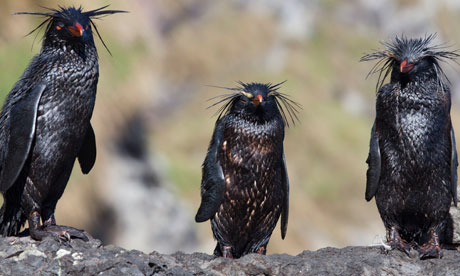
rockhopper-penguins-007

How to Clean an Oil-Slicked Penguin
by Andrew Gent

Like the punch line to a very bad joke
the obvious and actual answer
is: “carefully”.
First, you must learn to hold the penguin
from behind, to avoid the beak,
pressing both wings against the body
until you need to hold each out
(again, carefully) to clean
in and around the extremities.
Next, contrary to logic,
you apply more oil
(cooking oil works best)
to loosen and remove
the thicker crude. Working it (carefully)
into the feathers. Next
you clean what remains
with dishwashing detergent
four, five, maybe even six times.
Careful (yet again) to avoid
the eyes and mouth.
You want to clean the feathers
without removing their natural
protective coating, or else
the penguin will sink like a stone
having lost its normal buoyancy.
Finally, you let it rinse off
in a pool of clean water.
Let the penguin do the work,
preening its coat and reclaiming
what little remains of its dignity.
Do not expect thanks.
In fact, it will continue
to bite and scratch.
But, if you are lucky,
it might survive.
Which is the most
we can hope for.


“How to Clean an Oil-Slicked Penguin” by Andrew Gent from Explicit Lyrics. © The University of Arkansas Press, 2016. Reprinted with permission. (buy now)

CROSSROADS

by Ricky Hawthorne


woman-standing-red-traffic-light-22129474

Une brève réunion


The traffic light changed from green to red

And there you were

Knowing me, grinning

At my stupefaction

Calling me by name

Running heavily across the traffic

Toward me as if a returning lover

At the climax of a movie


‘John’,  you cried and only then I knew you too

‘My God you look well,

What are we, fifty-five?’

(I play tennis oh, and I have a gym membership)

I head the corporation now you know


‘And smart in that suit;

But surely you were a dustman

The last time I saw you?’

(I went to college, at night, after work)


‘Yes, father’s retired now’


‘Where are you living now?

Never, however did you afford that?’

(Sixteen hour days and sacrifice)


I’ll inherit the house of course

‘And just back from Barbados — A second honeymoon’

(I thought of ours, in Skeggie, and smiled)


And the car and the Cretan Villa…


Then your conversation evaporated

Like a plump dewdrop

Pricked by a sunbeam

From a new star


Yes, these were yours long ago

My patron, my king

And here where all roads meet

We will always measure the distance


So we shook hands

For the first time while

Above us the lights turned green;

You went west, I east

But what I didn’t tell you was

That I’d done it all for you


– See more at: https://scriggler.com/DetailPost/Poetry/20936#sthash.q0iMr5gB.dpuf


6466

Ricky Hawthorne


Bio:  Ricky graduated from Warwick University Coventry, UK, with triple honors in literature, theater and film.
Three screenplays:
Myth – a modern allegory on Middle Eastern Current Events
The Abandoned – A doomed menage a trois straddles the carnage of WWI France
Pottersville  – Xmas Eve and Ricky, redundant, separated and drunk, crashes his car and ends up in Pottersville, the nightmare town from his favorite film
Three teleplays all adapted from his own short stories:
Is This Yours – A cell predicts horse-race winners but what else does it tell?
A Turn of the Wheel – A contradictory SatNav sends its poor driver around the bend
The Bell –  Recuperating in an old cottage Simon gets caught up in its ghastly history
Three Dramas
Ahasuerus –  The Wandering Jew finds himself outside a Concentration Camp in 1943
Lenten Observance – A devout Catholic is torn between family and God when he discovers his autistic son is gay
Litter – An examination of global warming from the inner human psyche

NOW

heart-vs-mind-fighting-28446089

by Michelle Cote


I was at the bottom with

No end in sight.

Mind numbing pain and sorrow

Blocked my vision and stopped my breath,

But then, from a soul sister, in the silence of despair,

Came a glimmering of hope,

A way to stop my ego, to

Reign in my mind.

She brought wise words of knowing,

A knowing and watching, a feeling and seeing.

And as I accepted that seeing and knowing,

the thoughts began to drop away

One by one like autumn leaves.

leaves

There came an absence of words,

A deep stilling of my soul.

Finally a way to be, just be, the only way,

But not quite a total release as I was yet

too weak, too exhausted from my struggle.

Parts of my ego and anger still held on, their grip

Like tentacles wrapped around my heart.

 I wanted to let go, I thought that maybe

the “wanting” was in the way,

But I accepted that soon even the wanting would be

of no consequence, it would drop away on its own and

The anger would stop sneaking up on me,

Grabbing me from behind when I least expected it.

 I know now that my ego and willful mind will not

Let go without a fight.

A fight to remain in charge, to perpetuate their control

And continue deluded behavior.

change ahead


But I have changed, grown,

and can now watch them from a safe distance and

At times even smile at their antics,

But I grow tired of their stubbornness,

their uncooperative nature,

their disdain for what is best for me.

They do not have my best interest at heart.

They have no heart.

Those two are not who I am

and when I am finally in tune to the being that is my true self,

All else will naturally fall away

and I won’t have to “deal” with either of them,

Nothing else will exists but the Now and

There I will happily stay.


Michelle Cotes loves to write poetry. Her poems describe her emotions beautifully. Michelle is in the process of working on two novels. She loves to garden and preserve what she grows by canning and freezing.  She lives in what she describes as  “a very cute little white cottage in the big woods.”

Her poetry can be found at http://heartwordsforpoetry.org  where this poem first appeared. Her poem “My Hope” was recently re-blogged here on Helios.


The Blending of Many

https://joellycameron.wordpress.com/2015/12/28/the-blending-of-many

by Joelly Cameron

images-1

Like snow, you fall around me.
I listen, content to your body breathing,
As we lay covered in flannel.
My fingers caught up in your pectoral curls,
And the way your eyes crinkle when you are content.
I wonder if it is possible to lie between the snowflakes,
And still be warm in this blatant vulnerability?
I have become exposed to this new awareness.This sense of bareness between us.
Yet, I welcome the fall, and the obviousness of you.

We have become like trees, rustling living beings,
That search for things we didn’t know we were looking for,
And aren’t sure that we want.
Like the leftover boxes that still lay on my bedroom floor.
That once contained something we wanted, but maybe outgrew.

Yet, for a time we held tightly to them, because we thought
They were what we needed.


See also https://heliosliterature.com/2015/02/16/castles-in-spain/

 D0fbGYy4_400x400

Joelle Cameron

Wallace Stevens: The Plain Sense of Things

S.C. Hickman's avatarThe Dark Forest: Literature, Philosophy, and Digital Arts

darwin_s_greenhouse_by_amandabates-d5ixp7e

After the leaves have fallen, we return
To a plain sense of things. It is as if
We had come to an end of the imagination,
Inanimate in an inert savoir.

It is difficult even to choose the adjective
For this blank cold, this sadness without cause.
The great structure has become a minor house.
No turban walks across the lessened floors.

The greenhouse never so badly needed paint.
The chimney is fifty years old and slants to one side.
A fantastic effort has failed, a repetition
In a repetitiousness of men and flies.

Yet the absence of the imagination had
Itself to be imagined. The great pond,
The plain sense of it, without reflections, leaves,
Mud, water like dirty glass, expressing silence

Of a sort, silence of a rat come out to see,
The great pond and its waste of the lilies, all this
Had to be imagined as…

View original post 1,962 more words

My prayer is a merry laughter

by Will Tiggs

Will Tigs's avatarHomo est Machina

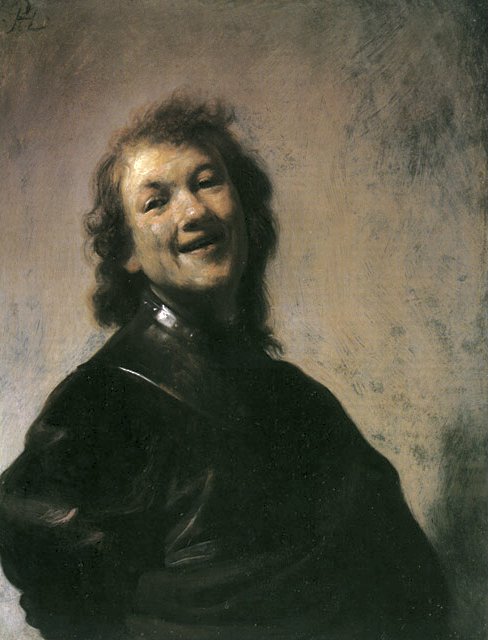
the-young-rembrandt-as-democritus-the-laughing-philosopher-1629

My prayer is a merry laughter
in which I say: “Ha ha! Ha ha!”
I do not care what comes after.
My prayer is a merry laughter.
Life is but a yearning for the hereafter.
A hope to cancel nature’s law.
My prayer is a merry laughter
in which I say: “Ha ha! Ha ha!”

*Painting – “The Young Rembrandt as Democritus the Laughing Philosopher” by Rembrandt, 1629.

View original post

GREAT SONG LYRICS

http://www.bbc.com/news/magazine-33282745

A Point of View: What’s the secret of writing great song lyrics?

by Adam Gopnik

  • 26 June 2015
  • From the section Magazine
Music score with the words
Having written words for someone else’s music, Adam Gopnik finds there’s a common factor behind all great lyrics, from Mozart opera to Taylor Swift. 

Everyone thinks he can write a song, and now I have. The haunted, wild look you see in the eyes of professional songwriters at cocktail parties rises from the popular idea that any of us, given the chance, can do what they do as well as they do it – the fur earmuffs you see them wearing even on the hottest summer days are there, too, from a desperate attempt not to have to listen to the songs the rest of us write and insist on playing for them. “I think I just feel how everyone feels, that I have three or four really great folk albums in me,” Hannah says complacently on the US television comedy Girls. Everyone thinks that.

But now I have done what all of us amateurs dream of doing – written words to someone’s music and heard it sung. Not a song alone, but an entire work – called (when I am in a puffed up mood) an oratorio, and when I am feeling more modest, a mere song cycle, and when I am feeling more modest still, a concept album, as yet unrecorded. It’s called Sentences, with music by the inspired young composer Nico Muhly, and seeing it premiere a few weeks ago, at the Barbican Centre in London goes high on my list of things I did that made my life matter – like the birth of a child, only with less sweat and better dressed.

The story we told was that of the great computer scientist Alan Turing, and it was sung by the amazing counter-tenor Iestyn Davies – but I won’t detain you with its genesis or my own sense of what in it works and what doesn’t. I will say that I was working on the libretto for the song cycle even as I was also writing the words for a musical comedy, properly so-called, and I discovered that in work meant or dreamed of for the commercial theatre, every syllable gets argued over. Is the emotional logic entirely lucid? In our Barbican-directed oratorio a great deal of indirection and obliquity was welcome. In our age, I’ve decided, the difference between entertainment and art is that in entertainment we expect to do all the work for the audience, while in art we expect the audience to do all the work for us.

But the deeper relation between words and music – the way they land in the listener’s ear, and then her soul – is more complicated than it seems. Music alone is puzzling enough – how it is that the mind makes sound into music and music into meaning is one of the big unanswered questions. No matter how hard we craft them for lucidity and shape and dramatic clarity – and it’s the good faith of the librettist’s art form to do so as elegantly as he can – music and words together exist in the end in an older realm of magic and enchantment, a place where the nursery rhyme and the church hymn and the pop single all meet. They work as spells do – that is, either entirely, or not at all. We sing and the magic door swings open, or it doesn’t, and there’s no explaining it. Three boys from Liverpool sing “She loves you, yeah, yeah yeah ” and the world turns off its axis. Had they sung, as Paul McCartney’s father wanted, “yes, yes, yes”, the old path would not have changed.

The Beatles in concert, 1964

Yeah, yeah. yeah. The Beatles in concert, 1964

The libretto writer, I should add at once, is merely the junior partner in the enterprise – or not even a partner, more like the man who sweeps out the candy wrappers from the theatre floor after the patrons leave. Who now remembers the name of the man who set the text for Handel’s Messiah? Well, it was Charles Jennens. The only libretto writer whose name anyone remembers – other than the great lyricists of the American musical theatre, the sacred law firm of Mercer, Loesser and Hart – is Lorenzo da Ponte, who is my hero. He was Jewish and a priest, and a Venetian and a New Yorker. It’s a sympathetic package, and he wrote for – more than “with” really – wrote for Mozart, the three operas that may well be the height of all artistic creation: The Marriage of Figaro, Cosi Fan Tutte and Don Giovanni.


Lorenzo Da Ponte 1749-1838

Lorenzo da Ponte
  • Born Emanuele Conegliano, to a Jewish family in Venice. converted to Roman Catholicism in 1764 and was baptised with the name Lorenzo da Ponte
  • Ordained as a priest in 1773 but nevertheless fathered two children, and was subsequently banished for 15 years from Venice
  • Moved to Vienna where he scored Mozart’s best-known Italian operas – The Marriage of Figaro (1786), Don Giovanni (1787) and Cosi Fan Tutte (1790)
  • Later moved to London and then the US where he ran a grocery store, gave Italian lessons and was eventually appointed professor of Italian literature at Columbia College

If the aliens arrived on earth from Neptune and asked me “what should we go out to see first that you humans have made?”, I think I would say Cosi Fan Tutte. (Though I also think I would add “Oh – and watch Cary Grant in North By Northwest” – but then the aliens would say, “Yeah: we saw that already on Neptune. Everybody in the galaxy has seen North By Northwest.”)

But a single touch of contrivance spoils it all. Any time we feel the authors creating coincidence or engineering emotion, making melodrama rather than musical drama – shoving incidents around rather than exploring character in collision with itself or another – we rebel inside. In Cosi Fan Tutte we accept the convention of disguised Albanians. But we accept it because Mozart writes his most sublime music for the silliest parts. If it sounded cute, we would rebel against it. That “yeah, yeah, yeah” mattered because it was exactly what such a boy would actually say to a friend about a girl. The smirk, or the hack’s weary knowing devices, are both enemies of enchantment and, without enchantment, music and words together mean nothing.

A 2009 production of Mozart's Cosi Fan Tutte, performed at the Salzburg Festival

A 2009 production of Mozart’s Cosi Fan Tutte, performed at the Salzburg Festiva

Music is so emotionally overwhelming that it pushes the discursive and explanatory roles of language aside – and it is part of the job of the libretto writer to get out of its way. Even in Handel’s Messiah we recall lyrical fragments more than whole stanzas. “Unto us a child is born, “How beautiful are the feet…” “All we, like sheep”. When we think through our experience of our favourite oratorios, our most important pop songs, our favourite operas, they are almost always the experience of a forceful fragment – three or four words – “How beautiful are the feet”, or “Shake it off”.

It is a mysterious, semi-physical response, in which the audience does as much work as the artists. It works or it doesn’t. Small fragments of sound and sense strike our hearts as shrapnel strikes our skin. They lodge and wound us, independent of their intended trajectory. The audience responds or it doesn’t. The audience is less like a crew of supercilious analysts and more like a magnet set to one pole or the other. If the pole is right, the audience is drawn irresistibly to the sound on stage. If it isn’t, no amount of seduction or intelligence can draw them in, any more than a physical magnet can be made to adhere to metal by good will or affection. Sung words belong more fully to the world of ritual and routine, of incantation and mother’s murmurings, than to the fully lucid and well-lit world of argument. The words work or they don’t.

Sigrid Thornton in an australian production of A Little Night Music, 2009

Sondheim’s “Send In The Clowns” is sung by Desiree (Sigrid Thornton) in this 2009 production of A Little Night Music.

The one thing I have learned through the process is this – our minds make meaning out of music by not making too much meaning out of it. One learns as a librettist to tiptoe to the edge of argument, and then back off to the limbo-land of implication and indirection. The most popular lyric of Stephen Sondheim is, after all, the most offhand – a rueful farewell, but exactly to whom or exactly why we don’t always know. I hear the producer or the scriptwriter asking “Send in the clowns? Shouldn’t it be call off the clowns?” But in the clowns must come for reasons only clowns and composers know.

I have not learned why music matters most – but I have learned a great deal about the power of voices, the limits of language to insist and its power to invoke, and about the mysterious magnetism that passes between an audience and its art. Above all, I have learned that musicians are a superior race. We are lucky to share this planet – or any other – with them.

  • Adam Gopnik has lived in Paris and wrote the book Paris to the Moon

A Point of View is usually broadcast on Fridays on Radio 4 at 20:50 BST and repeated Sundays 08:50 BST

“UNIVERSE”

Man of many thoughts's avatarkeithgarrettpoetry


Created within me Is the answer to the beginning of time,

Is there a start or finish, an ending or beginning to what’s mine.?

In many a direction I must be,

Everything travels through my darkness, who knows what their Is to see.

Older than anything, how long have I really existed,

Where did I come from, Is the answer a mystery never to be discovered.?

All things that live within my space,

Rotating forever, will they always be In this place.?

I am the universe, not knowing what I really am,

With no air or much light, not a visitor from your land.

I’ll stay here, whom can say just how long,

Perhaps till an end comes to my time.

Keith Garrett

View original post

MELISSA STUDDARD

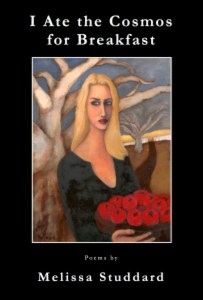
COSOMSI Ate the Cosmos for Breakfast

by Melissa Studdard

It looked like a pancake,

but it was creation flattened out—

the fist of God on a head of wheat,

milk, the unborn child of an unsuspecting

chicken — all beaten to batter and drizzled into a pan.

I brewed my tea and closed my eyes

while I ate the sun, the air, the rain,

photosynthesis on a plate.

I ate the time it took that chicken

to bear and lay her egg

and the energy it takes a cow to lactate a cup of milk.

I thought of the farmers, the truck drivers,

the grocers, the people who made the bag that stored the wheat,

and my labor over the stove seemed short,

and the pancake tasted good,

and I was thankful.

This poem first appeared in Dash Literary Journal 3 (Spring 2010).
Used here with the author’s permission.

http://www.amazon.com/gp/product/0988944766 —

And here are the ISBN Numbers: ISBN-10: 0988944766

ISBN-13: 978-0988944763

UnknownI Dream; Therefore You Are 

by Melissa Studdard

Moon & Pillow

say this is yesterday, and I’ve

pasted you back together

with salt. I mixed you with straw

& carried you into the desert to dry. My adobe

tulip,

my red earth, my paper doll,

I forgot that the rock I propped

you up against

was made of tombstone,

so I searched beneath your eyelids

for an explanation of color. I built

highways & colonies across

the meadows of sleep.

I followed you into the temple of absence

to learn how to die.

Don’t you know

how hard it is to keep you

buried? Please.

Have some compassion.

It’s like a swamp in this desert.

The caskets are at sea level

and always rising. See—

there you go, floating by, mouth full of

music and death.

I guess this means they finally told you:

You are the corpse in this off-key song.

And my words are a pilgrimage

bearing gifts. I brought you flowers.

Is it too late? Are you hungry?

I’m planting a casserole

in the grass.

product-hero-free-1-lrg

We Are the Universe

by Melissa Studdard

Watching your mouth as you eat I think

perhaps an apple is the universe and your body

is an orchard full of trees. I’ve seen the way your leaves

cling to the ground in fall, and I noted then

that your voice sounded soft, like feathered, drifting things

coming finally to rest. Note:

I was the core in your pink flesh. You

were hungry birds

and foxes walking through the miles of me.

You climbed, dug your nails in my bark, yanked

something loose. Don’t tell me what it is.

Just keep it close.

Because I planted these rows

and rows of myself for you–

so I could lick the juice from your lips,

so I could remember

how round and hot

the promise of seed. If I could find

that orchard right now, I’d run all through the rows

of you. I’d stand in the center and twirl

until I got dizzy and fell. I’d climb high and shake

until the only thing left in you was longing,

and you’d write a poem for me. You’d say:

Your mouth is the universe. Your desire

is an orchard full of trees.

Photo by Jennifer Ayers of Ayers Design

Photo by Jennifer Ayers of Ayers Design

Melissa Studdard is the author of My Yehidah, The Tiferet Talk Interviews, and the best-selling novel Six Weeks to Yehidah. Her books have received numerous awards, including the Forward National Literature Award, the International Book Award, January Magazine‘s best children’s books of the year, The Reader’s Favorite Award, and the Pinnacle Book Achievement Award. Her poetry collection, I Ate the Cosmos for Breakfast, is available from Saint Julian Press. Her short writings have appeared in dozens of journals and anthologies, and she currently serves as professor for Lone Star College System, a teaching artist for The Rooster Moans Poetry Cooperative, an editorial adviser for The Criterion, and host of Tiferet Talk radio. Visit her website. Melissa lives in Texas with her extended family and four sweet, but mischievous, cats.

Learn more about Melissa at www.melissastuddard.com.