THOUGHT

by Kenneth Harper Finton ©2015

A UNIFIED THEORY OF BEING

“A human being is part of the whole called by us universe, a part limited in time and space. We experience ourselves, our thoughts and feelings as something separate from the rest. A kind of optical delusion of consciousness. This delusion is a kind of prison for us, restricting us to our personal desires and to affection for a few persons nearest to us. Our task must be to free ourselves from the prison by widening our circle of compassion to embrace all living creatures and the whole of nature in its beauty…We shall require a substantially new manner of thinking if mankind is to survive.” – Albert Einstein

220px-Thought_bubble.svg

THOUGHTS

Unconscious thought needs no brain to advertise its presence.

Thought brings to light a spark, impulsive waves that creates space

and burns its way through time to start the clock of matter.

All matter thinks, as all movement is preceded by thought.

All life thinks, as life is thought made manifest in form.

All of nature thinks, as all of nature is ruled by physical laws.

We see it in the movement of the wind,

We see it in the birthing of desire,

We see it in the crackling of a fire.

Even the cosmos is a living, breathing being

that looks endlessly to propagate and create

and sifts through infinity itself to find its better half.

Our self-centered, self-reflecting species has come to believe that we are the only thing that thinks. Despite the fact that plants seek the sun and tendrils wind their way up and down, despite the fact that insects show intelligence and microbes show awareness, our limited definition of thought has hidden the truth of the world from us. We have equated our brains with our intelligence and our nervous system with our thoughts. It has not occurred to us that thought precedes essence, that the spark of thought ignited the entire big bang that we theorized made the universe itself.

All movement is preceded by thought. It is thought that causes movement. Without movement we can have no space nor time, nor existence. We can experience the truth of this statement within our own selves. In order to do something, we must first contemplate and think about it–even if the thought is unconscious thought.

What is thought?

The word thought comes from Old English þoht, or geþoht, from stem of þencan “to conceive of in the mind, consider.” [Harper, Douglas. “Etymology of Though.” Online Etymology Dictionary.]

Noesis (n.)

1820, from Greek noesis “intelligence, thought,” from noein “to have mental perception,” from noos “mind, thought.”

Mind (n.)

late 12c., from Old English gemynd “memory, remembrance, state of being remembered; thought, purpose; conscious mind, intellect, intention,” Proto-Germanic *ga-mundiz (cognates: Gothic muns “thought,” munan “to think;” Old Norse minni “mind;” German Minne (archaic) “love,” originally “memory, loving memory”), from PIE root *men- (1) “think, remember, have one’s mind aroused,” with derivatives referring to qualities of mind or states of thought (cognates: Sanskrit matih “thought,” munih “sage, seer;” Greek memona “I yearn,” mania “madness,” mantis “one who divines, prophet, seer;” Latin mens “mind, understanding, reason,” memini “I remember,” mentio “remembrance;” Lithuanian mintis “thought, idea,” Old Church Slavonic mineti “to believe, think,” Russian pamjat “memory”), meaning “mental faculty” is mid-14c. “Memory,” one of the oldest senses, now is almost obsolete except in old expressions such as bear in mind, call to mind. Mind’s eye “remembrance” is early 15c. Phrase time out of mind is attested from early 15c. To pay no mind “disregard” is recorded from 1916, American English dialect. To have half a mind to “to have one’s mind half made up to (do something)” is recorded from 1726. Mind-reading is from 1882.

Thought has been linked with the mind since the beginning of language and human communications. Consciousness is also related to the mind, as consciousness is the state of being aware of one’s own existence.

Our physicists envision a singular spot of infinitely dense particles with indescribable temperatures where all particle once congregated in unfathomable density before exploding in the big bang.

Have we failed to comprehend that it was the spark of thought that preceded the observed reality of existence and started the interconnected chains of experience that became our universe.

Experience

[ik-speer-ee-uh ns]

noun

1.   a particular instance of personally encountering or undergoing something:

2.   the process or fact of personally observing, encountering, or undergoing something:

3.    the observing, encountering, or undergoing of things generally as they occur in the course of time:

4.    knowledge or practical wisdom gained from what one has observed, encountered, or undergone:

5.    Philosophy. the totality of the cognitions given by perception; all that is perceived, understood, and remembered.

Prehension

[The term “prehension” indicates that the perceiver actually incorporates aspects of the perceived thing into itself. The term is meant to indicate a kind of perception that can be conscious or unconscious, applying to people as well as electrons.]

The march of time and space begins with prehensions of attraction and repulsion as elemental waves and particles recognize themselves and react. The reality of our world is not made of fundamental bits of matter that exist independently of one another as many believe. Reality is composed of the intermingled and entangled chains of events that make up experience.

These prehensions are felt in the most elemental of particles and waves. Particles and waves are the palpable recorded experience of thought in different states of energy and organization.

Awareness: the basis of existence

noun: awareness; plural noun: awarenesses

  1. knowledge or perception of a situation or fact.

Awareness precedes perceptions or perceptions would not exist.

In order to have prehensions and conceptions, we must have an awareness that can recognize these senses. We prove this in our own existence. If we did not have a both a conscious and an unconscious mind, we would know nothing and be nothing.

per·cep·tion

pərˈsepSH(ə)n/

noun

noun: perception; plural noun: perceptions

  1. the ability to see, hear, or become aware of something through the senses.

It is that original awareness, the primal state, that creates the process of consciousness. If it were not be present, there would be no registry or history of existence at all. The process of consciousness is the history of existence. We continually concoct existence out of nothing in every frame of time that we create.

Awareness is the precursor of consciousness. Consciousness is not a thing, but a process of self-objectification that constantly creates the world anew each moment. Through thought, awareness becomes conscious and organizes matter into being.

noun: consciousness

  1. the state of being awake and aware of one’s surroundings.
  • the awareness or perception of something by a person.plural noun: consciousnesses
  • the fact of awareness by the mind of itself and the world.

When contemplating infinity and the universe, there is no way to escape the concept of God. That which existed before anything and after anything, even though it be nothing, is still another concept for God. Nothing is, of course, no thing. God is not a thing as well. An empty void has no existence without a world in which to place it. Even a spirit in a world outside of time and space would need a materialized world for any material form of reality to exist. God and the world not only co-exist, but they ARE one another.

Primal awareness can be termed God. Not the God-king or God-the-Father who in his divinity imposes his will and plans upon the world, but the creator of completely free and random conceptions and experiences of unlimited potentiality.

We can describe the world as not only a work-in-progress, but a record of historical events and experiences where thoughts were made manifest and tangible by actions, recorded by the bricks and mortar of matter, and re-interpreted by the mind to formulate experience from contiguous and entangled events.

This primal awareness dwells outside of time and space. It is of another dimension that has no beginning nor end. This awareness is infinite, yet responsible for the existence of the finite. It is beyond self, beyond time and space, yet produces not only the act of consciousness, but describes and brings to being a forever changing universe of unlimited potential.

Because they are in a dimension beyond time, elemental particles like quarks exist and do not exist simultaneously. That is why they can be entangled in different times and space.  They are not in time and space until matter is created from energy. Their duration in time is temporal but their essence is eternal. Matter is the temporal recording media of experience, where events are stored and formed into experiences.

Eternal awareness, through consciousness and thought, creates the world and all the experience held within. This awareness is within us as well as without us because it is the foundation of being and the source of all things present, past and future.

It is correct to say that the world is awareness and it is correct to say that awareness is the world.  It is correct to say that awareness is God and it is correct to say that God is awareness. It is correct to say that the world is God and it is correct to say that God is the world. It is correct to say that we are the world and it is correct to say that the world is us. It is correct to say God is us and it is correct to say that we are God.

With the awareness of motion come the prehensions that precede feelings. Although awareness is outside of all things, all things exist within it by necessity because it is the foundation of all things. Awareness only exists in the now because the now, being an eternal moment, is the only time that has ever existed. All of time and space exist in the now eternally.

Per·cep·tion

noun: perception; plural noun: perceptions

  1. the ability to see, hear, or become aware of something through the senses.

Perceptions are feelings that have come to consciousness and made self aware.

Feel·ing

noun

noun: feeling; plural noun: feelings

  1. the capacity to experience the sense of touch. The sensation of touching or being touched by a particular thing.

The most elementary of things experiences the sense of touch or it would not react to or be influenced by another. Without a rudimentary sense of self, an object would never know or be influenced by another. This sense need not be intellectual, but as simple as gravitational attraction and repulsion.

All is of the mind.

Perceptions are coded into matter with chemical compounds made from elemental particles and waves, then stored, and organized into related conceptions by thought. This is the process of experience.

Thought is the eternal spark that interprets the electrical pulses and links chemical changes.

Actions are organized thoughts made manifest, as thought becomes material by recording temporal changes upon material particles and chemicals. It constantly changes the universe within us and around us.

It is all a part of an eternal process where fundamental awareness  creates and projects experience so that the world as we know it might exist and continue in this existential experience. Existence is a process, not a goal nor an end.

The external world is composed of sound and light, mediums that are in essence vibratory. The elements themselves are not solid, but composed of matter whose ultimate material nature is also vibratory.

In its purest state, virgin awareness is void of experience and thought. It is void of space and time and particles and waves. Thought is the spark that creates all matter and all space and all time. All existence is made of realized thoughts and unrealized thoughts that are the basis of future history.

Thought created the history of existence. Realized thoughts actually change the substance of matter. Matter itself is the record of thought having passed through points in space and time and imprinted the record of its passage on particles and elements, creating temporal events that become recorded experiences.

“I want to know how God created this world. I am not interested in this or that phenomenon, in the spectrum of this or that element. I want to know His thoughts; the rest are details.” – Albert Einstein

Einstein also said:

“Reality is merely an illusion, albeit a very persistent one.”


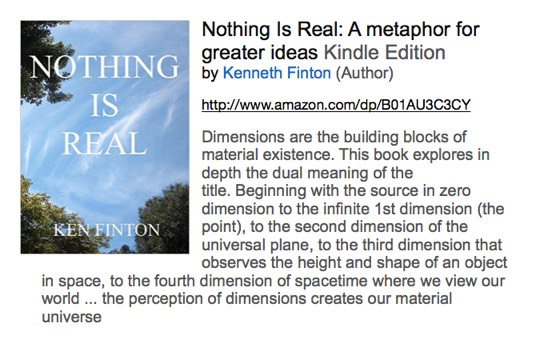
NOTHING

CRITICAL THEORY, HUMAN EXTINCTION AND ORIGINAL SIN


by Katherine

http://zebraturnedtiger.com/2015/02/09/critical-theory-human-extinction-and-original-sin/

Who tkitty-lionhe hell starts a serious reflection on critical theory with a quote from a Mel Gibson movie? Why, that would be me! Read on, if you dare:

“And a Man sat alone, drenched deep in sadness. And all the animals drew near to him and said, “We do not like to see you so sad. Ask us for whatever you wish and you shall have it.” The Man said, “I want to have good sight.” The vulture replied, “You shall have mine.” The Man said, “I want to be strong.” The jaguar said, “You shall be strong like me.” Then the Man said, “I long to know the secrets of the earth.” The serpent replied, “I will show them to you.” And so it went with all the animals. And when the Man had all the gifts that they could give, he left. Then the owl said to the other animals, “Now the Man knows much, he’ll be able to do many things. Suddenly I am afraid.” The deer said, “The Man has all that he needs. Now his sadness will stop.” But the owl replied, “No. I saw a hole in the Man, deep like a hunger he will never fill. It is what makes him sad and what makes him want. He will go on taking and taking, until one day the World will say, ‘I am no more and I have nothing left to give.”

-Tribal Elder in Apocalypto

In my short and painful lifetime, I’ve seen far more than my share of the death and destruction that Man’s “hole” has wrought upon the animals and the planet. So when I hear academic philosophers turning their attention to the possible extinction of humanity…see, for example, Claire Colebrook’s “Death of the PostHuman: Essays on Extinction,” I feel like I have something to say. Even though I’m not academically “qualified,” I am more than personally qualified, after losing my family to various terminal illnesses, and struggling with my own. I know what it feels like to question whether human existence is worthwhile, and that should be qualification enough.

I don’t think I’m the only one in this boat. It seems these days that everyone who pays attention to the world outside their immediate personal circles has a feeling that something is going to happen… something vaguely apprehended, something yet to be decided…something maybe apocalyptic or tragic, something maybe transcendental and defining. But our guts are screaming that business as usual is not forever.

We humans are the first instantaneously, globally interconnected species in the history of the planet. And we instinctively know that this is an incredibly brief instant, even though it feels deceptively like an eternity. We live in a limbo of global industrial capital overlaid with exotic virtual realities of all species–“social” media, financial ghost gamblers, MMORPGs and the celebrity theater.

And we fear its inevitable demise, yet we also dread its continuation.

Many of us secretly wish our treadmill-grinding homeostasis would end in some glamorous apocalypse and relieve us of our ennui (or is “limbo” a better word)? Yet we equally fear the apocalypse because, how much does it hurt just to lose our smartphones for a day, much less to lose safe water supplies, shelter or a life-sustaining prescription?

The thorn of industrial civilization is in our hearts, not our sides. The system can’t continue as it is–it must either mutate and accelerate or collapse–yet either option feels intolerable: a sense of existential horror, in the case of acceleration, or terror, for collapse.

Never before, even as hunter-gatherers, have we Homo Sapiens been so directly confronted with our unclothed nature. For postmodern man, stripped by efficient communication of the fedoras and greatcoats that covered his animal body, there is no more speculation…

Communism doesn’t work.

Living like sages and fools in the streets of San Francisco gave us drug addiction and sex scandals, not peace love and freedom.

And even freedom itself is likely an illusion generated by our brains, if we take neuroscience seriously.

There is absolutely no ideology, institution, or infrastructure untainted by the tragic evolutionary imperative to survive, procreate, and eliminate the competition at all costs. And the most expensive cost: the blood sacrifice of our own descendants and our own future selves.

Most disturbing in all this is that despite our very real human beauty, famously described by Robert Ardrey as “risen apes,” our unique self-awareness lets us look upon our defects and aspire to change them. The basic law of nature rules that those non-risen apes among us (also known as psychopaths) are certain to rise to power in the Psychopathocene Age, leaving us in a game-theory nightmare from which there is no escape, or at least no intentional exit.

If we humans escape our predicament in good health, it will likely be some tragic stroke of luck, an accidental deluge of death and suffering for many people and communities; a painful “market correction,” literally or figuratively, in the near term future.

And in the midst of this, which we all know consciously or otherwise, academia’s credentialed experts stand up and try to tell us how we should feel and think about ourselves.

Humanism

This intellectual disease called “critical theory” probably began much earlier, but let’s for convenience sake start with humanism, the doctrine that replaced Nietzsche’s dead God. Humans, said the humanists, are what is most important. We must define our own meaning, said Camus and Sartre, in an indifferent universe; or with Beckett, we must carry on heroically to our inevitable tragic end. (I actually have a weakness for Beckett; for a magnificently indescribable cinematic take on his approach to life, see Hungarian director Bela Tarr’s The Turin Horse.)

In either case, for the humanist it is our lived, individual experience, and not our lives’ socially ascribed or linguistically constructed “meaning,” that matters. Each human being is uniquely responsible for her decisions, and possesses an inalienable set of dignities that define her as human: free will, rights, the social contract, and ethics.

Antihumanism

But humanism, like theism before it, fell under the weight of its own contradictions. After the failure of the global “isms” that our grandparents trusted to deliver humanity to its Edenic potential–communism, fascism, nationalism, capitalism–we reluctantly accepted that there would always be sexism, racism, classism, misery and poverty. Once we failed to lift minorities out of their disenfranchisement, we realized that no individual is self-determining, but instead a product of both nature and nurture, and most of all, he is not even really an “individual.” We are inextricable and even indistinguishable from our contexts and the systemic defects of our societies.

And we also saw, as scandals beset every single institution we could possibly hope to exemplify the virtues of humanity–first capitalism, next government and the media, then medicine, then religion, and now even science and academia–that there are no human virtues left–at least not in human institutions.

So in reaction, the new crop of theorist-priests, the postmodernists, turned to antihumanism. Antihumanism promised to do for humanism what humanism did for theism. It acknowledged that humanity is flawed, contingent and contextual, not self-defining and individually sovereign. It learned from the insights of the animal rights and civil rights movement, and the discipline of ethology, that there was and never could be any set of virtues by which one could define “humanity.” More problematically, by my assessment, antihumanism proposed that lived experience could not be the primary site of critical engagement, because experience is always already constructed through theory.

But what of critical theory, and philosophy as a whole? If we can’t trust any institution, can we trust academic humans’ ability to self-assess? Strange things have come to pass after antihumanism. They are strange because they are so unexpectedly familiar.

Beyond Antihumanism

A new crop of “post-antihumanists” like Colebrook are extending the genealogy of the humanists and antihumanists before them. They realize that antihumanism is deluded by hidden anthropocentrism. The diverse, context-bound world of both human and non-human actors that antihumanists imagine is yet still determined by a human-bounded theoretical or cognitive structure. Antihumanists still project of human values–illusions of unity, connection, stability, subjectivity–onto the nonhuman universe.

Belief in Original Sin as the Motivation for Critical Theory

So yet again, like Adam and Eve, we fall, except we fall not from a garden, but down giant stairs.

Our book of original sins writes itself page after page into an all-too-short eternity as trees are cut down for its printing. Philosophers and theorists have changed their job description from the “lovers of truth” to the atheist theologians of original sin, each one vying to find the Sin of Life more original, more necessary or inevitable than the theorist before.

We fell from theism, to humanism, to antihumanism, and now to post-antihumanism. What of it? Can this end? Should it? Should anyone even care about critical theory, philosophy, or any of the humanities at all? Maybe we should just lose ourselves, damn our progeny, in the ancient frenzy to strive and survive?

My feeble attempt to answer this seemingly intractable question hinges on the crucial issues of lived experience, self-perception, and the human desire for change.

Before I turn to these three issues, I’ll make a short point about the problem of anthropocentrism: it’s not as simple as it seems. The problem is not only these antihumanist thinkers who inappropriately project “human” qualities to nonhuman entities. There is also the opposite and more complicated problem that humans assume that such projected qualities are, in fact, uniquely human. What I am suggesting is that anthropocentrism may be a different animal than we suspected. Ask a respected ethologist such as Robert Sapolsky and you will find that these “human” qualities which we “mistakenly” project onto animals are in fact not unique to humans. We’re not so special after all–not even in a bad way.

“Humanity” is likely to be a continuum, not a discrete state.

As to what we should substitute for critical theory, I suggest an ethos based on the findings of neuroscience, and most crucially, a basic compassion for *consciousness*, rather than “life,” in any form (which I will address in a different essay.)

The Hope That Feeds Extinction

Returning again to the issues of lived experience, self-determination and the desire for change, it may be that the endless book of original sin may only stop writing itself once we move beyond “subverting,” “retheorizing” or “criticizing” our biases, and return instead to lived experience.

But as Heraclitus said, we cannot step in the same river twice. I don’t propose we resurrect the old cry of “Lived, Unmediated Experience”–we should not forget the original insight that lived experience is inevitably intertwined with ideology. But instead of responding by “working on” that ideology to approach some “correct” configuration, I suggest that we recognize, counterintuitively, that it is the desire for change itself, whether ideological or experiential, which traps humans on the one-way down elevator into Godless original sin, and feeds our endless self-condemnation. How can we ever be free of Yahweh if we insist on sitting in judgment of ourselves?

More ironically, if we were to admit that there is something “fallen” about humans, our brains or behavior, or if we were to propose something apely about us that is not adequately risen, then whatever it is, it must have also arisen from the human desire for change, just as the endless self-condemnation of critical theory arose from our desire for change.

Our original sin is not our desire for knowledge, but our dissatisfaction with what we learn.

This brings us back to lived experience. Our neocortex guarantees that lived human experience will almost invariably be metaphorically mediated. Yet it is hard to deny that this mediation lies on a continuum, just as humanity lies on a continuum between humans, monkeys and dogs. An intellectually disabled adult who can only comprehend basic survival has more unmediated experiences than a crusader for a cause who is willing to defy his bodily drive for survival in service of ideology.

I would make an educated guess that the more neocortically mediated our lived experience, the more we desire change. And is it not exactly the self-aware critical theorists, who recognize this mediation most, who most desire change?

So instead of blindly accepting the neocortical mediation and seeking to work with it (ie, change it to some ideal configuration), maybe we should simply give up, and overthrow the tyranny of the prefrontal cortex. Academics laugh at saints and sages like Ramana Maharshi, who told us to simply surrender, and surrender completely: “Surrender is complete only when you reach the stage ‘‘Thou art all’ and ‘Thy will be done’”

In practice, this would mean that we construct Taoism from the Cartesian and Kantian blocks of Western logic: that we do philosophy, as Wittgenstein suggested, to free ourselves from philosophy. But let us not make Wittgenstein’s mistake and limit ourselves to language. Change-hungry philosophy hides in images, in relationships, in desire, and its greatest concentration is in hope, our hope for change.

One charge against this approach is that it could open us to a morally indefensible inaction. This is a valid criticism on the individual, specific level–but activists, this is not a message to stop fighting! If we must act, and we must, to relieve suffering is paramount.

But on the existential and civilizational level, if we truly understand that we never had a choice, and if we wake up, look at the big picture, and see that it was only ever *action*, never *inaction*, that got us into this global human predicament in the first place, then things look very different.

My White Flag is Raised

So, as a personal veteran of death, existential horror, and extreme trauma, I propose a different change… the rejection of change. The one thing we heirs of the Western mind have never tried, since first Pandora spoke–the rejection of hope. I hope to write non-theory that gives our overloaded brains a break. We must allow ourselves to at last stop hoping and fighting, stop making sense, stop comparing, calculating and integrating, and surrender unreservedly to what appears. To accept death.

Wouldn’t it be beautiful if we could forget original sin and learn to celebrate destruction as well as creation? What would be so wrong if we let humanity grow old gracefully in peace and nostalgic reflection, rather than drown in extinction anxiety and disappointed self-castigation? If Oswald Spengler was right to compare civilizations to organisms, then the death of a civilization–or even the death of humanity itself–is not shameful or sinful. It is no more tragic than the death of a great king. Let us die with a dignity that befits our achievements. Doom without gloom.

Let’s Learn from our Ancestors

An elder of a hunter-gatherer tribe would not curse herself for dying. Unlike us moderns, she would not frantically search to stave off her death; instead she would rest, accept and remember. Maybe we, as a species, can do the same. After all, we had no real say in our destiny.

As for me, I say yes! I will remember fondly, rest and celebrate, free from guilt, sin, or judgment. I will celebrate and bear witness to the wondrous story of both risen and non-risen apes, of mammals and reptiles, plants and even the bacteria that made me sick, and I will witness the witnessing stars that always shined above us and will continue to shine long after we are gone.

I will tend the last crowning blossom of the sinless risen ape, the one that shall only appear when it has confronted its own mortality. This is what Hegel meant when he wrote, “The owl of Minerva spreads its wings only with the falling of the dusk.” Only in death do we earn the freedom to theorize without criticism. As a dying man returns to infancy, I will return humanity, in my blind human brain, to that universal mythological time before humans’ hearts became sucking voids of sin.

And how? It’s very simple and peaceful. It happened only after I’d lost all existential hope: as soon as I abandoned the fight for hope, life’s magic returned. Maybe the same is true for us on a broader level: once we abandon hope, all the other demons of Pandora’s box will return to their proper place and we will be at last free of original sin and the critic who assigned it to us, whether he be of godly, human or cosmological origin.


FOR THE LOVE OF ROBERT BURNS

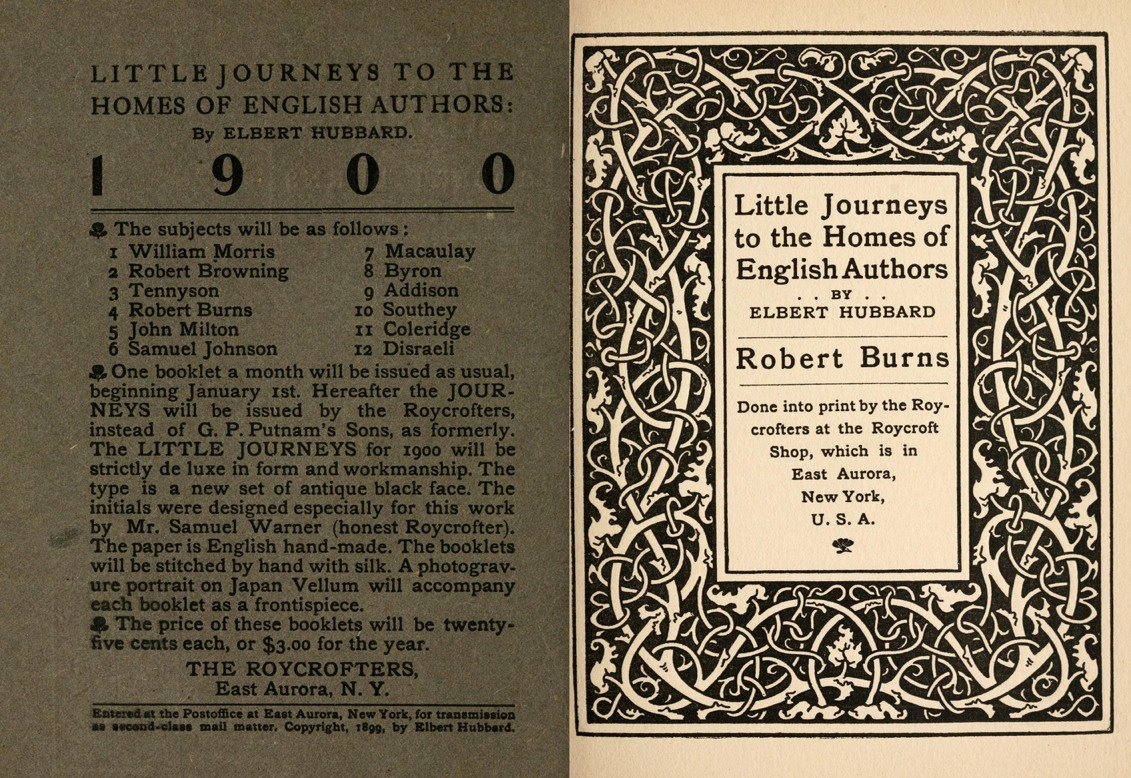
From my own copies of the Roycrofter Press issues from 1900

The earliest 20th-century exposé on love and relationships between men and women. One of the most insightful essays you will ever read.

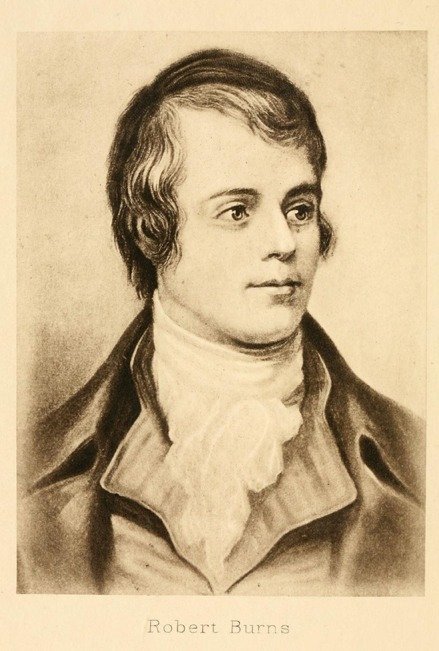
Robert Burns by Elbert Hubbard
FinderScreenSnapz002

Elbert Hubbard In “Little Journeys to the Homes of English Authors.”

FinderScreenSnapz003

TO JEANNIE

Come, let me take thee to my breast,

And pledge we ne’er shall sunder;

And I shall spurn, as vilest dust,

The warld’s wealth and grandeur.

And do I hear my Jeannie own

That equal transports move her?

I ask for dearest life, alone,

That I may live to love her.

Thus in my arms, wi’ a’ thy charms,

I clasp my countless treasure;

I’ll seek nae mair o’ heaven to share

Than sic a moment’s pleasure.

And by thy een, sae bonnie blue,

I swear I’m thine for ever:

And on thy lips I seal my vow,

And break it shall I never.

Robert Burns

The business of Robert Burns was love-making. All love is good, but some kinds of love are better than others. Through Burns’ penchant for falling in love we have his songs.

A Burns bibliography is simply a record of his love-affairs, and the spasms of repentance that followed his lapses are made manifest in religious verse.

Poetry is the very earliest form of literature, and is the natural expression of a person in love; and I suppose we might as well admit the fact at once that without love there would be no poetry.

Poetry is the bill and coo of sex. All poets are lovers, and all lovers, either actual or potential, are poets. Potential poets are the people who read poetry; and so without lovers the poet would never have a market for his wares.

If you have ceased to be moved by religious emotion; if your spirit is no longer exalted by music, and you do not linger over certain lines of poetry, it is because the love-instinct in your heart has withered to ashes of roses. It is idle to imagine Bobby Burns as a staid member of the Kirk; had he been so, there would now be no Bobby Burns. The literary ebullition of Robert Burns (he himself has told us) began shortly after he had reached the age of indiscretion; and the occasion was his being paired in the hayfield, according to the Scottish custom, with a bonnie lassie. This custom of pairing still endures, and is what the students of sociology call an expeditious move. The Scotch are great economists—the greatest in the world. Adam Smith, the father of the science of economics, was a Scotchman; and Draper, author of “A History of Civilization,” flatly declares that Adam Smith’s “Wealth of Nations” has influenced the people of Earth for good more than any other book ever written—save none.

The Scotch are great conservators of energy.

But they all make hay while the sun shines, and count it joy. Liberties are allowed during haying-time that otherwise would be declared scandalous; during haying-time the Kirk waives her censor’s right, and priest and people mingle joyously. Wives are not jealous during hay-harvest, and husbands never faultfinding, because they each get even by allowing a mutual license. In Scotland during haying-time every married man works alongside of some other man’s wife. To the psychologist it is somewhat curious how the desire for propriety is overridden by a stronger desire—the desire for the shilling. The Scotch farmer says, “Anything to get the hay in”—and by loosening a bit the strict bands of social custom, the hay is harvested.

In the hay-harvest the law of natural selection holds; partners are often arranged for weeks in advance; and trysts continue year after year. Old lovers meet, touch hands in friendly scuffle for a fork, drink from the same jug, recline at noon and eat lunch in the shade of a friendly stack, and talk to heart’s content, sweetening the labor of the long summer day.

Of course this joyousness of the haying-time is not wholly monopolized by the Scotch. Haven’t you seen the jolly haying parties in Southern Germany, France, Switzerland and the Tyrol? How the bright costumes of the men and the jaunty attire of the women gleam in the glad sunshine!

But the practise of pairing is carried to a degree of perfection in Scotland that I have not noticed elsewhere. Surely it is a great economic scheme! It is like that invention of a Connecticut man, which utilizes the ebb and flow of the ocean-tides to turn a gristmill.

And it seems queer that no one has ever attempted to utilize the waste of dynamic force involved in the maintenance of the Company Sofa.

In Ayrshire, I have started out with a haying party of twenty—ten men and ten women—at six o’clock in the morning and worked until six at night. I never worked so hard, nor did so much. All day long there was a fire of jokes and jolly gibes, interspersed with song, while beneath all ran a gentle hum of confidential interchange of thought. The man who owned the field was there to direct our efforts and urge us on in well-doing by merry raillery, threat, and joyous rivalry.

The point I make is this—we did the work. Take heed, ye Captains of Industry, and note this truth, that where men and women work together under right influences, much good is accomplished, and the work is pleasurable. Of course there are vinegar-faced philosophers who say that the Scotch custom of pairing young men and maidens in the hayfield is not without its effect on esoterics, also on vital statistics; and I’m willing to admit there may be danger in the scheme. But life is a dangerous business anyway—few indeed get out of it alive!

Burns succeeded in his love-making and succeeded in poetry, but at everything else he was a failure. He failed as a farmer, a father, a friend, in society, as a husband, and in business.

From his twenty-third year his days were passed in sinning and repenting.

Poetry and love-making should be carried on with caution: they form a terrific tax on life’s forces. Most poets die young, not because the gods especially love them, but because life is a bank-account, and to wipe out your balance is to have your checks protested. The excesses of youth are drafts payable at maturity. Chatterton dead at eighteen, Keats at twenty-six, Shelley at thirty-three, Byron at thirty-six, Poe at forty, and Burns at thirty-seven, are the rule. When drafts made by the men mentioned became due, there was no balance to their credit and Charon beckoned.

Most life-insurance companies now ask the applicant this question, “Do you write poetry to excess?” Shakespeare, to be sure, clung to life until he was fifty-three, but this seems to be the limit. Dickens and Thackeray, their candles well burned out, also died under sixty. Of course, I know that Browning, Tennyson, Morris and Bryant lived to a fair old age, but this was on borrowed time, for in the early life of each there was a hiatus of from ten to eighteen years, when the men never wrote a line, nor touched a drop of anything, bravely eschewing all honey from Hymettus. Then the four men last named were all happily married, and married life is favorable to longevity, but not to poetry. As a rule only single men, or those unhappily mated, make love and write poetry. Men happily married make money, cultivate content, and evolve an aldermanic front; but love and poetry are symptoms of unrest. Thus is Emerson’s proposition partially proven, that in life all things are bought and must be paid for with a price—even success and happiness.

Burns once explained to Doctor Moore that the first fine, careless rapture of his song was awakened into being when he was sixteen years old, by “a bonnie sweet sonsie lass” whom we now know as “Handsome Nell.” Her other name to us is vapor, and history is silent as to her life-pilgrimage. Whether she lived to realize that she had first given voice to one of the great singers of earth—of this we are also ignorant. She was one year younger than Burns, and little more than a child when she and Bobby lagged behind the troop of tired haymakers, and walked home, hand in hand, in the gloaming. Here is one of the stanzas addressed to “Handsome Nell”:

“She dresses all so clean and neat,

Both decent and genteel,

And then there’s something in her gait

Makes any dress look weel.”

And how could Nell then ever guess why her cheeks burned scarlet, and why she was so sorry when haying-time was over? She was sweet, innocent, artless, and their love was very natural, tender, innocent. It’s a pity that all loves can not remain in just that idyllic, milkmaid stage, where the girls and boys awaken in the early morning with the birds, and hasten forth barefoot across the dewy fields to find the cows. But love never tarries. Love is progressive; it can not stand still. I have heard of the “passiveness” of woman’s love, but the passive woman is only one who does not love—she merely consents to have affection lavished upon her. When I hear of a passive woman, I always think of the befuddled sailor who once saw one of those dummy dress-frames, all duly clothed in flaming bombazine (I think it was bombazine) in front of a clothing establishment. The sailor, mistaking the dummy for a near and dear lady friend, embraced the wire apparatus and imprinted a resounding smack on the chaste plaster-of-Paris cheek. Meeting the sure-enough lady shortly after, he upbraided her for her cold passivity on the occasion named.

A passive woman—one who consents to be loved—should seek occupation among those worthy firms who warrant a fit in ready-made gowns, or money refunded.

Love is progressive—it hastens onward like the brook hurrying to the sea. They say that love is blind: love may be short-sighted, or inclined to strabismus, or may see things out of their true proportion, magnifying pleasant little ways into seraphic virtues, but love is not really blind—the bandage is never so tight but that it can peep. The only kind of love that is really blind and deaf is Platonic love. Platonic love hasn’t the slightest idea where it is going, and so there are surprises and shocks in store for it. The other kind, with eyes wide open, is better. I know a man who has tried both. Love is progressive. All things that live should progress. To stand still is to retreat, and to retreat is death. Love dies, of course. All things die, or become something else. And often they become something else by dying. Behold the eternal Paradox! The love that evolves into a higher form is the better kind. Nature is intent on evolution, yet of the myriads of spores that cover earth, most of them are doomed to death; and of the countless rays sent out by the sun, the number that fall athwart this planet are infinitesimal. Edward Carpenter calls attention to the fact that disappointed love—that is, love that is “lost”—often affects the individual for the highest good. But the real fact is, nothing is ever lost. Love in its essence is a spiritual emotion, and its office seems to be an interchange of thought and feeling; but often thwarted in its object, it becomes general, transforms itself into sympathy, and embracing a world, goes out to and blesses all mankind.

Very, very rare is the couple that has the sense and poise to allow passion just enough mulberry-leaves, so it will spin a beautiful silken thread, out of which a Jacob’s ladder can be constructed, reaching to the Infinite. Most lovers in the end wear love to a fringe, and there remains no ladder with angels ascending and descending—not even a dream of a ladder. Instead of the silken ladder on which one can mount to Heaven, there is usually a dark, dank road to Nowhere, over which is thrown a package of letters and trinkets, all fastened round with a white ribbon, tied in a lover’s knot. The many loves of Robert Burns all ended in a black jumping-off place, and before he had reached high noon, he tossed over the last bundle of white-ribboned missives and tumbled in after them. The life of Burns is a tragedy, through which are interspersed sparkling scenes of gaiety, as if to retrieve the depth of bitterness that would otherwise be unbearable. Go ask Mary Morison, Highland Mary, Agnes McLehose, Betty Alison, and Jean Armour!

The poems of Robert Burns fall easily into four divisions.

First, those written while he was warmly wooing the object of his affection.

Second, those written after he had won her.

Third, those written when he had failed to win her.

Fourth, those written when he felt it his duty to write, and really had nothing to say.

The first-named were written because he could not help it, and are, for the most part, rarely excellent. They are joyous, rapturous, sprightly, dancing, and filled with references to sky, clouds, trees, fruit, grain, birds and flowers. Birds and flowers, by the way, are peculiarly lovers’ properties. The song and the plumage of birds, and the color and perfume of flowers are all distinctly sex manifestations. Robert Burns sang his songs just as the bird wings and sings, and for the same reason. Sex holds first place in the thought of Nature; and sex in the minds of men and women holds a much larger place than most of us are willing to admit. All religious emotion and all art are born of the sex instinct.

Burns’ poems of the second variety, written after he had won her, are touched with religious emotion, or filled with vain regret and deep remorse, as the case may be, all owing to the quality and kind of success achieved, and the influence of the Dog-Star.

Burns wrote several deeply religious poems. Now, men are very seldom really religious and contrite, except after an excess. Following a debauch a man signs the pledge, vows chastity, writes fervently of asceticism and the need of living in the spirit and not in the senses. Good pictures show best on a dark back-ground. Men talk most about things they do not possess.

“The Cotter’s Saturday Night,” perhaps the most quoted of any of Burns’ poems, is plainly the result of a terrible tip to t’ other side. Bobby had gone so far in the direction of Venusburg that he resolved on getting back, and living thereafter a staid and proper life.

In order to reform you must have an ideal, and the ideal of Burns, on the occasion of having exhausted all capacity for sin, is embodied in the “Saturday Night.” It is all a beautiful dream. The real Scottish cotter is quite another kind of person. The religion of the live cotter is well seasoned with fear, malevolence and absurd dogmatism. The amount of love, patience, excellence and priggishness shown in “The Cotter’s Saturday Night” never existed, except in a poet’s imagination. In stanza Number Ten of that particular poem is a bit of unconscious autobiography that might as well ha’ been omitted; but in letting it stand, Burns was loyal to the thought that surged through his brain.

People who are not scientific in their speech often speak of the birds as being happy. My opinion is that birds are not any more happy than men—probably not as much so. Many birds, like the English sparrow and the blue jay, quarrel all day long. Come to think of it, I believe that man is happier than the birds. He has a sense of remorse, and this suggests reformation, and from the idea of reformation comes the picturing of an ideal. This exercise of the imagination is pleasure, for indeed there is a certain satisfaction in every form of exercise of the faculties. There is a certain pleasure in pain: for pain is never all pain. And sin surely is not wholly bad, if through it we pass into a higher life—the life of the spirit.

Anything is better than the Dead Sea of neutral nothingness, wherein a man merely avoids sin by doing nothing and being nothing. The stirring of the imagination by sorrow for sin, sometimes causes the soul to wing a far-reaching upward flight.

Asceticism is often only a form of sensuality: the man finds satisfaction in overcoming the flesh. And wherever you find asceticism you find potential passion—a smoldering volcano held in check by a devotion to duty; and a gratification is oft found in fidelity.

The moral and religious poems of Burns were written in a desire to work off a fit of depression, and make amends for folly. They are sincere and often very excellent. Great preachers have often been great sinners, and the sermons that have moved men most are often a direct recoil from sin on the part of the preacher. Remorse finds play in preaching repentance. When a man talks much about a virtue, be sure that he is clutching for it. Temperance fanatics are men with a taste for strong drink, trying hard to keep sober. The moral and religious poems of Robert Burns are not equal to his love-songs. The love-songs are free, natural, untrammeled and unrestrained; while his religious poems have a vein of rotten warp running through them in the way of affectation and pretense. From this I infer that sin is natural, and remorse partially so. In Burns’ moral poems the author tries to win back the favor of respectable people, which he had forfeited. In them there is a violence of direction; and all violence of direction—all endeavors to please and placate certain people—is fatal to an artist. You must work to please only yourself.

Work to please yourself and you develop and strengthen the artistic conscience. Cling to that and it shall be your mentor in times of doubt: you need no other. There are writers who would scorn to write a muddy line, and would hate themselves for a year and a day should they dilute their honest thought with the platitudes of the fear-ridden. Be yourself and speak your mind today, though it contradict all you have said before. And above all, in art, work to please yourself—that Other Self that stands over and behind you, looking over your shoulder, watching your every act, word and deed—knowing your every thought. Michelangelo would not paint a picture on order. “I have a critic who is more exacting than you,” said Meissonier—”it is my Other Self.”

Rosa Bonheur painted pictures just to please her Other Self, and never gave a thought to any one else, nor wanted to think of any one else, and having painted to please herself, she made her appeal to the great Common Heart of humanity—the tender, the noble, the receptive, the earnest, the sympathetic, the lovable. That is why Rosa Bonheur stands first among women artists of all time: she worked to please her Other Self.

That is the reason Rembrandt, who lived at the same time Shakespeare lived, is today without a rival in portraiture. He had the courage to make an enemy. When at work he never thought of any one but his Other Self, and so he infused soul into every canvas. The limpid eyes look down into yours from the walls and tell of love, pity, earnestness and deep sincerity. Man, like Deity, creates in his own image, and when he portrays some one else, he pictures himself, too—this provided his work is Art. If it is but an imitation of something seen somewhere, or done by some one else, to please a patron with money, no breath of life has been breathed into its nostrils, and it is nothing, save possibly dead perfection—no more.

Is it easy to please your Other Self? Try it for a day. Begin tomorrow morning and say: “This day I will live as becomes a man. I will be filled with good-cheer and courage. I will do what is right; I will work for the highest; I will put soul into every hand-grasp, every smile, every expression—into all my work. I will live to satisfy my Other Self.”

Do you think it is easy? Try it for a day.

Robert Burns wrote some deathless lines—lines written out of the freshness of his heart, simply to please himself, with no furtive eye on Dumfries, Edinburgh, the Kirk, or the Unco Guid of Ayrshire; and these are the lines that have given him his place in the world of letters.

The other day I was made glad by finding that John Burroughs, Poet and Prophet, says that the male thrush sings to please himself, out of pure delight; and pleasing himself, he pleases his mate. “The female,” says Burroughs, “is always pleased with a male that is pleased with himself.”

The various controversial poems (granting for argument’s sake that controversy is poetic) were written when Burns was smarting under the sense of defeat. These show a sharp insight into the heart of things, and a lively wit, but are not sufficient foundation on which to build a reputation. Ali Baba can do as well. Considering the fact that twice as many people make pilgrimages to the grave of Burns as visit the dust of Shakespeare, and that his poems are on the shelves of every library, his name now needs no defense. The ores are very seldom found pure, and if even the work of Deity is composite, why should we be surprised that man, His creature, should express himself in a varying scale of excellence!

There was nothing of Jack Falstaff about Francis Schlatter, whose whitened bones were found amid the alkali dust of the desert, a few years ago—dead in an endeavor to do without meat and drink for forty days.

Schlatter purported, and believed, that he was the reincarnation of the Messiah. Letters were sent to him, addressed simply, “Jesus Christ, Denver, Colorado,” and he walked up to the General-Delivery window and asked for them with a confidence, we are told, that relieved the postmaster of a grave responsibility.

Schlatter was no mere ordinary pretender, working on the superstitions of shallow-pated people. He lived up to his belief—took no money, avoided notoriety when he could; and the proof of his sincerity lies in the fact that he died a victim to it.

Herbert Spencer has said all about the Messianic Instinct that there is to say, save this—the Messianic Instinct first had its germ in the heart of a woman. Every woman dreams of the coming of the Ideal Man—the man who will give her protection, even to giving up his life for her, and vouchsafe peace to her soul. I am told by a noted Bishop of the Catholic Church that many women who become nuns are prompted to take their vows solely through the occasion of an unrequited love. They become the bride of the Church and find their highest joy in following the will of Christ. He is their only Spouse and Master.

The terms of endearment one hears at prayer-meetings, “Blessed Jesus,” “Dear Jesus,” “Loving Jesus,” “Elder Brother,” “Patient, gentle Jesus,” etc., were first used by women in an ecstasy of religious transport. And the thought of Jesus as a loving, “personal Savior,” would die from the face of the earth did not women keep it alive. The religious nature and the sex nature are closely akin: no psychologist can tell where the one ends and the other begins.

There may be wooden women in the world, and of these I will not speak, but every strong, pulsing, feeling, thinking woman goes through life, seeking the Ideal Man. Whether she is married or single, rich or poor, old or young, every new man she meets is interesting to her, because she feels in some mysterious way that possibly he is the One.

Of course, I know that every good man, too, seeks the Ideal Woman—but that deserves another chapter.

The only woman in whose heart there is not the live, warm, Messianic Instinct is the wooden woman, and the one who believes she has already found him. But this latter is holding an illusion that soon vanishes with possession.

That pale, low-voiced, gentle and insane man, Francis Schlatter, was followed at times by troops of women. These women believed in him and loved him—in different ways, of course, and with passion varying according to temperament and the domestic environment already existing. To love deeply is a matter of propinquity and opportunity.

One woman, whom “The Healer” had cured of a lingering disease, loved this man with a wild, mad, absorbing passion. Chance gave her the opportunity. He came to her house, cold, hungry, homeless, sick. She fed him, warmed him, looked into his liquid eyes, sat at his feet and listened to his voice. She loved him—and partook of his every mental delusion.

This woman now waits and watches in her mountain home for his return. She knows the coyotes and buzzards picked the scant flesh from his starved frame, but she says: “He promised he would come back to me, and he will. I am waiting for him here.”

This woman writes me long letters from her solitude, telling me of her hopes and plans. Just why all the cranks in the United States should write me letters, I do not know, but they do—perhaps there is a sort o’ fellow-feeling. This woman may write letters to others, just as she does to me. Of this I do not know, but surely I would not thus make public the heart-tragedy told me in a private letter, were it not that the woman herself has printed a pamphlet, setting forth her faith and veiling only those things into which it is not our right to pry.

This Mary Magdalene believes her lover was the Chosen Son of God, and that the Father will reclothe the Son in a new garment of flesh and send him back to his beloved. So she watches and waits, and dresses herself to receive him, and at night places a lighted lantern in the window to guide the way.

She watches and waits.

Other women wait for footsteps that will never come, and listen for a voice that will never be heard. All round the world there is a sisterhood of such. Some, being wise, lose themselves in loving service to others—in useful work. But this woman, out in the wilds of New Mexico, hugs her sorrow to her heart, and feeds her passion by recounting it, and watches away the leaden hours, crying aloud to all who will listen: “He is not dead—he is not dead! he will come back to me! He promised it—he will come back to me! This long, dreary waiting is only a test of my loyalty and love! I will be patient, for he will come back to me! He will come back to me!”

This world would be a sorry place if most men conducted their lives on the Robert Burns plan. Burns was affectionate, tender, generous and kind; but he was not wise. He never saw the future, nor did he know that life is a sequence, and that if you do this, it is pretty sure to lead to that. His loves were largely of the earth.

Excess was a part of his wayward, undisciplined nature; and that constant tendency to put an enemy in his mouth to steal away his brains, bound him at last, hand and foot. His old age could never have been frosty, but kindly—it would have been babbling, irritable, senile, sickening. Death was kind and reaped him young. Sex was the rock on which Robert Burns split. He seemed to regard pleasure-seeking as the prime end of life, and in this he was not so very far removed from the prevalent “civilized” society notion of marriage. But it is a phantasmal idea, and makes a mock of marriage, serving the satirist his excuse.

To a great degree the race is yet barbaric, and as a people we fail utterly to touch the hem of the garment of Divinity. We have been mired in the superstition that sex is unclean, and therefore honesty and free expression in love matters have been tabued.

But the day will yet dawn when we will see that it takes two to generate thought; that there is the male man and the female man, and only where these two walk together hand in hand is there a perfect sanity and a perfect physical, moral and spiritual health.

We reach infinity through the love of one, and loving this one, we are in love with all. And this condition of mutual sympathy, trust, reverence, forbearance and gentleness that can exist between a man and a woman, gives the only hint of Heaven that mortals ever know. From the love of man for woman we guess the love of God, just as the scientist from a single bone constructs the skeleton—aye! and then clothes it with a complete garment.

In their love-affairs women are seldom wise, or men just. How should we expect them to be when but yesterday woman was a chattel and man a slave-owner? Woman won by diplomacy—that is to say, by trickery and untruth, and man had his way through force, and neither is quite willing to disarm. An amalgamated personality is the rare exception, because neither Church, State nor Society yet fully recognizes the fact that spiritual comradeship and the marriage of the mind constitute the only Divine mating. Doctor Blacklock once said that Robert Burns had eyes like the Christ. Women who looked into those wide-open, generous orbs lost their hearts in the liquid depths.

In the natures of Robert Burns and Francis Schlatter there was little in common; but their experiences were alike in this: they were beloved by women. Behind him Burns left a train of weeping women—a trail of broken hearts. And I can never think of him except as a mere youth—”Bobby Burns”—one who never came into man’s estate. In all his love-making he never seemed really to benefit any woman, nor did he avail himself of the many mental and spiritual excellencies of woman’s nature, absorbing them into his own. He only played a devil’s tattoo upon her emotions.

If Burns knew anything of the beauty and inspiration of a high and holy friendship between a thinking man and a thinking woman, with mutual aims, ideals and ambitions, he never disclosed it. The love of a man for a maid, or a maid for a man, can never last, unless these two mutually love a third something. Then, as they are traveling the same way, they may move forward hand in hand, mutually sustained. The marriage of the mind is the only compact that endures. I love you because you love the things that I love. That man alone is great who utilizes the blessings that God provides; and of these blessings no gift equals the gentle, trusting companionship of a good woman.

So, having written thus far, I find that already I have reached the limit of my allotted space.

In closing, it may not be amiss for me to state that Robert Burns was an Irish poet whose parents happened to be Scotch. He was born in Ayrshire in Seventeen Hundred Fifty-nine. He died in Seventeen Hundred Ninety-six, and was buried at Dumfries by the “gentleman volunteers,” in spite of his last solemn words—”Don’t let the Awkward Squad fire over my grave!”

His mother survived him thirty-eight years, passing out in Eighteen Hundred Thirty-four. Burns left four sons, each of whom was often pointed out as the son of his father—but none of them was.

This is all I think of, at present, concerning Robert Burns.
LIFE AND TIMES IN DEATH

by Soumya Bukherjee ©2013

View original at http://wp.me/p41l0y-Sdeath-and-life

Life and times of Death

Let us begin with a strikingly vivid painting of a harsh barren landscape, centering a fading creature seemingly in the throes of death and its accompanying absolution. Pocket watches lay scattered over the landscape, their shiny metallic surfaces melting, dangling in liquid defeat from a branch or spread out over a ledge or the disappearing creature. I came across this iconic painting entitled ‘The persistence of memory’ by the surrealist artist Salvador Dali in the form of a poster in the room of a chance acquaintance, and immediately I knew I had found the painting that resonated with my own deep insecurities about the nature of time, of life and finally of death. The melting clocks seemed to address the impossibility of nailing time, as well as the fluidity of its perception in human consciousness. Indeed as Salvador Dali himself noted, “The soft watches are an unconscious symbol of the relativity of space and time, a Surrealist meditation on the collapse of our notions of a fixed cosmic order” Moreover the harshness of the climate, the undefined creature in the pose of death and the notion of time itself put me in mind of our conception of mortality, views on the transience of life and the ramifications of contemplating our own death, all topics that have long fascinated me.

The first time I realized I was going to die and that this our life would not last forever, despite what the distractions of our surroundings may seem to suggest, was at the age of seven, when my grandmother passed away and I was confronted with the idea that I too may one day cease to exist. The bewildering emotions rising within me at the time, haltingly, imperfectly expressed in my mother’s ear, were quieted with the thought of an afterlife, rebirth, the amusing possibility of being reborn as my own granddaughter’s child. My imagination was captured and distracted by the comical dilemma of needing to call one’s own daughter ‘grandma’, as my mother drew parallels between me and her own late grandmother to illustrate the point. For the moment thus I was saved from peering into the chasm that the realization of death would bring.

It is interesting that one’s first brush with death in childhood almost always gets hurriedly suppressed by concerned family and relatives. Rather than explaining death as a natural process and acclimatizing the growing consciousness to it they lull us into a false security where death is denied, so that the realization, when it comes, is that much more unacceptable. Children’s fiction has managed to challenge this trend only recently. However for the longest time fiction for children was carefully selected and filtered, rooting out all elements that would illustrate too harsh a reality, especially all topics concerning death. The earliest media we were regaled with, whether quaint Enid Blyton worlds with everlasting magical creatures and children who never grew old, or a Tom and Jerry cartoon where scrapes are funny but never lethal, were all in on this benevolent conspiracy.

Death became a familiar figure in the years that followed, whether through fiction or the world around me. However the enormity of what it entailed never encroached upon my consciousness until one defining incident during a family vacation in Goa. The day of our particular adventure the water was somewhat choppy, but the guide waived aside our doubts and launched us along with a father son duo onto the one-manned boat. By this time the waves were starting to get bigger, and the boat struggled to combat each crushing wall of water as it came along, its engine spluttering valiantly against the force. The boat managed to overcome the first few waves after much lurching, and for a moment we thought we had made it into the clear calm waters of the ocean, but then a sneak current suddenly buffeted us back as another wave rose up to meet us, an enormous monster of gruesome scope. The single seaman navigating our boat had stiffened, his eyes staring glassily. He clearly knew what was coming, for we could see the dilemma in his eyes as he contemplated abandoning ship to somehow getting us through. The wave came; crushingly huge, spanking our exposed faces and arms and making it sting with salt. The boat stayed, but just about. Its engine had been torn away by the force of the hit, and a gaping hole had water gushing in towards the back of the vessel. Meanwhile another wave was readying itself to finish what was left undone, and didn’t even need the seaman’s strangled cry to know what he had to do. He screamed to jump ship, and that’s precisely what we did after a moment of frozen panic. Everyone jumped off the side nearest to them, which for me, sitting on the center right meant jumping around the rigging of the boat. This turned out to be a mistake, as I realized a split-second later, for I found my neck and torso tangled in the thick coiled ropes of the boat. I would have strangled right there and then if the boat hadn’t capsized at the same time and in the same direction, causing me to be trapped directly under the upturned boat by its tenacious coils, the lengths of which prevented me from striking out from either side and breaking surface. It was then, as the oxygen ran out and water threatened to enter my lungs, as each movement of the boat buffeted by the waves threatened to either knock me out or strangle me by tightening its hold around my throat that I appreciated once and for all the true terror of knowing I might die, or rather knowing I will die. It was a truly sobering realization. There were no romantic flashbacks of the past as popularized in fiction, nor any great insight into the meaning of life. The only emotion I remember is abject terror, translated into a desperate quest to save myself. I struggled against the ropes in every way possible, kicking at the boat to dislodge its hold, all to no avail. I was tiring out fast, and my movements getting feebler under the pressure of the current. My eyes stung in the salty sandy water and my skin was already breaking into bruises and scratches which I wouldn’t feel until much later. Just as the weight of my aching neck and head grew too much to bear and I began to lose the will to fight that sheer coincidence sent a merciful wave at just the right angle to dislodge the choking hold of the rope around my neck and free one of my arms. With newfound urgency I managed to wrench out of the harness and kicked off the side of the boat at the same time as a wave shoved it to the other side. The first lungful of cool sea air that followed was the best thing I’d ever experienced. It hurt to breathe but each gulp full had me thankful anew to be breathing it. It took a while to orient myself to my surroundings. There were swimmers and divers all around, fighting the waves to reach us. Not more than a few minutes must have passed since the boat capsized, yet I felt as though I had emerged after months of struggle. Gasping and weak, I allowed a swimmer who reached me to pull me back away from the sea, this time using the waves to move us faster back to shore. My sister had been rescued first it seemed, for she was already on shore by the time I reached. My father came close after. He’d escaped safely too but hung back shouting himself hoarse for my sister, not knowing she had been rescued first. I chose not to think about the fact that he never looked for my whereabouts. I had been the last to be rescued; being trapped under the boat they had not been able to locate me. The thought brought home full force the realization that I could have died but for sheer chance circumstances, a thought that had evaded me again in the heat of the rescue operations.

Our mind attempts to protect us, by denying death or distracting us from our contemplation of it. However traumatizing the experience, my own consciousness hurried to cover up my close encounter with death, concentrating on the exciting experience rather than relive that terror which comes from absolute certainty. Ever since, I occasionally wake up in the middle of the night, or get a jolt of fear while awake and deep in thought, when a vision of absolute nothingness rises before my eyes with the sudden damning conviction that there is nothing after death and our life is but a tiny spark in the midst of eternal meaningless darkness. The thought of such insignificance and meaninglessness is so daunting, and the idea of the world carrying on irrespective of our existence so unbearable, that our mind hurries to close the idea up again, with the result that the vision or realization disappears as soon as it appeared, leaving only the cold clammy feeling of an uncertain dread in its place. The realization of our miniscule existence in the enormous scheme of things can’t fail to be accompanied by a lack of faith in the meaningfulness of our insignificant lives. It’s an idea probed time and again by writers and artists alike, yet it is one that can yield no answers. It causes us to question the nature of existence itself, and the justification behind its repetitive mundane pursuits. Albert Camus’ defining work Myth of Sisyphus provides the classic metaphor to represent this confusion. Our life and its pointless endeavors get compared to the mythological Sisyphus’ eternal task of fruitlessly rolling a rock uphill only to have it roll back down again. Dali’s Persistence of Memory too speaks to me of the nature of time and life, of death and continuity. It portrays time as envisioned in human context and imagination, and the result is unreliable, liquid, time and life a melting entity rather than their rigid and structured conventional representation. The painting and its theme reminds me of Virginia Woolf’s novel Mrs. Dalloway, which has perhaps more aptly been previously named ‘The Hours’. The novel follows multiple stream of consciousness narratives of multiple characters that all overlap in space and time, time in their imagination being no linear entity but rather a flexible, capricious one, molded through perception and emotion before finally culminating abruptly with death. As with my near death experience, when a few minutes of terror seemed to last a very long time indeed, here too the relativity of time is represented as an essential fact of human existence, making the attempt to quantify and structure time narratives, though the recurrent imagery of the chiming of the hours, seem unnecessary and absurd. Woolf herself, much like her protagonist Clarissa Dalloway, was obsessed with life and death, and like her other protagonist, Septimus Smith, actually chose suicide as a means out of her struggles with life.

Ultimately what Dali, Woolf, Camus, and even the writers of children’s fiction in avoiding the subject dealt with is man’s inability to contemplate his own transience without tremor, resulting in his constant struggle to justify a temporary fleeting existence, the necessary obsession with what comes next and the desperate quest to justify what came before. What is left is an eternal cycle of repeated events, of action with no possible reaction save more of the same. Hence does our mind distract us from contemplating an end, hence do I go on quite contentedly with life despite questioning its validity, hence do we all stop ourselves from curling in terror at the thought of an absolute end, but beguile ourselves with worldly distractions and pretty myths. Time is an illusion, death an inconceivable absolute, and all we have is today, and more of today. If that is absurd, so be it. Whoever promised us meaning in any case? What we can do, is just continue. A scene from Samuel Beckett’s Waiting for Godot comes to minds, wherein the two characters Vladimir and Estragon, stuck in a cycle of repetitive events they cannot escape, have the following altercation

Wiseguy From The East's avatarIdyll Dreams of an Idle Fellow

Go Back

View original post

INTERACTIVISM

220px-Lead_Photo_For_Category_(mathematics)0-41319275833666325Perhaps “relation” is the wrong word for what is thought in ecological ontology.  There’s something too ghostly, too incorporeal, about relations.  Everything in the entire cosmos could be still and there would still be relations.  Things would be to the left or right or one another, so many miles or light years apart, larger and smaller, and so on.  Yet ecology, above all, thinks beings in interaction and becoming.  While interaction is a form of relation, the concept of interaction captures a certain fleshiness of how beings hang together in ecologies that risks being lost with the signifier “relation”.

Beings in ecologies interact.  This is a mundane and obvious observation, yet maybe one we don’t often pause to think through.  First, even at a distance, there is always a materiality of interactions.  Every interaction requires flesh.  There are no incorporeal or ghostly interactions.  Two entities at a distance might interact.  Indeed, ecology often and primarily thinks interactions between beings at a distance.  The novelty of its thought consists in showing or tracing how two entities that appear to be unrelated– say frogs and cars –in fact affect one another in an assemblage.  Their interaction is not, of course, an immediate one.  It is not a direct touching.  Rather, there is a fleshy or material mediator that passes between them, surmounting time and distance:  the car’s carbon emissions.

read on!

Even symbolic and linguistic interactions require flesh to occur.  They require an atmosphere, for no sound can travel in a vacuum, or electro-magnetic signals, paper, smoke, or any number of other mediums.  With ghostly relations, nothing passes between; but in interactions there’s always a material passage.  And because interactions not only unfold in time but require time, nothing is ever immediate in ecologies.  Nothing– so far as we know at present –can occur faster than the speed of light.  We’re all familiar with the letter that arrives too late.  The lateness of a letter is the mark of its flesh, its materiality.  Letters must travel, whether they be conveyed by speech, on paper, or electronically.  They require time to proliferate through the ecosystem of a society like the circles produced in a pond after the throw of a stone.  In another register, it could be that unexpected tragedies are now approaching us as a result of flesh currently traveling our way.  Who knows whether a gamma ray burst that occurred thousands of years isn’t currently making a journey to meet our planet?

Ghostly relations change nothing in the entity they relate.  The entity remains exactly as it was before whether it is to the left or right of another entity, whether it is this close or that far, whether it is larger or smaller.  With interactions it is entirely different.  Entities affect and are affected by one another in their interactions.  Bald eagles interacted with scientists and farmers through DDT, causing shells to thin and reproductive rates to go down.  In turn, all sorts of plants and animals are affected positively and negatively as a result of the absence of these birds.  Perhaps other populations of organisms grow because they’re no longer prey for a particular predator.  This growth, in its turn, affects a whole host of other organisms.  Ripples proliferating throughout the water of an assemblage involving birds, plants, rodents, farmers, crops, scientists, chemical formulas, factories, and a host of other entities.

monet-haystacksIn interactions we encounter a certain plasticity of entities.  No entity is exactly what it seems to be at a particular point in time, for every being is sustained in its qualities by a certain field of relations.  Even something as solid as a rock or a lump of lead is sustained in its qualitative being by a field of interactions.  Change the pressure to which the rock is subject and it becomes molten or folds in new ways or its grain is transformed.  That lump of lead on Venus becomes molten and evaporates.  Permanence is a function of a relatively stable interactive field.  Change the sendings of flesh that populate that field and the entity will undergo a qualitative change.  Even the color of entities is the result of interactive fields.  Entities display the colors they display as a result of the wavelengths of light their surfaces interact with.  Color is an event, not a fixed feature in entities.  Look carefully.  Contemplate a colored object as lighting conditions change.  You will witness the color change.  There’s a reason Monet painted his lily pads and hay stacks in series of paintings.  He sought to paint the event of these lily pads and hay stacks, their becoming.  It’s not that these beings appeared to change color.  They really did change color.  Entities then are teeming with powers, with capacities, that we scarcely know for we only encounter them when they are unleashed as a result of an interaction.  And it goes without saying that while many of these interactions will leave entities unchanged as they will merely actualize a property or action, others will transform the very powers of the being as in the fictional case of Seth Brundle being spliced with a fly.

Often entities interact with one another not only occasionally or as a one time event, but in relations of feedback.  One entity sends flesh to another leading it to actualize itself in a particular way.  The receiving entity, in its turn, sends flesh to the sending entity, leading it to actualize itself in a particular way.  Like stars orbiting each other in a binary star system, the two send matter back and forth to one another in an endless cycle and in doing so both undergo a co-evolution and form a system in which their respective actualizations are relatively stable and enduring.  This is what is called “negative feedback”.  We can think social assemblages along these lines.  We wonder, why is it so difficult to change social assemblages even when they are so oppressive and painful?  This is because there are dense fields of negative feedback interactions that more or less maintaining the pattern of the social assemblage.  We seek to intervene, to disrupt and change those patterns, and interactions occur to erase the trace of our action, maintaining the patterns of the assemblage as they were before.  These feedback mechanisms occur at all sorts of levels.  There are the noisy feedback mechanisms of police and military that discipline those events that disrupt the social assemblage.  There are the subjectivizations that form persons, creating dispositions to behave, think, and feel in particular ways– despite the intentions of those subjects –that maintain the ecology of the social assemblage.  This is what Bourdieu called habitus.  The person might avow, for example, feminism at the level of their conscious thought, but their bodily dispositions indicate the functioning of patriarchy at a sub-personal level.  There are the ways in which forms of life are locked into an ecology of energy, labor, and technology that makes it very difficult to live otherwise.  There are media outlets that perpetually reinforce reigning ideologies.  Sometimes there’s just the distractions of things like social media and entertainment that perpetually distract, drawing attention away from intolerable circumstances.  We should not work from the premise that ecology inherently denotes something positive.  All ecology denotes is an ontology of interacting entities in fields of dependency, where some interactions and the stabilities they produce might be desirable, whereas others are quite horrific.

larvalsubjects's avatarLarval Subjects .

220px-Lead_Photo_For_Category_(mathematics)0-41319275833666325Perhaps “relation” is the wrong word for what is thought in ecological ontology.  There’s something too ghostly, too incorporeal, about relations.  Everything in the entire cosmos could be still and there would still be relations.  Things would be to the left or right or one another, so many miles or light years apart, larger and smaller, and so on.  Yet ecology, above all, thinks beings in interaction and becoming.  While interaction is a form of relation, the concept of interaction captures a certain fleshiness of how beings hang together in ecologies that risks being lost with the signifier “relation”.

Beings in ecologies interact.  This is a mundane and obvious observation, yet maybe one we don’t often pause to think through.  First, even at a distance, there is always a materiality of interactions.  Every interaction requires flesh.  There are no incorporeal or ghostly interactions.  Two entities at a distance might…

View original post 1,086 more words

More Than A Memento

© Tonya Rieley Hengerer

In life, we often go through our days interacting with others, but not really connecting.  It’s just the way it is.  Most days we are busy, stressed, and distracted–replaying yesterday and worrying about tomorrow.  It can be difficult to be in the moment, to observe and listen, to be present–to look and actually see.  Not that we mean to or want to, but sometimes we operate on a superficial level.  This is partly because we are so engaged in our own worlds, disconnected and unable to relate to something outside of ourselves.

I’m reminded of an experience I had this summer while visiting my most favorite place–England.  My husband and I were spending the day in a Cotswolds market town in Gloucestershire, a charming place with honey-colored, stone architecture and baskets full of colorful, cascading flowers adorning the front of every other building.  As we made our way along the busy street, a courtyard with shops and galleries caught our attention.  We walked into the brightly lit space, sunlight streaming down from the skylights above, illuminating the shops before us.  I immediately noticed the simple but stunning jewelry in one of the galleries.  I walked in and began to browse.  My gaze landed on an understated, wide, silver band with an anticlastic shape.  It was lovely.  I wanted to try it on, but I didn’t see anyone.  I looked across the hallway, and sitting opposite the gallery, in a studio, was the artist.  She was petite with short, blonde hair–maybe in her mid to late forties, an attractive woman.  She was sitting, bent over her wooden, work table with a giant light craning over her.  She wore some sort of head-gear with a magnifier on it.  I walked over.  “Hi, I’m sorry to disturb you, but could I try on one of your rings?” I asked.    She looked up with kind eyes and a warm smile.  “Of course,” she answered.  She stood up and came over, pausing  a minute to clean the silver tarnish from her hands, before handing me the ring.  I tried it on; and, it fit perfectly.  “I’ll take it,” I said.

As she prepared and wrapped the ring for me to purchase, I commented that her jewelry was beautiful and asked how she started working in this medium.  I was expecting a one or two-line reply, but what I got instead was one of the most powerful and meaningful interactions that I’d ever had with another person.  She began speaking to me as if I were a confidant, someone she’d known for years.  She was dignified and comfortable in the unfolding of her answer to my question.

She shared that she’d worked in the healthcare field, been married to her husband for close to 20 years and had two children.  Then one day, her husband asked for a divorce; she was devastated.  She went on to confide that she had emotionally spiraled into a dark place, having a nervous breakdown and becoming anorexic.  The words she was saying were not congruent with the healthy, self-assured woman standing before me.  I listened, but shifted uncomfortably.  “Why was she telling me this?” I wondered.  The answer: Because I had asked.

She went on to share her story and lay herself bare in this real and raw way.  She explained that during her recovery, she struggled with obsessive thoughts about food.  Initially, she was only surviving on fewer than 100 calories a day.  “It’s really counterintuitive.  You’d think if you were anorexic, you wouldn’t think about food; but it’s not so.  I thought about it constantly,” she said.

Her therapist suggested a hobby that would be engaging in order to distract her mind from the relentless thoughts about food.  So, the idea of working with precious metals and making jewelry was born.  She went on to tell me of the endless days that she’d sit, working, creating–thoughts of food inundating her waking hours.  That is until one day.  It was just another day of obsessive thoughts bombarding her tired mind, when she realized that 30 seconds had passed, and she hadn’t even thought about food.  She had become totally engrossed in her work–completely in the moment.   It was a small victory, but something on which she could build.  She continued on her path of recovery, saying her art was her salvation.  She had suffered and struggled, but she was steadily rebounding.  She kept working, day after day, determined to overcome the obsessive thoughts that had her in their grip.  Then, it happened again.  She was creating a piece of jewelry and realized that she was smiling.  And it hit her:  she was so immersed in the moment, in the pleasure and peace of creating, that she hadn’t thought about food for quite a while.

I stood there, listening to this woman who had been a stranger to me only minutes earlier, a light of truth radiating from her.  I felt incredibly moved, not only by her story, but by the way in which she shared it, without ceremony or airs, but sincerely, matter-of-factly, and without apologies.  Empathy and admiration for this person overwhelmed me, and I was compelled to reach out in some manner.  I stepped forward and put my arms around her.  She acknowledged the moment and said that sharing her story was part of her ongoing recovery.  She assured me that she was fine now;  she was healthy, happily re-married, her children in college and her jewelry in demand.

The visit was drawing to a close.  As we chatted, she proceeded to place the carefully wrapped box with the ring into a bag, adding her card and a piece of candy.  She handed it to me and smiled.  I smiled back, thanked her and said good-bye.  This unusual, spontaneous and fleeting moment of connection was over.  As I walked away, a sea of emotion flooded over me.  Having just listened to this woman’s poignant journey and witnessed her triumph, the enormity of it struck me; and I wept.

Here’s the thing:  At one time or another, most of us have found ourselves in a dark place of sorts.  This woman suffered and struggled, but she had made her way back to herself.  I felt a strong sense of compassion and respect for her.  It was her resilience and grace that she so effortlessly conveyed that was immensely stirring.  I’m grateful that I walked into her gallery that day.  She transformed the simple act of buying a holiday memento into a spiritual experience, a routine interaction into a moment of connection with another human being that I would not soon forget.

I wear the ring that she made nearly everyday.  It’s not a particularly expensive or flashy ring.  Its value lies more in what it symbolizes to me:  a reminder to be in the moment, to try not to worry, and most importantly–to really see the people around me.  Also, remembering that we don’t ever know what private battle someone may be waging, but hopefully winning, because we took the time to care.

Fourth Generation Farmgirl's avatarfourth generation farmgirl

In life, we often go through our days interacting with others, but not really connecting.  It’s just the way it is.  Most days we are busy, stressed, and distracted–replaying yesterday and worrying about tomorrow.  It can be difficult to be in the moment, to observe and listen, to be present–to look and actually see.  Not that we mean to or want to, but sometimes we operate on a superficial level.  This is partly because we are so engaged in our own worlds, disconnected and unable to relate to something outside of ourselves.

I’m reminded of an experience I had this summer while visiting my most favorite place–England.  My husband and I were spending the day in a Cotswolds market town in Gloucestershire, a charming place with honey-colored, stone architecture and baskets full of colorful, cascading flowers adorning the front of every other building.  As we made our way along the…

View original post 1,027 more words

CARTOON IDEAS FOR CHARLIE HEBDO

mohammed


MOHAMMED SHOWING TRUE BELIEVERS HOW TO REACT TO INFIDELS

 Bernard_Picart_The_Perfumer_m

THE POPE RIDDING THE CHURCH OF MOLESTATION AND DOGMA


Unknown


JEHOVAH AS A CLOWN VOMITING OUT EXISTENCE ON A GULLIBLE CREATION


14706960_7c7e_1024x2000


BUDDHA CONTEMPLATING HIS NAVEL AS A POINT OF SEXUAL ENTRY

image022rabbi

BRAHMA LEADING SHAKRA TO TANTRIC YOGA SESSION  WITH THE BRAHMAN BULL

Pope-Francis

POPE FRANCIS UPON HEARING THAT EVE WAS THE FIRST CREATION OF GOD

THE PROBLEM WITH ENLIGHTENMENT

by Kenneth Harper Finton ©2017

meditating-dog

There is a problem with what people like to call ‘enlightenment’. No matter how much you think you might know the answers, you return to the familiar spot where you started. The world appears just as it did before. If you had a timeless experience through meditation or drugs or intellectual inquiry, then you begin to think that your timeless experience had no meaning at all and is perhaps just a function of your overtaxed nervous system. The universe and all its existential problems seem unchanged.

If you are like me with an abiding interest in cosmology and metaphysics, you check the TV shows and books about the newest particle colliders and listen closely to the latest theories that explain how the universe came into being. You check the Internet and find the links to The Standard Model [standard_model.html]. You try to comprehend what physicists are saying. You realize that they are talking about theories that are backed up with mathematical equations that are difficult to understand and almost impossible to express. The essence of the world itself remains unknowable.

Scientists look for material reasons for the world’s existence and often ignore the non-material basis of being. Until non-material awareness is recognized as the primary building block of material existence, we will not understand how our world comes into being. We see evidence of this in quantum mechanics when we find that observation is interaction and produces changes the positioning of primary particles.

We are used to equating awareness and consciousness to what we term as living things. We are not used to it being a property of elemental reactions as well. Yet, it takes awareness to even make a point. Without an awareness that is processed through interactions, there is no point at all. A primal awareness without form or mass is essential to the very birthing of the world, just as it was in our personal beginnings. Gravity, weak forces, strong forces, and magnetism are essentially like the sense of touch—pressures that are brought into being by interactions that are perceived by awareness.

Nothingness does not exist in time and space. Even a void cannot be known without awareness. This awareness is not material, but it is eternally present and is especially evident everywhere that time and space have been formed. It dwells in an unknowable dimension of zero time and zero space.

If we are fortunate enough to be healthy, well-adjusted people, then we love our lives and the identities we have chiseled out of the elements. We feel sympathy and love. We desire to bask in understanding. We feel disgust, pain, and rejection and either strike out against it or want to sleep through it. We are human and that is our lot. We live in a local universe of beginnings and endings. We muddle through change and aging, love and regret, sickness and health, joy, and sorrow.

We find that there are many myths designed to help us cope with our lot in life. All of them are illusions created by others—sometimes out of real concern, sometimes for profit and power over us. All of them are fabricated answers.

We can only take reason and logic so far. We can probe our minds and find that something is conscious. That is quite evident. We cannot be sure that this conscious and aware entity is even ourselves. We spin around the vortex in the whirlpool of time. We discover that we will never have a real answer because there is no real answer.

There is a reason for that. Logic has not really abandoned us. If our own logic and observations cannot solve the problems of existence, then nothing can.

Our only and best recourse is to trust in the logical powers of our wisdom and minds. We know there appears to be an inside and an outside to everything. If we are the inside, then the world is the outside and we have to take that necessary leap of faith to believe in its actuality. We perceive the world around us with the same tools that we perceive ourselves.

When we delve deep inside we come to realize that there is a spirit in us that is beyond time and space. It does not matter what we call it. We can call it God, Soul, Void, or any other name we might devise. When we realize that time is truly relative and the now is an instant that always exists, we begin to get an idea of what our universe is about.

There is a way to wrap up the dichotomy of being and to solve the problem of why we exist. There is a real world about us. When we come to the realization that we are here for the experience of being and this experience is formed by interactions, we should get the bigger picture.

We know experience within ourselves. We need no outside proof of the fact that we are experiencing the world. That is our greatest gift and the way to a more peaceful life without nearly so much angst and sorrow. We can reach this understanding any time we wish to do so. When we sleep or enter into an unconscious state, the ultimate nature of the universe is revealed to us.

We are all made of the same stuff. That is obvious enough. Science tells us we are shaped by elements created by the explosions of ancient stars. We achieve uniqueness and variety by being in a place where we perceive space and time. It is a dimensional experience. It is all appearance. It appears to appear, so it exists. It is that simple.

Giant centrifuges are built to recreate conditions at the birth of the universe. This is not a useless thing. We might learn to harness physical forces and profit from this kind of research. After all, we profit from harnessing the energy released by converting matter to energy, not only in atomic energy but simple things like making fires, breathing, and moving about. All life consumes and utilizes energy. Higher sciences are quite useful and can have many positive values that create warmth and comfort and ease of living.

In one sense, this understanding makes gods of us all. Not the father-mother-holy-and-divine God that almost all religions profess to believe, but an eternal—without beginning, without ending—awareness that brings experience into the world. Each one of us is a part of that experience. It is even possible that experience repeats itself in the infinity that we devise when we take our place in time and space. Information, some physicists tell  us, is stored digitally on the boundaries between the universe and that nothingness that is on the outside.  The consciousness of our persona can forget itself and beget itself again and again. We do this every night when we sleep. Awareness can perhaps take a symbolic breather and not be aware. When time and space itself is a product of dimensional viewpoints, there is no need to become emotionally upset with what is just an appearance. There is no need to take ourselves seriously if we are but bits of information like actors in a cosmic play.

We are now back where we started. Our lives are the same. The experience that we now experience continues and the problems we had yesterday continue today. The only good such understanding can do is help is to make better decisions, be more tolerant and less judgmental. It can change our hormonal balance and make us feel better in the now.

We the people of the world are the ones that place value and judgment on the valueless facts that appear in nature. We create a communal mind and a social structure that feeds and nourishes us. Perfecting that structure is what we do with our time. The universe leaves us with a billion unanswered questions. It gives us something useful to do with our limited time. Be kind. It is better than being cruel. We deem this to be so. Be proud of your spiritual awareness. Perfect the social aspect of your existence. Our time in this sector of space is short. Cherish it.

Be kind. It is better than being cruel. We deem this to be so. Be proud of your spiritual awareness. Perfect the social aspect of your existence. Our time in this sector of space is short. Cherish it.


FOR FURTHER READING:

https://heliosliterature.com/2014/12/10/whoarewe/

https://heliosliterature.com/2015/02/26/does-the-universe-have-a-brain/

https://heliosliterature.com/2015/11/13/channeling-our-world/

https://heliosliterature.com/2014/12/21/much-ado-about-nothing/

https://heliosliterature.com/2014/12/26/the-perpetua-lsearcyh-for-truth/

https://heliosliterature.com/2015/01/03/of-god-man-nature-and-zero-dimension/

https://heliosliterature.com/2015/01/05/metaphysics/

https://heliosliterature.com/2014/12/21/much-ado-about-nothing/

https://heliosliterature.com/2015/02/12/thought/

https://heliosliterature.com/2015/03/20/god-infinity-and-the-mobius-universe/

DESPERATELY SEEKING READERS

Image

 Soumya Mukherjee


“Soumya is an alumni of St. Stephen’s College and Delhi School of Economics where he was supposed to have studied Economics. He, however, did not let studies interfere with his education. Currently he earns his daily bhat mach by working for a PSU Insurance company, and lectures for peanuts., He is addicted to the printed word and has been devouring it since learning to read. In whatever time this leaves him he pursues his other passions, family,films,travel,food,trekking,wildlife,music,theater,and occasionally,writing. He has been published earlier in TOI, HT, Express, and other lesser known papers and magazines. He is currently trying to learn the ropes of  tech challenged blogging.”


DESPERATELY SEEKING SUGGESTIONS

Written for a prompt on project 365, a newby blogger seeking advice from veterans:

Dearest Sir or Madam, more likely the latter, please guide a confused babe in the woods in this confusing virtual world of letters, where writers outnumber readers by a ratio of 10:1. That is if you can call a wrong side of fifty overweight graying man a babe, and this strange land populated by such fabulous beasts as urls, linkys, widgets  et al as wood…. But in the virtual world anything goes. And batting my eyelids won’t be visible behind my thick minus six progressive glasses, but still do help me out.

I need to unravel the eternal enigma of the amateur writer- how to grab eyeballs. How to get someone who doesn’t owe me money, filial loyalty, bonds of brohood or is otherwise indebted to me, in other words complete strangers, to read the outpourings of my soul. And read it to the end, controlling impatience, irritability and the myriad distractions of the millions of other posts, as well as that shadowy realm of the real world, inhabited by live humans who exist outside the laptop screen.

In the ancient times of snailmail and manual typewriters and little magazines and stenographers, life was simple. You simply dictated your ramblings, and sent the manuscript in double spaced type, one side of the page only, by post, addressed to the editor, along with a stamped self addressed envelope, and you got a polite rejection letter, or more rarely a cheque by post. Or you wrote longhand and dropped it at the friendly neighborhood little magazine publishers place, to see it in print when they could afford the next issue. The whole affair was leisurely, and took months, and you were gratified to see your babies in print, around once a month, sometimes with a monetary reward, but you didn’t know if anybody ever read it.

Nowadays I have to type it, with great difficulty, and through many trials and errors manage to upload it and share it on the social media, then wait for the elusive blue columns to see who has read them. Then waiting in vain for ratings and likes, turning greener than Greenpeace at the sight of you veterans with one million views, five thousand followers, comments ten pages long,  likes from hundred odd people., and dozens of awards advertised on the margins.

Your pieces come in myriad fonts, liberally peppered with pictures, videos and links, with many alluring exertions to comment and share. Your background and profile pix grab me by the collar and make me read. My piece in plain B&W text stand out forlornly like the spinster aunt at a ball in old English films, waiting desperately for a dance.

Tell me, should I change my Nome de plume to Partygirl and the profile picture to a early shot of Madonna (from whose first film I have stolen the title). On second thoughts, no… it might put off the ladies, who seem to constitute 80% of the population of this blogging world, and the only ones who sometimes read like and comment.

Modern poets, whose work no one reads, have a protocol. You listen to my ravings and I listen to yours. Anyone who welshes, runs away without listening to others after having read out one’s own, they are hunted down mercilessly by the thwarted poets. Does this work in the blogging world too?

Stories flock my mind, fighting to be born, held up by the roadblock of my tech illiteracy.  After giving sweat and blood in getting it into the netsphere, how do I find readers, followers and get those awards?

Wiseguy From The East's avatarIdyll Dreams of an Idle Fellow

DESPARETELY SEEKING SUGGESTIONS

Written for a prompt on project 365, a newby blogger seeking advice from veterans

Dearest Sir or Madam, more likely the latter, please guide a confused babe in the woods in this confusing virtual world of letters, where writers outnumber readers by a ratio of 10:1. That is if you can call a wrong side of fifty overweight graying man a babe, and this strange land populated by such fabulous beasts as urls, linkys, widgets  et al as wood…. But in the virtual world anything goes. And batting my eyelids won’t be visible behind my thick minus six progressive glasses, but still do help me out.

I need to unravel the eternal enigma of the amateur writer- how to grab eyeballs. How to get someone who doesn’t owe me money, filial loyalty, bonds of brohood or is otherwise indebted to me, in other words complete strangers, to…

View original post 469 more words

Today I Weep for my Own Ignorance


Originally written by and posted on whoknowswhenwhat:


98f5f74e965a938da4317005d4d6401d

Today I weep for my own ignorance,

I cradle myself in the warmth of my own embrace,

I bandage my own wounds with a loving, tender touch,

I sing myself soothing words just to ease the pain–

For if I can’t be compassionate to myself,

How can I be compassionate toward anyone else?

Confusion, suffering- they cannot be fully dissipated without the light of wisdom.

However, until the hour of knowledge dawns upon this being,

A love that is so often directed outwards,

Will now be directed inwards,

In order to soften the sharp blades of the stabs rendered behind the veil.

Surrender to love my dear,

To a love that encompasses all that you do not understand,

And all that you believe harms you.

Give it up, my dear,

Your persistent battle with the mind that can never be won.

A mind that is lovingly caressed, accepted and embraced,

Will with time, agree to bid you a farewell,

And reveal the secrets of that dazzling goldmine within.

JessMichorWrites's avatarJess Writes

Today I weep for my own ignorance,

I cradle myself in the warmth of my own embrace,

I bandage my own wounds with a loving, tender touch,

I sing myself soothing words just to ease the pain–

For if I can’t be compassionate to myself,

How can I be compassionate toward anyone else?

Confusion, suffering- they cannot be fully dissipated without the light of wisdom.

However, until the hour of knowledge dawns upon this being,

A love that is so often directed outwards,

Will now be directed inwards,

In order to soften the sharp blades of the stabs rendered behind the veil.

Surrender to love my dear,

To a love that encompasses all that you do not understand,

And all that you believe harms you.

Give it up, my dear,

Your persistent battle with the mind that can never be won.

A mind that is lovingly caressed, accepted and embraced,

Will with time, agree to…

View original post 12 more words