Cucumber Fields Crossed by High Tension Wires


cucumber-field-scenery-39585853
by Thomas Lux

The high-tension spires spike the sky
beneath which boys bend
to pick from prickly vines
the deep-sopped fruit, the rind’s green
a green sunk
in green. They part the plants’ leaves,
reach into the nest,
and pull out mother, father, fat Uncle Phil.
The smaller yellow-green children stay,
for now. The fruit goes
in baskets by the side of the row,
every thirty feet or so. By these bushels
the boys get paid, in cash,
at day’s end, this summer
of the last days of the empire
that will become known as
the past, adios, then,
the ragged-edged beautiful blink.
“Cucumber Fields Crossed by High Tension Wires” by Thomas Lux from The Street of Clocks. © Houghton Mifflin Company, 2001. Reprinted with permission.


Thomas Lux is an American poet that holds the Margaret T. and Henry C. Bourne, Jr. Chair in Poetry at the Georgia Institute of Technology and runs Georgia Tech’s “Poetry at Tech” program. Wikipedia

BornDecember 10, 1946 (age 69), Northampton, MA
EducationEmerson College (2003), Emerson College (1972–1970)

Bio: https://www.poetryfoundation.org/poems-and-poets/poets/detail/thomas-lux

A LESSON IN PERSPECTIVE

THE TWO DIRECTIONS OF INFINITY

FinderScreenSnapz068

WATCH THIS VIDEO NOW BELOW.


“A human being is a part of a whole, called by us universe, a part limited in time and space. He experiences himself, his thoughts and feelings as something separated from the rest… a kind of optical delusion of his consciousness. This delusion is a kind of prison for us, restricting us to our personal desires and to affection for a few persons nearest to us. Our task must be to free ourselves from this prison by widening our circle of compassion to embrace all living creatures and the whole of nature in its beauty.”

-Albert Einstein

INTELLECTUALS ARE FREAKS

http://thesmartset.com/intellectuals-are-freaks/?utm

images

BY 

Intellectuals — a category that includes academics, opinion journalists, and think tank experts — are freaks. I do not mean that in a disrespectful way. I myself have spent most of my life in one of the three roles mentioned above. I have even been accused of being a “public intellectual,” which sounds too much like “public nuisance” or even “public enemy” for my taste.

My point is that people who specialize in the life of ideas tend to be extremely atypical of their societies. They — we — are freaks in a statistical sense. For generations, populists of various kinds have argued that intellectuals are unworldly individuals out of touch with the experiences and values of most of  their fellow citizens. While anti-intellectual populists have often been wrong about the gold standard or the single tax or other issues, by and large they have been right about intellectuals.

The terms “intellectual” and “intelligentsia” arose around the same time in the 19th century. Before the industrial revolution, the few people in advanced civilizations paid to read, write, and debate were mostly either clerics like medieval Christian priests, monks, or secular scribes like Confucian mandarins who worked for kings or aristocrats, or, as in the city-states of ancient Greece, teachers whose students were mostly young men of the upper classes.

The replacement of agrarian civilization by industrial capitalism created two new homes for thinkers, both funded directly or indirectly by the newly enriched capitalist elite. One was the nonprofit sector — the university and the nonprofit think tank — founded chiefly by gifts from the tycoons who lent these institutions their names:  Stanford University, the Ford Foundation. Then there was bohemia, populated largely by the downwardly-mobile sons and daughters of the rich, spending down inherited bourgeois family fortunes while dabbling in the arts and philosophy and politics and denouncing the evils of the bourgeoisie.

Whether they are institutionalized professors and policy wonks or free-spirited bohemians, the intellectuals of the industrial era are as different from the mass of people in contemporary industrial societies as the clerics, scribes, mandarins, and itinerant philosophers of old were from the peasant or slave majorities in their societies.

To begin with, there is the matter of higher education. Only about 30 percent of American adults have a four-year undergraduate degree. The number of those with advanced graduate or professional degrees is around one in ten. As a BA is a minimal requirement for employment in most intellectual occupations, the pool from which scholars, writers, and policy experts is drawn is already a small one. It is even more exclusive in practice, because the children of the rich and affluent are over-represented among those who go to college.

Then there is location. There have only been a few world capitals of bohemia, generally in big, expensive cities that appeal to bohemian rich kids, like the Left Bank of the Seine and Greenwich Village and Haight-Ashbury. In the U.S., the geographic options for think tank scholars also tend to be limited to a few expensive cities, like Washington, D.C. and New York. Of the different breeds of the American intellectual, professors have the most diverse habitat, given the number and geographic distribution of universities across the American continent.

Whether they are professors, journalists, or technocratic experts, contemporary intellectuals are unlikely to live and work in the places where they are born.  In contrast, the average American lives about 18 miles from his or her mother. Like college education, geographic mobility in the service of personal career ambitions is common only within a highly atypical social and economic elite.

In their lifestyles, too, intellectuals tend to be unusually individualistic, by the standards of the larger society. I am aware of no studies of this sensitive topic, but to judge from my experience the number of single individuals and childless married couples among what might be called the American intelligentsia appears to be much higher than in the population at large. The postponement of marriage in order to accumulate credentials or job experience, the willingness to move to further career goals, and — in the case of bohemians — the willingness to accept incomes too low to support children in order to be an avant-garde writer or artist or revolutionary sets intellectuals and other elite professionals apart from the working-class majority whose education ends with high school and who rely on extended family networks for economic support and child care.

The fact that we members of the intellectual professions are quite atypical of the societies in which we live tends to distort our judgment, when we forget that we belong to a tiny and rather bizarre minority. This is not a problem with the hard sciences.  But in the social sciences, intellectuals — be they professors, pundits, or policy wonks — tend to be both biased and unaware of their own bias.

This can be seen in the cosmopolitanism of the average intellectual. I was the guest of honor at an Ivy League law school dinner some years ago, when, in response to my question, the academics present — U.S. citizens, except for one — unanimously said they did not consider themselves American patriots, but rather “citizens of the world.”  The only patriot present, apart from yours truly, was an Israeli visiting professor.

Paranoid populists no doubt would see this as confirmation of their fear intellectuals are part of a global conspiracy directed by the UN or the Bilderbergers.  I see it rather as a deformation professionelle.  Scholarship, by its nature, is borderless.  The mere phrases “Aryan science” and “Jewish science” or “socialist scholarship” and “bourgeois scholarship” should send chills down the spine. Furthermore,  many successful academics study, teach, and live in different countries in the course of their careers.

So it is natural for academics to view a borderless world as the moral and political ideal — natural, but still stupid and lazy. Make-believe cosmopolitanism is particularly stupid and lazy in the case of academics who fancy themselves progressives. In the absence of a global government that could raise taxes to fund a global welfare state, the free movement of people among countries would overburden and destroy existing national welfare states, or else empower right-wing populists to defend welfare states for natives against immigrants, as is happening both in the U.S. and Europe.

The views of intellectuals about social reform tend to be warped by professional and personal biases, as well. In the U.S. the default prescription for inequality and other social problems among professors, pundits, and policy wonks alike tends to be:  More education! Successful intellectuals get where they are by being good at taking tests and by going to good schools. It is only natural for them to generalize from their own highly atypical life experiences and propose that society would be better off if everyone went to college — natural, but still stupid and lazy. Most of the jobs in advanced economies — a majority of them in the service sector — do not require higher education beyond a little vocational training. Notwithstanding automation, for the foreseeable future janitors will vastly outnumber professors, and if the wages of janitors are too low then other methods — unionization, the restriction of low-wage immigration, a higher minimum wage — make much more sense than enabling janitors to acquire BAs, much less MAs and Ph.Ds.

The social isolation of intellectuals, I think, is worsened by their concentration in a few big metro areas close to individual and institutional donors like New York, San Francisco, and Washington, D.C. (where I live) or in equally atypical college towns. It was never possible for Chinese mandarins or medieval Christian monks in Europe to imagine that their lifestyles could be adopted by the highly visible peasantry that surrounded them. But it is possible for people to go from upper middle class suburbs to selective schools to big-city bohemias or campuses with only the vaguest idea of how the 70 percent of their fellow citizens whose education ends with high school actually live.

Universal national service would be a bad idea; the working class majority is hard-pressed enough without being required to perform unpaid labor. But it might not hurt if every professor, opinion journalist, and foundation expert, as a condition of career advancement, had to spend a year or two working in a shopping mall, hotel, hospital, or warehouse. Our out-of-touch intelligentsia might learn some lessons that cannot be obtained from books and seminars alone

HOW TO TAKE A WALK

How to Take a Walk
by Leo Dangel

This is farming country.
The neighbors will believe
you are crazy
if you take a walk
just to think and be alone.
So carry a shotgun
and walk the fence line.
Pretend you are hunting
and your walking will not
arouse suspicion.
But don’t forget
to load the shotgun.
They will know
if your gun is empty.
Stop occasionally.
Cock your head and listen
to the doves you never see.
Part the tall weeds
with your hand and inspect
the ground.
Sniff the air as a hunter would.
(That wonderful smell
of sweet clover is a bonus.)
Soon you will forget
the gun in your hands,
but remember, someone
may be watching.
If you hear beating wings
and see the bronze flash
of something flying up,
you will have to shoot it.
“How to Take a Walk” by Leo Dangel from Home From the Field. © Spoon River Poetry Press, 1997. Reprinted with permission


Leo Dangel

Poet Details

b. 1941

Leo Dangel was born and raised in South Dakota and attended colleges in South Dakota, Minnesota, and Kansas. He earned both a BA in social science and an MA in English from Emporia State University.

Dangel’s collections of poetry include Keeping between the Fences (1981), Old Man Brunner Country (1987), Hogs and Personals (1992), and Home from the Field (1997), a Minnesota State Book Award nominee. His most recent collection of poems is The Crow on the Golden Arches (2004).

Dangel has taught at Southwest Minnesota State University in Marshall, Minnesota.

DOES MATTER EXIST?


QUANTUM PARTICLES


“Concerning matter, we have been all wrong. What we have called matter is energy, whose vibration has been so lowered as to be perceptible to the senses. There is no matter.”

– Quote attributed to Albert Einstein


Yes, this is quite a bold statement, if true, that would certainly demand some sort of evidence or mathematical proof to back it up. It may seem like a paradox that the things which we can see and touch are nonexistent. However, there is an answer to this, which may be found in the bold and exciting (relatively) new science of quantum physics.

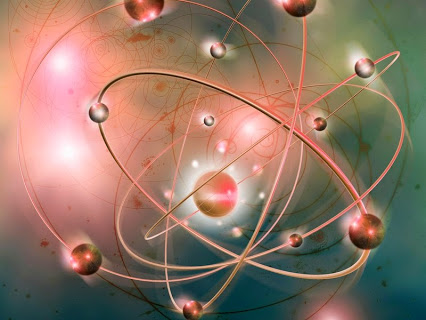
In ages past, it was believed that what we can see and touch, like a rock for instance, was the elements, in other words, matter. However, as science developed, such as chemistry, and much more recently quantum physics, it had been observed that matter seems to exist on one hand, but once one takes a deep look into the heart of the matter (no pun intended), there seems as if there is nothing. In atoms, you have mostly protons, neutrons and electrons. However, electrons for example, are insignificantly microscopic and spread out over enormous distances. Inbetween them, there is what is perceived as empty space. In fact, 99.99999% of an atom is this so-called ‘empty space’. Even if we look into electrons, protons, etc, we see that there is yet more open space. Gluons, neutrinos and the like are also in there somewhere but no matter how far into these particles we look, there is not anything that we can say quantifiably that it is the building block of all of this. What’s more, electrons literally possess no dimension. An electron is simply not an object as we know it. There is nothing. However, our eyes and observations are fooling us because indeed this nothing is something but we can not quantifiably say it is something and therefore it is nothing. There has to exist an energy that holds all these particles together like a sort of glue, or else matter would not exist because it would be akin to having a rock turn into sand that can not stay together as a rock any longer.

There have been some notable quantum physicists, such as Dr. Fred Alan Wolf, that have been looking to fuse science with spirituality…and with relative success. Below is from an article attributed to Dr. Wolf concerning his perception of this most-interesting issue at hand.

Quantum physics has thus brought about a radical new understanding both of the particles and the void. In subatomic physics, mass is no longer seen as a material substance but is recognized as a form of energy. When a piece of seemingly solid matter–a rock or a human hand or the limb of a tree–is placed under a powerful electronic microscope: the electron-scanning microscope, with the power to magnify several thousand times, takes us down into a realm that has the look of the sea about it… In the kingdom of corpuscles, there is transfiguration and there is samsara, the endless round of birth and death. Every passing second, some 2-1/2 million red cells are born; every second, the same number die. The typical cell lives about 110 days, then becomes tired and decrepit. There are no lingering deaths here, for when a cell loses its vital force, it somehow attracts the attention of macrophage.

As the magnification increases, the flesh does begin to dissolve. Muscle fiber now takes on a fully crystaline aspect. We can see that it is made of long, spiral molecules in orderly array. And all of these molecules are swaying like wheat in the wind, connected with one another and held in place by invisible waves that pulse many trillions of times a second. What are the molecules made of? As we move closer, we see atoms, the tiny shadowy balls dancing around their fixed locations in the molecules, sometimes changing position with their partners in perfect rhythms. And now we focus on one of the atoms; its interior is lightly veiled by a cloud of electrons. We come closer, increasing the magnification. The shell dissolves and we look on the inside to find…nothing.

Somewhere within that emptiness, we know is a nucleus. We scan the space, and there it is, a tiny dot. At last, we have discovered something hard and solid, a reference point. But no! as we move closer to the nucleus, it too begins to dissolve. It too is nothing more than an oscillating field, waves of rhythm. Inside the nucleus are other organized fields: protons, neutrons, even smaller “particles.” Each of these, upon our approach, also dissolve into pure rhythm. These days they (the scientists) are looking for quarks, strange subatomic entities, having qualities which they describe with such words as upness, downness, charm, strangeness, truth, beauty, color, and flavor. But no matter. If we could get close enough to these wondrous quarks, they too would melt away. They too would have to give up all pretense of solidity. Even their speed and relationship would be unclear, leaving them only relationship and pattern of vibration.

Of what is the body made? It is made of emptiness and rhythm. At the ultimate heart of the body, at the heart of the world, there is no solidity. Once again, there is only the dance. (At) the unimaginable heart of the atom, the compact nucleus, we have found no solid object, but rather a dynamic pattern of tightly confined energy vibrating perhaps 1022 times a second: a dance… The protons–the positively charged knots in the pattern of the nucleus–are not only powerful; they are very old. Along with the much lighter electrons that spin and vibrate around the outer regions of the atom, the protons constitute the most ancient entities of matter in the universe, going back to the first seconds after the birth of space and time.

It follows then that in the world of subatomic physics there are no objects, only processes. Atoms consist of particles and these particles are not made of any solid material substance. When we observe them under a microscope, we never see any substance; we rather observe dynamic patterns, continually changing into one another–a continuous dance of energy. This dance of energy, the underlying rhythm of the universe, is again more intuited than seen. Jack Kornfield, a contemporary teacher of meditation, finds a parallel between the behavior of subatomic particles and meditational states:

When the mind becomes very silent, you can clearly see that all that exists in the world are brief moments of consciousness arising together with the six sense objects. There is only sight and the knowing of sight, sound and the knowing of sound, smell, taste and the knowing of them, thoughts and the knowing of thoughts. If you can make the mind very focused, as you can in meditation, you see that the whole world breaks down into these small events of sight and the knowing, sound and the knowing, thought and the knowing. No longer are these houses, cars, bodies or even oneself. All you see are particles of consciousness as experience. Yet you can go deep in meditation in another way and the mind becomes very still. You will see differently that consciousness is like waves, like a sea, an ocean. Now it is not particles but instead every sight and every sound is contained in this ocean of consciousness. From this perspective, there is no sense of particles at all.

If truly being the words of Dr. Wolf, I believe this above explanation of this fascinating reality is a beautiful description of the issue at hand.

So how is it that we exist as matter? Albert Einstein alluded to this answer. We, the people of this beautiful planet, are really beings made of energy, but we exist at the 3rd dimension because our atoms have a specific frequency which makes us able to exist in this very 3rd dimension. This specific frequency is stable enough for all our lifetime. Using this information, if we are indeed capable of accelerating and decelerating the frequencies to make us able to exist in the 3rd dimension, then naturally, we can use this in order to travel inter-dimensionally throughout the infinite multiverse…and here lies the key to the true evolution of the human being race. Once we learn, or progress far enough, to accelerate and decelerate the vibrating frequencies of our atoms, then, in theory, we will be able to exist in the 5th dimension and in parallel universes of this wonderful multiverse.

Note: The quote attributed to Albert Einstein in the beginning of the article, as well as the article quotations attributed to Fred Alan Wolf are not in the specific terms which these two physicists have used. However, upon deeper research, there is enough evidence to be compelled to believe that the general message of matter not being definitive to still hold true. A quote from Einstein’s “Metaphysics of Relativity” (1950)shows this:

“Physical objects are not in space, but these objects are spatially extended (as fields). In this way the concept ‘empty space’ loses its meaning. … The field thus becomes an irreducible element of physical description, irreducible in the same sense as the concept of matter (particles) in the theory of Newton.”

Legendary physicist Max Planck is attributed to saying in a lecture that was given in Florence the following:

“As a physicist, that is, a man who had devoted his whole life to a wholly prosaic science, the exploration of matter, no one would surely suspect me of being a fantast. And so, having studied the atom, I am telling you that there is no matter as such. All matter arises and persists only due to a force that causes the atomic particles to vibrate, holding them together in the tiniest of solar systems, the atom. Yet in the whole of the universe there is no force that is either intelligent or eternal, and we must therefore assume that behind this force there is a conscious, intelligent mind or spirit. This is the very origin of all matter.”

Source of this quote is from the following:

Pauli, Wolfgang: THE INFLUENCE OF ARCHETYPICAL PRESENTATIONS ON THE DEVELOPMENT OF THE NATURAL SCIENCE THEORY BY KEPPLER in: Jung Pauli: NATURAL EXPLANATION AND PSYCHE, Zuerich 1952, p. 163

http://shift.is


ASPHALT

Picture

Asphalt
by Al Ortolani 

Listen Online

The road crew hired temps
between semesters
to stand beside the hopper
shoveling. The foreman
disliked college students.
He never learned our names,
referenced us by the tools
we carried—Skip and I
were Shovels, scraping the hot
mix into the conveyor.
Ronnie the college drop-out
advanced to Rake.
He followed the paver,
flicking the screed ridge
to a smooth seam.
All summer I shoveled the city
streets, made-do with whatever
shade I could catch. Each day
at five, we cleaned the tools
with diesel and putty knives.
Then we sprayed our boots,
kicking our steel toes against
a bar of rail line. We wet rags
with the diesel and scrubbed
our hands and faces.
Then I drove home, a towel
on the seat, another on the arm rest.
I hung my work clothes
on the fence behind the house.
They appeared capable
of walking off on their own.
“Asphalt” by Al Ortolani from Paper Birds Don’t Fly. © NYQ Books, 2016.


http://www.alortolani.com


Al Ortolani

Picture

Jack and Al
 Al Ortolani’s prose and poetry has appeared in Rattle, New Letters, the New York Quarterly, The Midwest Quarterly, The English Journal, The QuarterlyThe Laurel Review, Prairie Schooner, Word Riot, Camroc Press Review, and others. He is the author of one chapbook, Slow Stirring Spoon, High/CooPress, two collections of poetry, The Last Hippie of Camp 50 and Finding the Edge, both published by Woodley Press at Washburn University. His third book of poetry, Wren’s House, a collection of haiku, published by Coal City Press in Lawrence, Kansas. Book four, Cooking Chili on the Day of the Dead, was published by Aldrich Press, CA. His fifth book,Waving Mustard in Surrender, was released from New York Quarterly Books, New York, New York. His sixth collection, Francis Shoots Pool at Chubb’s Bar came out in February 2015 from Spartan Press in Kansas City, Missouri. Soon to be released will be Paper Birds Don’t Fly, New York Quarterly Books, and Ghost Sign with J.T. Knoll, Adam Jameson, and Melissa Fite Johnson from Spartan Press in Kansas City, White Buffalo Poets.

The Evolutionary Argument Against Reality

Cognitive scientist Donald Hoffman uses evolutionary game theory to show that our perceptions of an independent reality must be illusions.

As we go about our daily lives, we tend to assume that our perceptions — sights, sounds, textures, tastes — are an accurate portrayal of the real world. Sure, when we stop and think about it — or when we find ourselves fooled by a perceptual illusion — we realize with a jolt that what we perceive is never the world directly, but rather our brain’s best guess at what that world is like, a kind of internal simulation of an external reality. Still, we bank on the fact that our simulation is a reasonably decent one. If it wasn’t, wouldn’t evolution have weeded us out by now? The true reality might be forever beyond our reach, but surely our senses give us at least an inkling of what it’s really like.

Not so, says Donald D. Hoffman, a professor of cognitive science at the University of California, Irvine. Hoffman has spent the past three decades studying perception, artificial intelligence, evolutionary game theory and the brain, and his conclusion is a dramatic one: The world presented to us by our perceptions is nothing like reality. What’s more, he says, we have evolution itself to thank for this magnificent illusion, as it maximizes evolutionary fitness by driving truth to extinction.

Getting at questions about the nature of reality, and disentangling the observer from the observed, is an endeavor that straddles the boundaries of neuroscience and fundamental physics. On one side you’ll find researchers scratching their chins raw trying to understand how a three-pound lump of gray matter obeying nothing more than the ordinary laws of physics can give rise to first-person conscious experience. This is the aptly named “hard problem.”

On the other side are quantum physicists, marveling at the strange fact that quantum systems don’t seem to be definite objects localized in space until we come along to observe them — whether we are conscious humans or inanimate measuring devices. Experiment after experiment has shown — defying common sense — that if we assume that the particles that make up ordinary objects have an objective, observer-independent existence, we get the wrong answers. The central lesson of quantum physics is clear: There are no public objects sitting out there in some preexisting space. As the physicist John Wheeler put it, “Useful as it is under ordinary circumstances to say that the world exists ‘out there’ independent of us, that view can no longer be upheld.”

So while neuroscientists struggle to understand how there can be such a thing as a first-person reality, quantum physicists have to grapple with the mystery of how there can be anything but a first-person reality. In short, all roads lead back to the observer. And that’s where you can find Hoffman — straddling the boundaries, attempting a mathematical model of the observer, trying to get at the reality behind the illusion. Quanta Magazine caught up with him to find out more. An edited and condensed version of the conversation follows.


To read the interview and the rest of the article go to https://www.quantamagazine.org/the-evolutionary-argument-against-reality-20160421


This article was reprinted on TheAtlantic.com.

ORIGINAL 1855 Preface to Leaves of Grass


FinderScreenSnapz060

ORIGINAL 1855 Preface to Leaves of Grass 
by Walt Whitman

This is what you shall do: Love the earth and sun and the animals, despise riches, give alms to every one that asks, stand up for the stupid and crazy, devote your income and labor to others, hate tyrants, argue not concerning God, have patience and indulgence toward the people, take off your hat to nothing known or unknown or to any man or number of men, go freely with powerful uneducated persons and with the young and with the mothers of families, read these leaves in the open air every season of every year of your life, re-examine all you have been told at school or church or in any book, dismiss whatever insults your own soul; and your very flesh shall be a great poem and have the richest fluency not only in its words but in the silent lines of its lips and face and between the lashes of your eyes and in every motion and joint of your body.


[This preface was dropped in later editions.]

THE WORKS OF IGOR MORSKI

Burning Issue(4)

Burning Issue

Polish illustrator, artist, and co-owner of Morski Studio Graficzne, Igor Morski creates surreal images imbued with hidden meaning. He graduated with honors from the Interior Architecture and Industrial Design Faculty at the State Higher School of Fine Art in Poznań, and worked for public broadcasting in the 80s and 90s, before finally pursuing a career in press illustration. Morski opened his own studio in 1995.

“Sometimes I used to use popular symbols, such as Pinocchio’s long nose,” Morski told Bored Panda. “However, most frequently I have tried to think up my own symbols. For example, [my piece] “creative archaeology” is about the commercialisation of archaeology. There, I depict a halved human head filled with the sand with a stylised figure of Indiana Jones, the archaeologist, at the top. The symbolism becomes clear. On the one hand, you have the head filled with the sand, on the other, the figure digging in it.”

SOURCE: http://www.boredpanda.com/surreal-illustrations-poland-igor-morski/

original

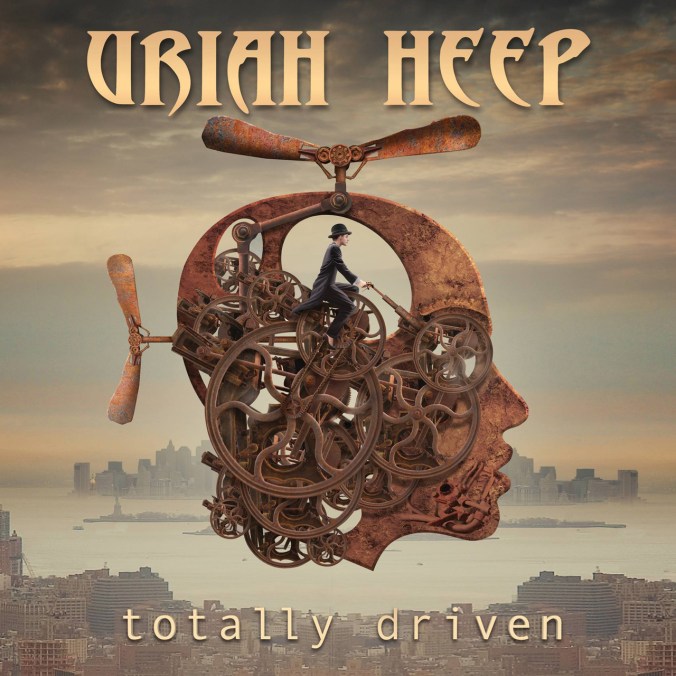
He was recently commissioned for the artwork on Uriah Heap’s new album.


contro_pics-728x400

BIOGRAPHY: http://www.artgalaxie.com/index.php/igor-morski

Unknown-1

IGOR MORSKI

Igor Morski (b. 1960) Polish graphic designer, illustrator and set designer, Presently,  focuses on mixed media graphic art, based manly on photo manipulation, drawing, recently also 3D.

Morski graduated with honors from the Interior Architecture and Industrial Design Faculty at the State Higher School of Fine Art in Poznań (now the University of Arts).

In the late 80’s and early 90’s he worked for public broadcasting company Polish Television creating set design for TV theatre, culture and commentary shows.In the early 90’s the artist pursued a career in press illustration, working for leading Polish titles including  Wprost,  Newsweek,  Businesweek,  Businesman Magazine,  Manager Magazine, Charaktery, Psychologia dziś and  Focus.

So far, he has created about 1000 illustrations. His work also regularly appears in international magazines such as the American Deloitte Review,  the Australian  Prevention, Money, ITB,  Men’s Health, Womans Health and George.

He is a winner of many prestigious awards including Communication Arts Excellence Award (2008, 2010) and Applied Arts Award (2010, 2011). Golden Stellar Digital Arts California (2013) Igor Morski is co-owner of a graphic design studio Morski Studio Graficzne in his hometown. His advertising art has been commissioned by Saatchi & Saatchi Singapore, Saatchi & Saatchi Sydney and Abelson Taylor among others.

Privately, he is a proud father of two daughters. He is interested in natural sciences in a broad sense, genetics, cosmology and theoretical physics.

old-ages-1024x682

OLD AGES

surreal-illustrations-poland-igor-morski-15

surreal-illustrations-poland-igor-morski-21

ORDERING PRINTS  SEE: http://igormorski.pl/category/works/print/

INTERVIEW:  http://sunriseartists.com/2013/06/13/igor-morski-interview/


Ron Padgett

The Writer’s Almanac for June 17, 2016

Unknown


Hug
by Ron Padgett

Listen Online

The older I get, the more I like hugging. When I was little the
people hugging me were much larger. In their grasp I was a rag
doll. In adolescence, my body was too tense to relax for a hug.
Later, after the loss of virginity—which was anything but a
loss—the extreme proximity of the other person, the smell of
hair, the warmth of the skin, the sound of breathing in the
dark—these were mysterious and delectable. This hug had
two primary components: the anticipation of sex and the plea-
sure of intimacy, which itself is a combination of trust and
affection. It was this latter combination that came to character-
ize the hugging I have experienced only in recent years, a hug-
ging that knows no distinctions of gender or age. When this
kind of hug is mutual, for a moment the world is perfect the
way it is, and the tears we shed for it are perfect too. I guess it
is an embrace.
“Hug” by Ron Padgett from Collected Poems. © Coffee House Press, 2013. Reprinted with permission. (buy now)


Today, 6/12/16, is the birthday of avant-garde American poet, essayist, and translator Ron Padgett (1942) (books by this author), who once said: “If you match yourself up against Shakespeare, guess what? You lose. It’s not productive. Better to focus on the poem you’re writing, do your work, and leave it at that.”

Padgett was born in Tulsa, Oklahoma. His father was a bootlegger who also traded cars; his mother was a housewife who assisted Padgett’s father with bootlegging. Padgett was a precocious reader as a teenager, drifting toward Baudelaire and Rimbaud. He said: “When I got to adolescence, I became more and more gloomy and introspective and serious and angst-ridden.” He and a few friends started an avant-garde literary journal called The White Dove, which lasted for five years. They weren’t shy about writing to their literary heroes and soliciting work. Allen Ginsberg, Jack Kerouac, and LeRoi Jones all published poems in Padgett’s small magazine.

Padgett went to New York to attend Columbia University (1960), where he fell in with a group of poets who favored stream-of-consciousness writing, vivid imagery, and spontaneity. It was the 1960s, and Padgett, Kenneth Koch, Frank O’Hara, and Ted Berrigan drew inspiration from the art galleries, museums, dancers, and artists that surrounded them. Padgett inherited Kenneth Koch’s teaching position as a “poet-in-the-schools” (1969) for the Teachers & Writers Collaborative, and stayed for nine years. In the beginning, he was paid $50 for three class visits, which he could do in one day, and which paid for an entire month’s rent, utilities, and his phone bill. He loved teaching public school children. He said that whenever poets visited a classroom, “We were like heroes being welcomed home.”

Padgett’s collections of poetry include Bean Spasms: Poems and Prose (1967, with Ted Berrigan); How to Be Perfect (2007); and Alone and Not Alone (2015). His collection How Long (2011) was a finalist for the Pulitzer Prize.

Padgett says: “Almost everything that’s happened in my poetry is what you might call organic. I don’t do much pre-conceiving. If I start to sound too much like the Ron Padgett that I’ve read before, I stop myself.”

On writing his poems, he says: “If I don’t make line breaks, it’s a prose poem. The line breaks are part of the dance of the poem. If I’m not dancing, I don’t know what steps to take. I don’t know whether to turn or to bow or to move quickly or whatever. I don’t know what to do if I don’t have the line breaks.”